07 Jul 2026
12 min read
Introduction
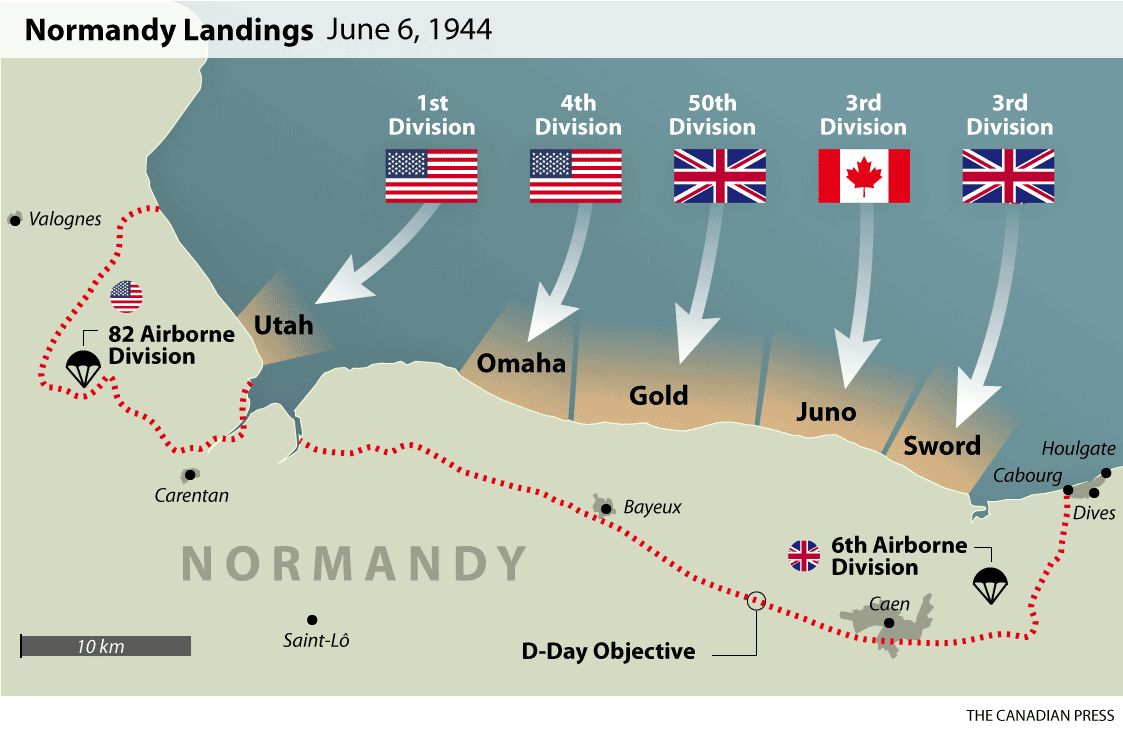
During my previous trips to Normandy, I had visited all of the D-Day beaches except Sword Beach, and I wanted to correct that oversight. Sword is the easternmost beach and probably the least explored. The US beaches of Omaha and Utah have plenty of visitors because of the US Marketing Machine, Gold Beach has the Mulberry Harbour and Juno Beach is the Canadian Landing zone. A ferry from the UK lands at Ouistreham, but most British Visitors usually head straight past Sword Beach to the more famous sites.
The Landings
Overview
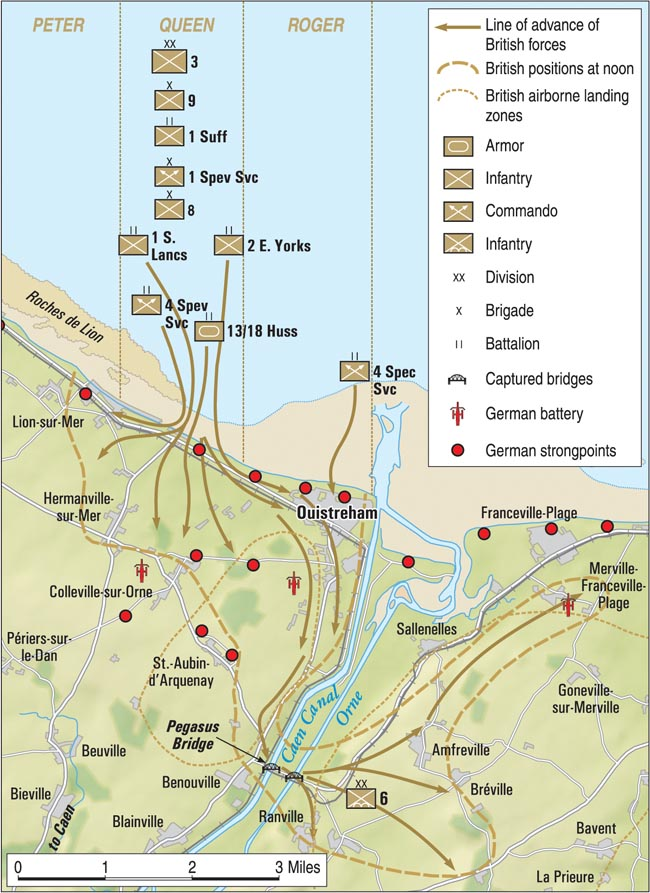
Although the Sword Beach Landing area is 5 miles wide, offshore reefs and the heavily defended port limited the landing area to a one-mile section. The beaches were labeled from West to East, Peter, Queen and Roger. The landings took place on Queen White and Queen Red sectors, forcing the troops to spread out once they made their way inland.
The British 3rd Division, supported by the 1st Special Service Brigade (Commandos) landed on Sword. Due to the narrow beach area, only one Brigade landed at a time as opposed to the two Brigade landings at the other beaches. The next map shows the conveyor belt landings over the narrow strip of beach. The landings were tightly timed, and the rapidly advancing tide quickly limited the beach area leading to a great deal of congestion. The landings occurred just before low tide so there was more than 300 m of open beach to cross. At high tide at 1430 there was only about 30 m of beach.
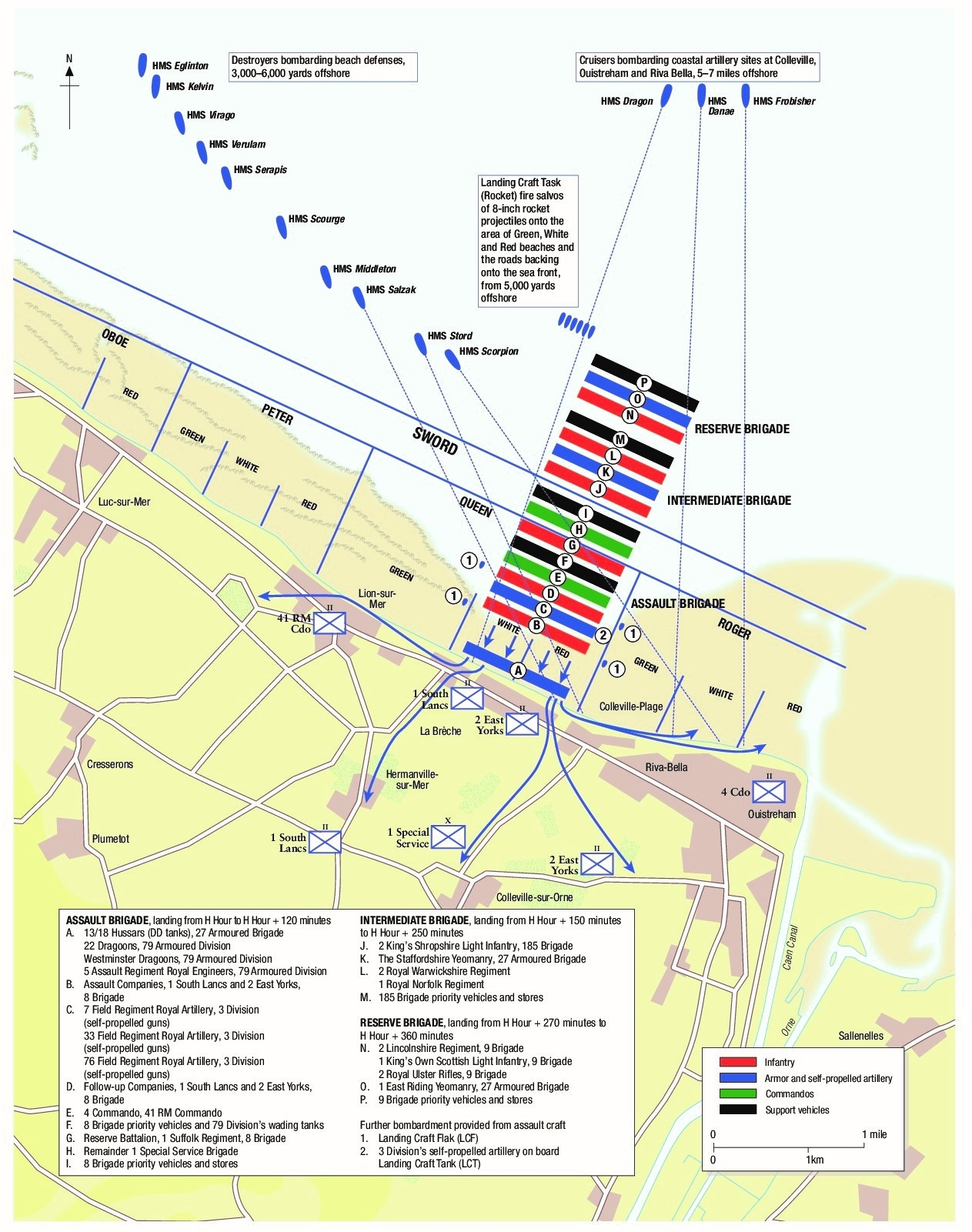
At 0530 the Naval Bombardment started. The previous Air campaign had limited impact due to cloud cover, and the intense Naval Bombardment didn’t take out the reinforced concrete casemates. At 0725 the Duplex Drive (DD) Tanks from the 13/18 Hussars swam in from about 5,000 yards. Of the 34 tanks that swam in, 31 made it to the beach. This was much more successful than those at Omaha beach, of the 29 DD Tanks launched from 6,000 yards only 5 made it to the beach due to heavy surf conditions. At the same time, the Armoured Vehicle Royal Artillery (AVRE) speciality tanks were delivered directly to the beach by the Landing Craft Tank (LCT) ships. The Petard tanks took out casemates, the Flail tanks cleared paths through the minefields, and the Crocodile tanks provided flamethrowers to take out the defenders. More on the tanks in a bit.
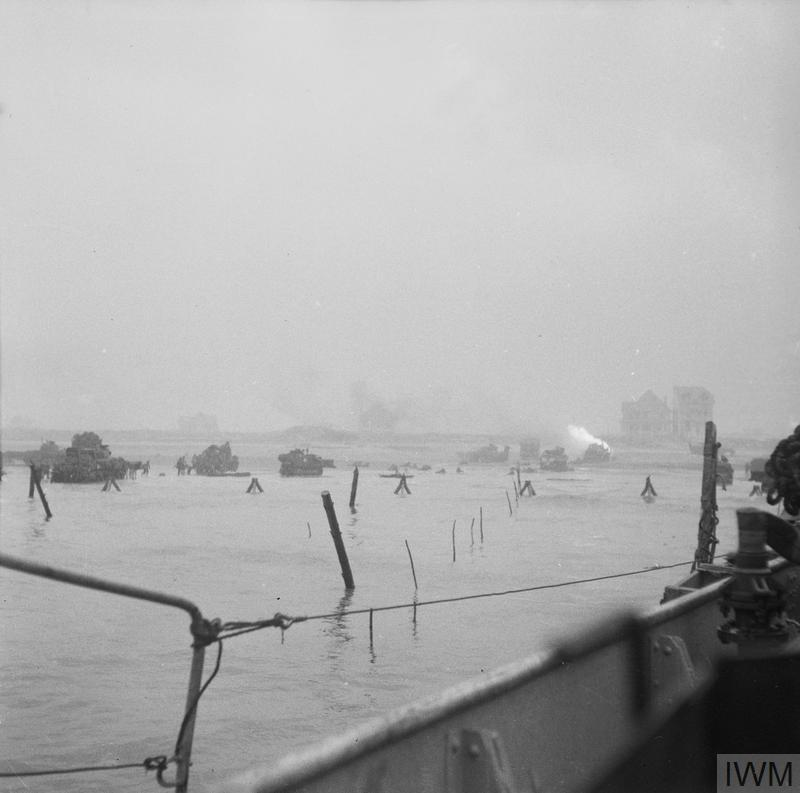
The tanks were slightly delayed, so they landed at the same time as the initial assault forces of the 2nd East Yorkshires and 1st South Lancashire Regiment. Beach clearance units started to clear paths through the beach obstacles, but the rapidly rising tide hampered their efforts.
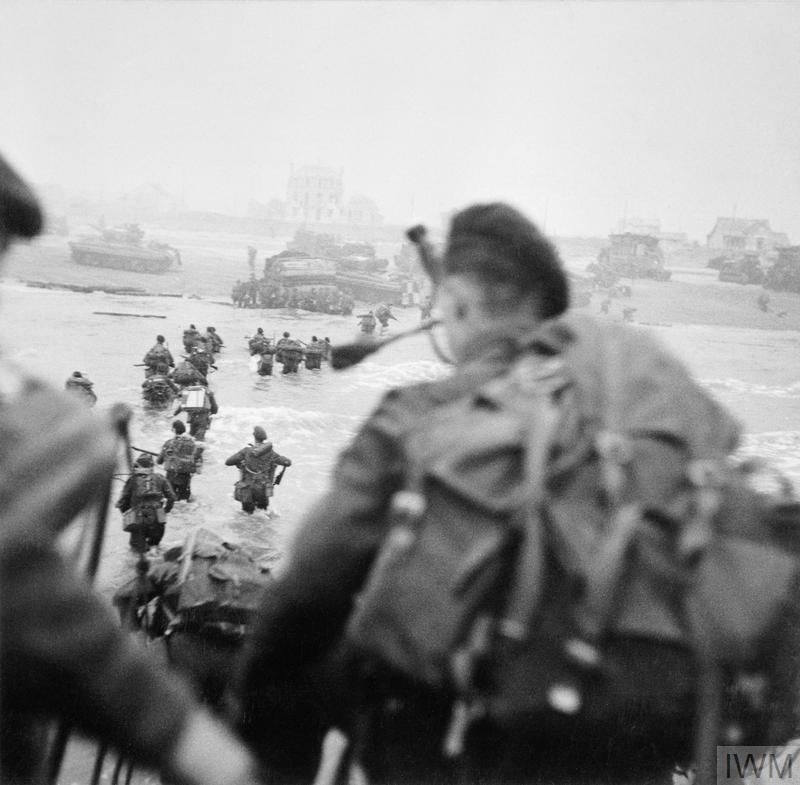
Next up were the self-propelled guns of the artillery, follow-on
infantry companies and an hour later the Commandos of #4 Commandos
along with 177 members of the Free French Commandos who landed on the
eastern edge of the beach. The French Commandos took out the Casino at
Ouistreham and the 1st Special Service Brigade under
Brigadier the Lord Lovat who was scheduled to support the paratroopers
who had captured Pegasus Bridge shortly after midnight. Lord Lovat was a
Scot, and he had his piper Bill Millin pipe the troops off the landing
craft. Lord Lovat is on the right just off the ramp and Piper Millen is
getting ready to enter the water.
On the western edge of the invading force, the #41 Royal Marine Commandos headed toward Juno Beach to link up with the Canadians.
By 0900 the exits off the beach were cleared and the assault battalions moved inland.
Counterattack
The German Armour was held back from immediate counterattacks because Hitler believed this was only a diversionary attack and that the main attack would be at Pas de Calais. By late morning the 21 Panzer Division launched an attack, exploiting the gap between the Canadians at Juno Beach and the Sword Beach landings.
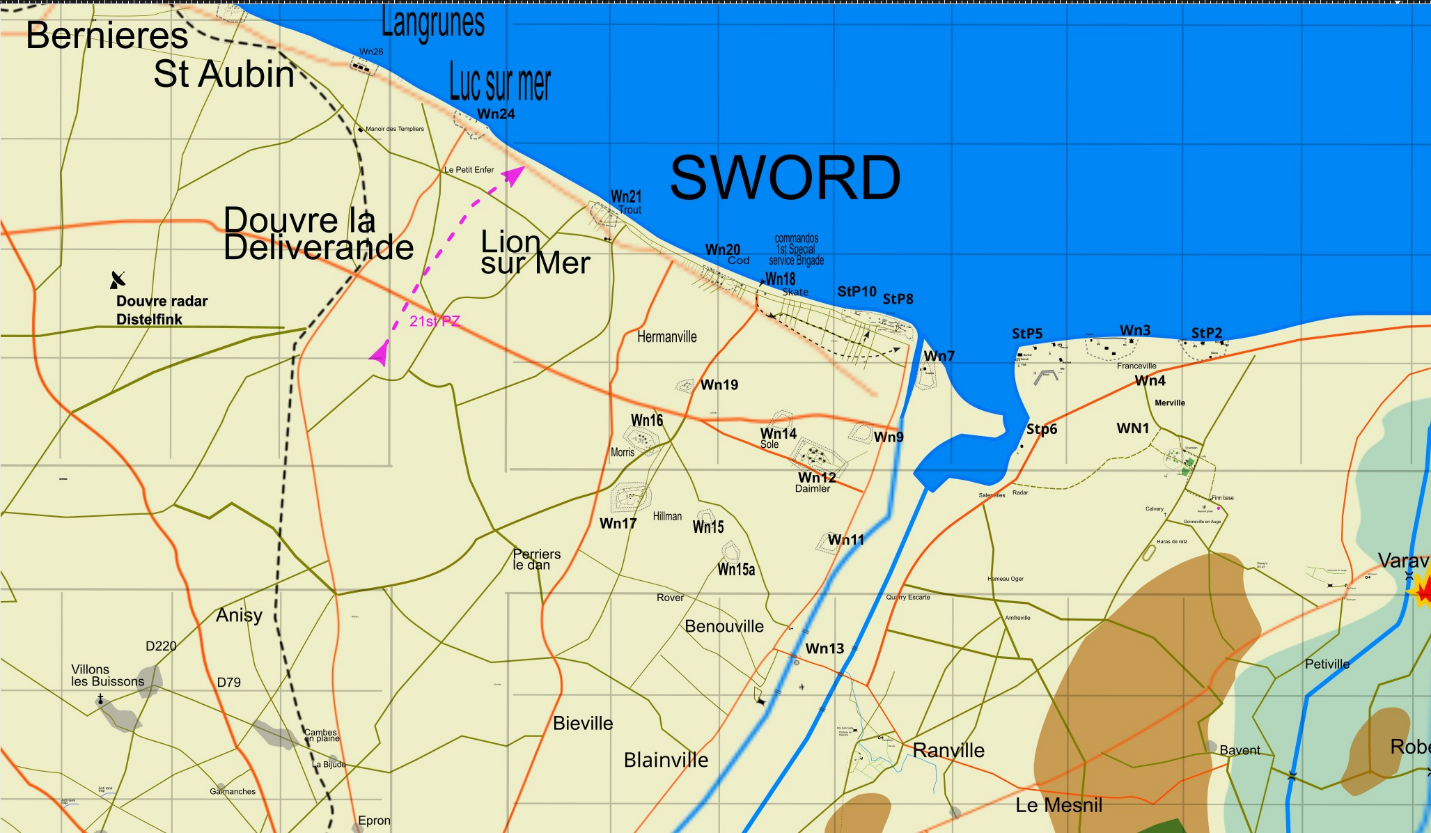
The Panzers made it to the coast as shown by the pink line, but heavy naval bombardment and relentless bombing by the RAF Typhoons destroyed many vehicles and forced their withdrawal.
Strong Points
Sword Beach was heavily defended with both strong points and other substantial defences inland as described in a previous post. The main landings went in between WN20 and WN18. WN stands for Widerstandsnest, a German military term that translates directly to “resistance nest”. These were heavily fortified strongpoints, typically consisting of concrete bunkers, trench networks, machine gun tobruks, and anti-tank guns. Manned by small garrisons of 20 to 40 soldiers, these nests were strategically placed to dominate fields of fire. The Strong Points (SP) or Stützpunkt, was a much larger, more heavily armed, and complex defensive node. An SP was created by grouping multiple smaller WN together under a single command. These larger complexes housed more troops, heavy artillery, and multiple interconnected bunkers. Several of the maps in this post are using the mapping tool created by Colin McGarry, a long-time Normandy guide.
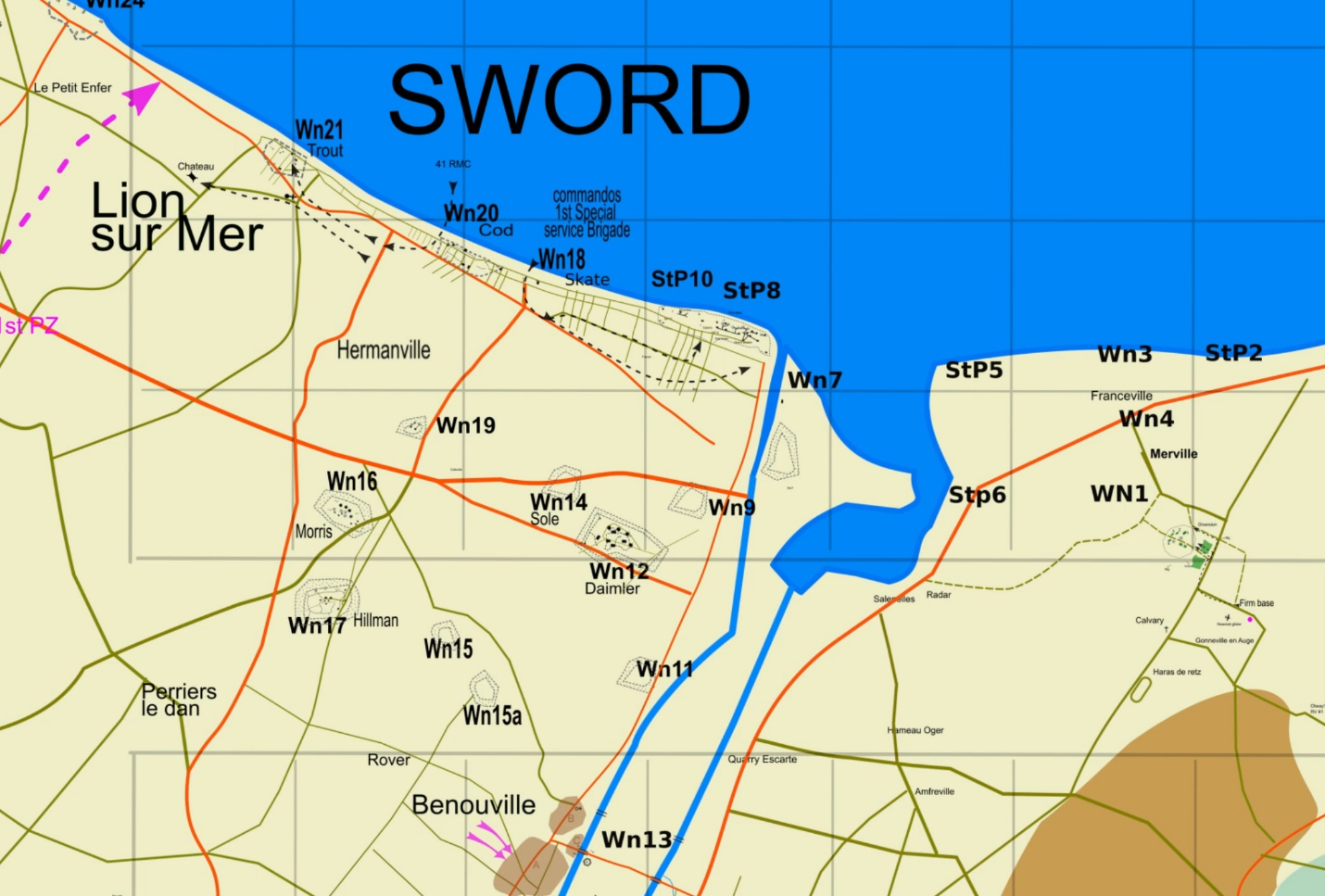
In addition to the WN and SP, there were houses all along the waterfront, most with stone walls, which had also fortified and interconnected with an extensive trench system.
WN20 (codename COD) had an 88mm and several 50mm guns. The initial wave landed almost directly in front of the WN resulting in heavy infantry and armoured casualties. The WN was not fully taken until 1000.
WN18 (codename Skate) had a 75mm and a 50mm gun and was responsible for taking out at least 10 tanks. The WN was not cleared until after 0930. There is generally not much evidence of the defensive positions on Sword Beach, but one of the casemates from WN18 remains and is integrated into a private residence. The gun port, previously used to fire down the beach is now a window.
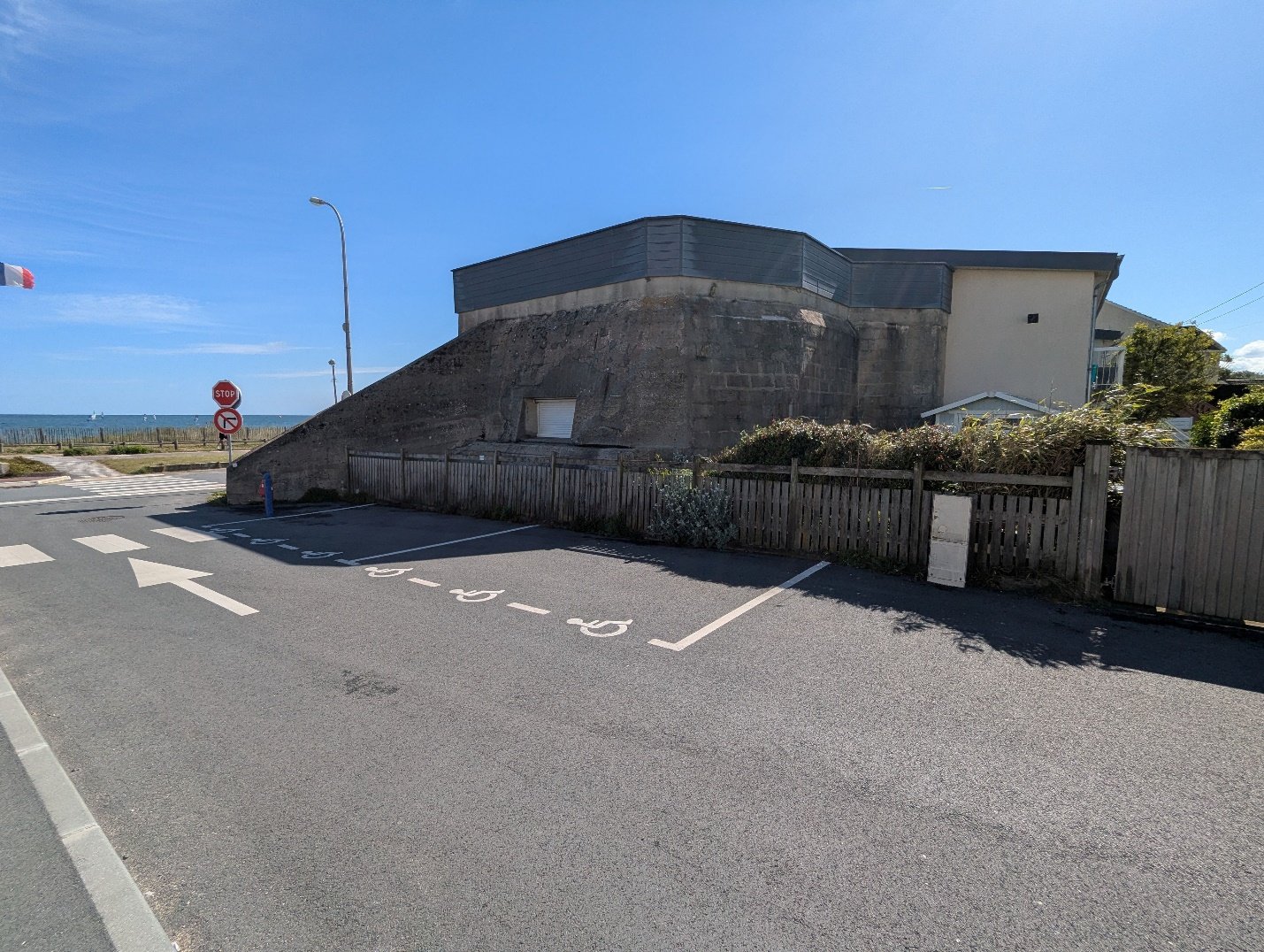
The view from the beach side shows the integration into the house, including a roof-top patio on top of the bunker.
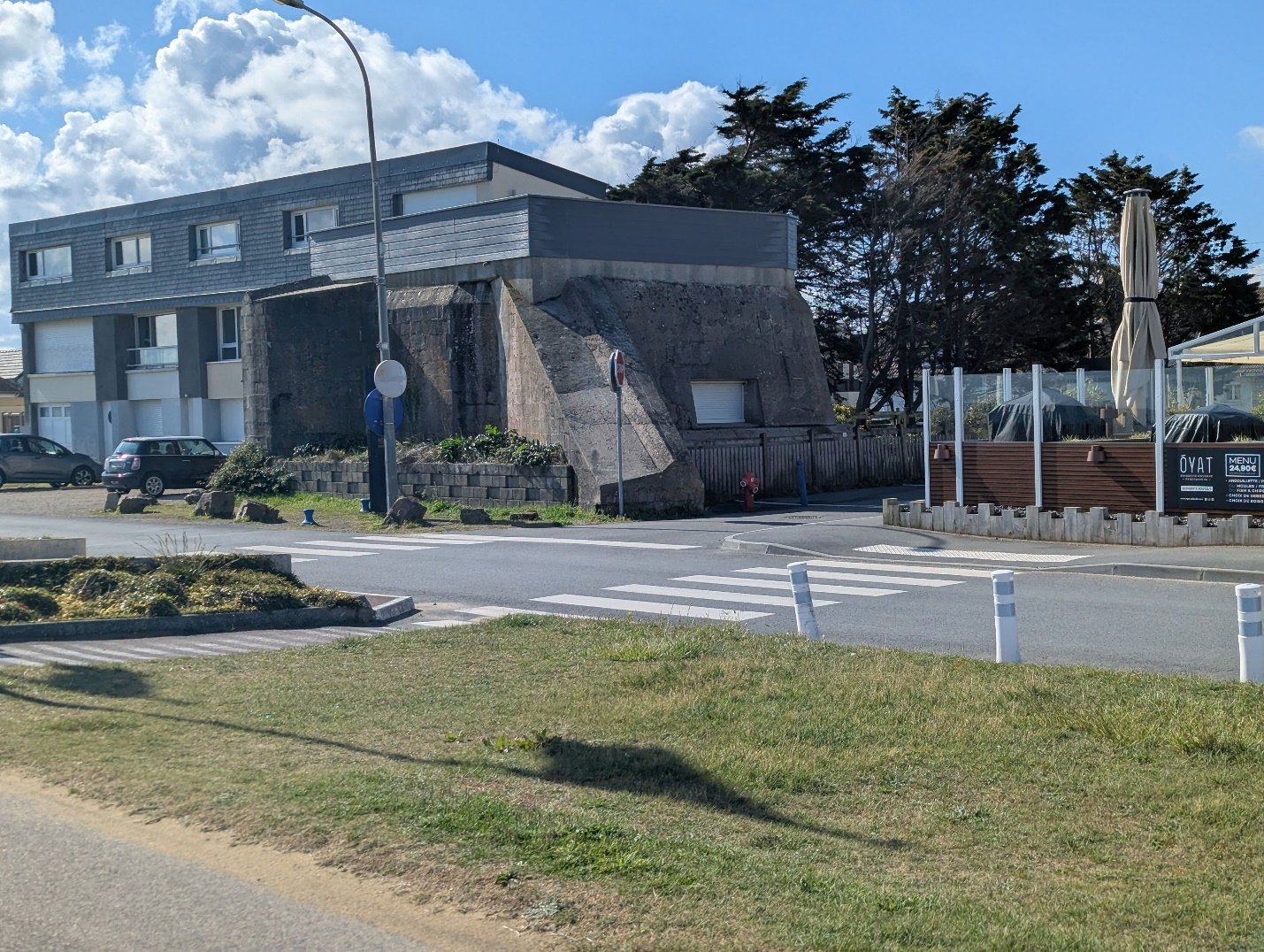
Further down the coast, the memorial to the French Commandos is built atop the bunker at SP10.
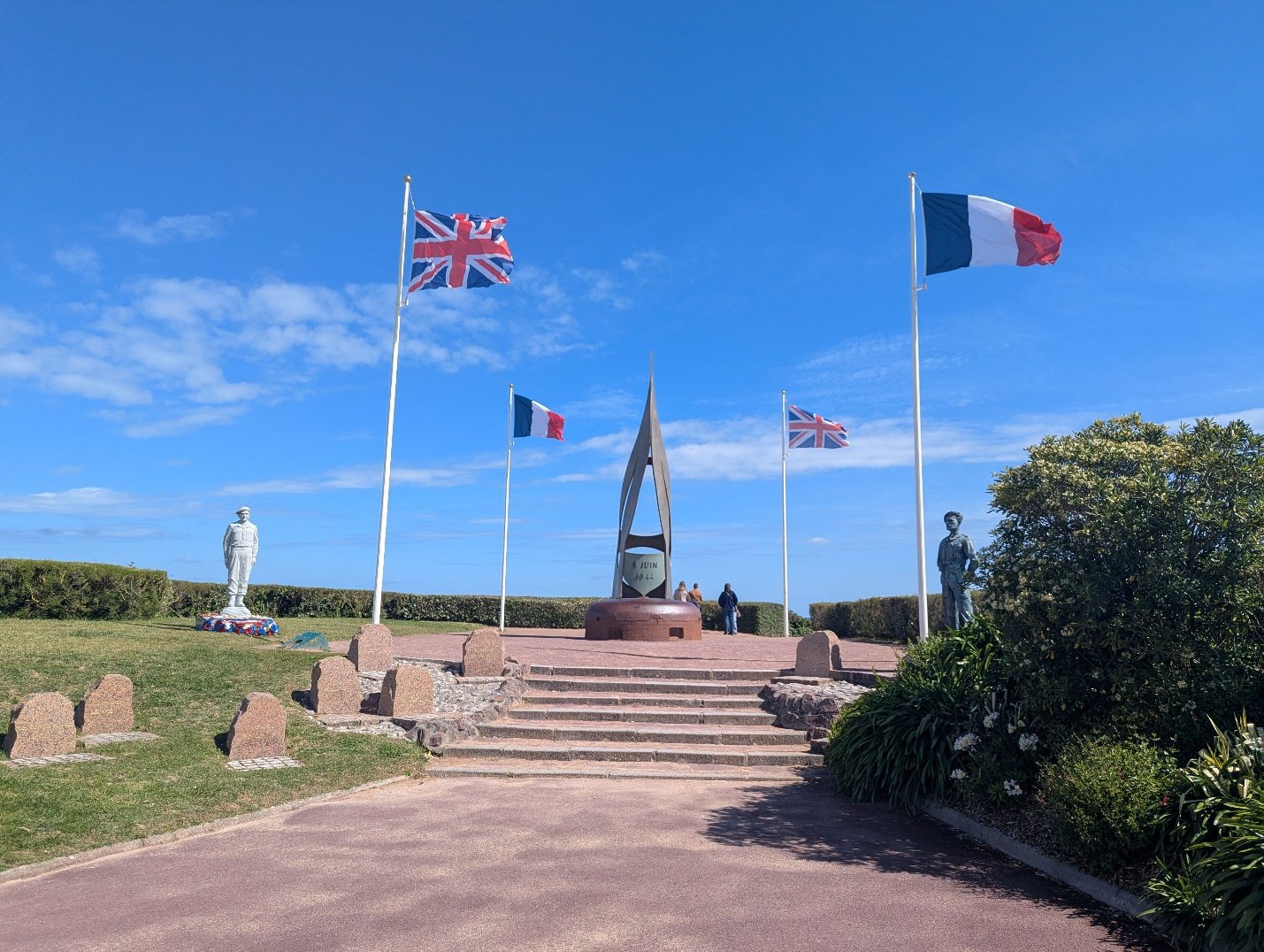
A few Dragon’s Teeth (anti-tank defences) remain on the beach.
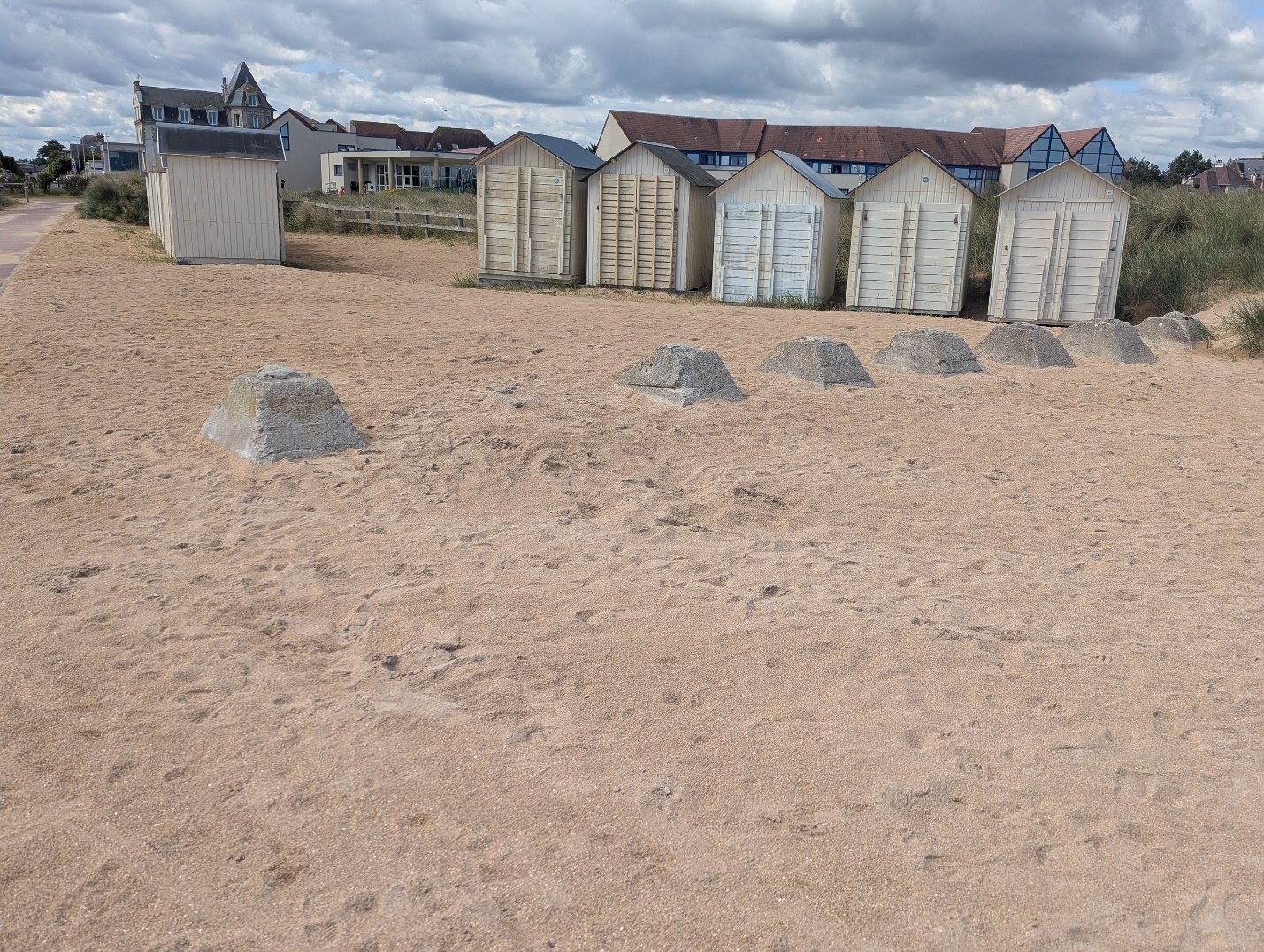
Parts of WN08 remain in the dunes just off the beach.
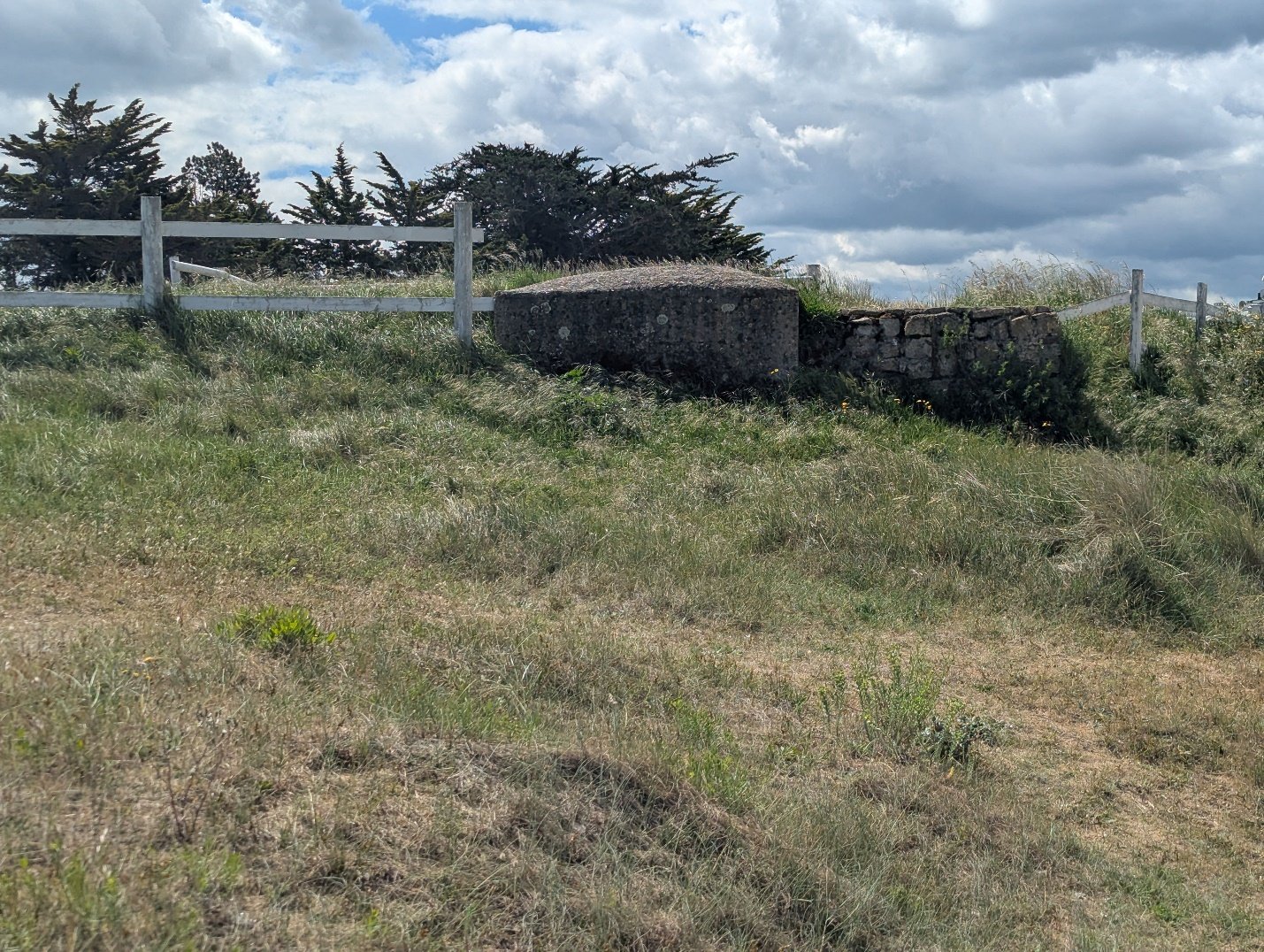
Interestingly, the stable for the pony park is integrated with the bunkers as well.
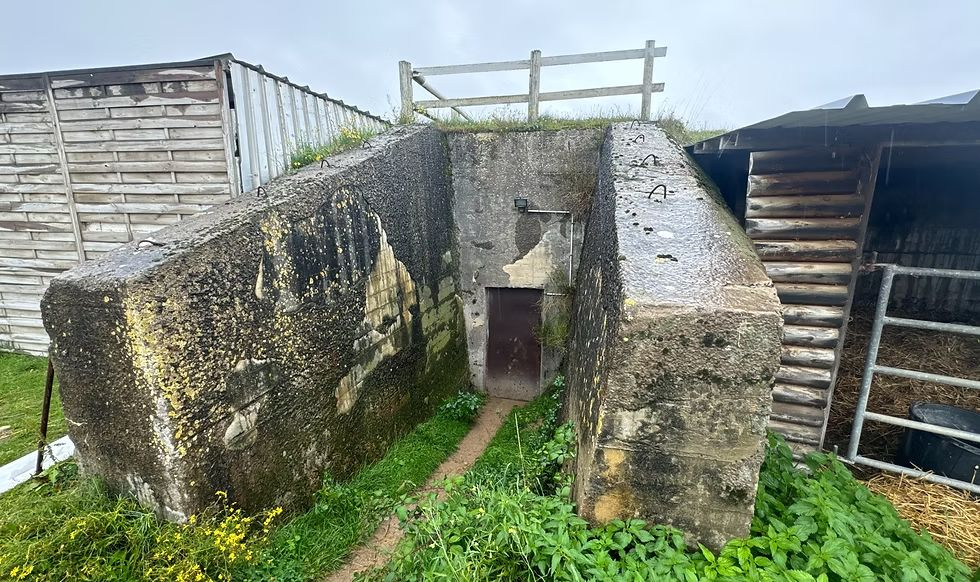
One of the bunker crew out for an afternoon stroll.

The Flak (Anti-Aircraft) tower sits just behind the stable.
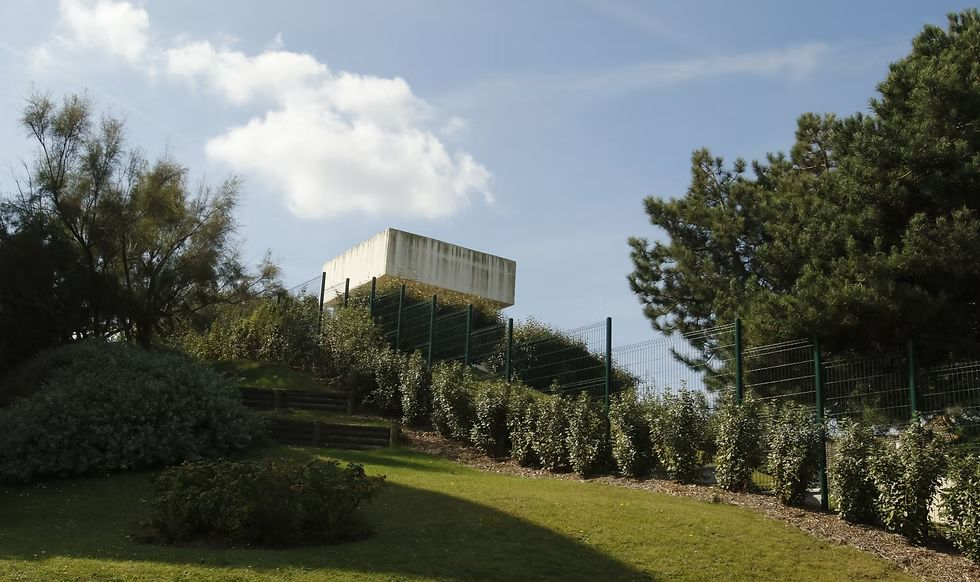
Le Grand Bunker
Almost at the port of Ouistreham is the Le Grand Bunker, a 5-story observation bunker that has been turned into a museum. There were anti-aircraft guns on the roof, and a fifth-floor observation window. On other beach areas there are cliffs, but the flat land here forced the creation of a tall bunker.
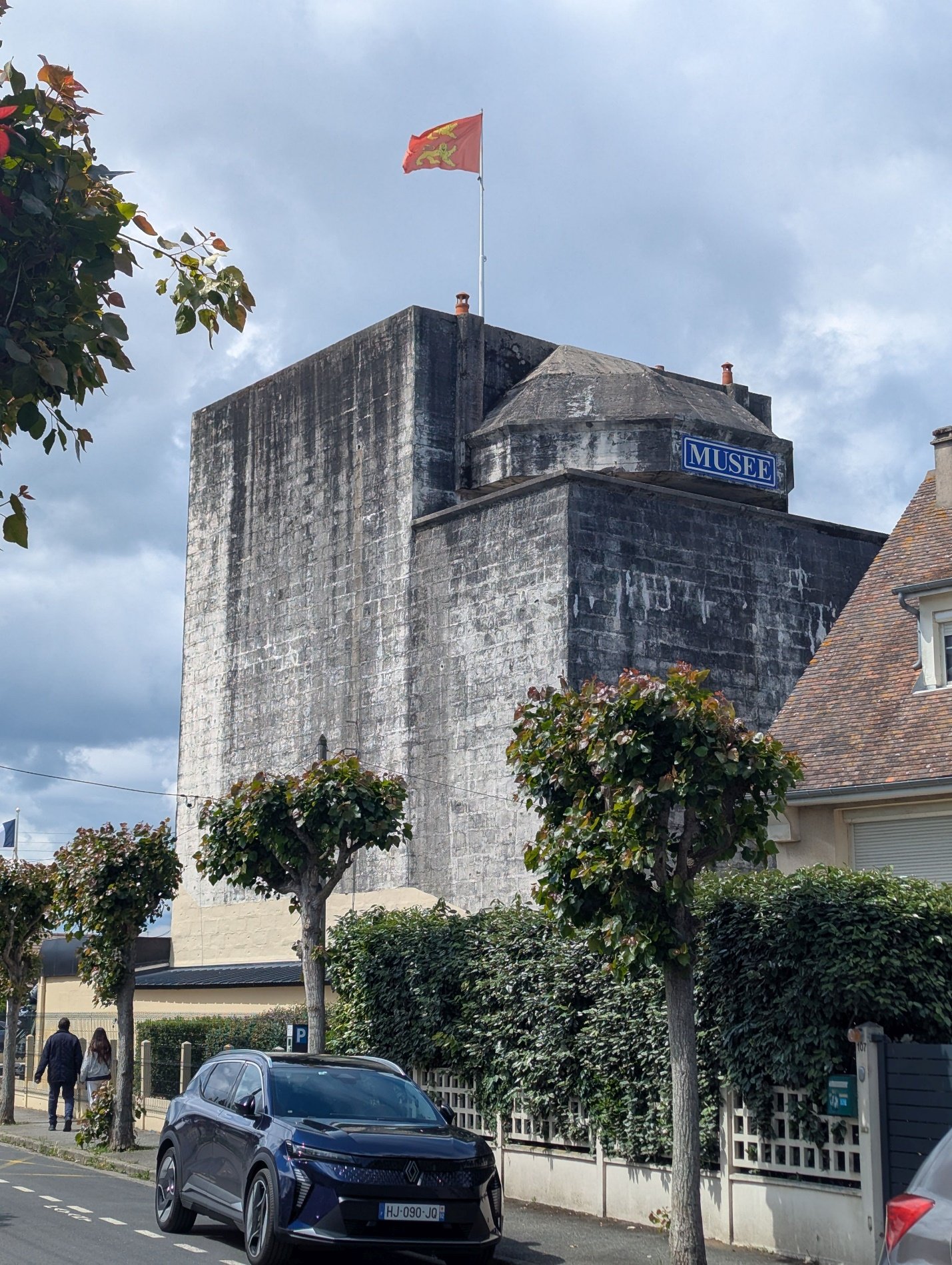
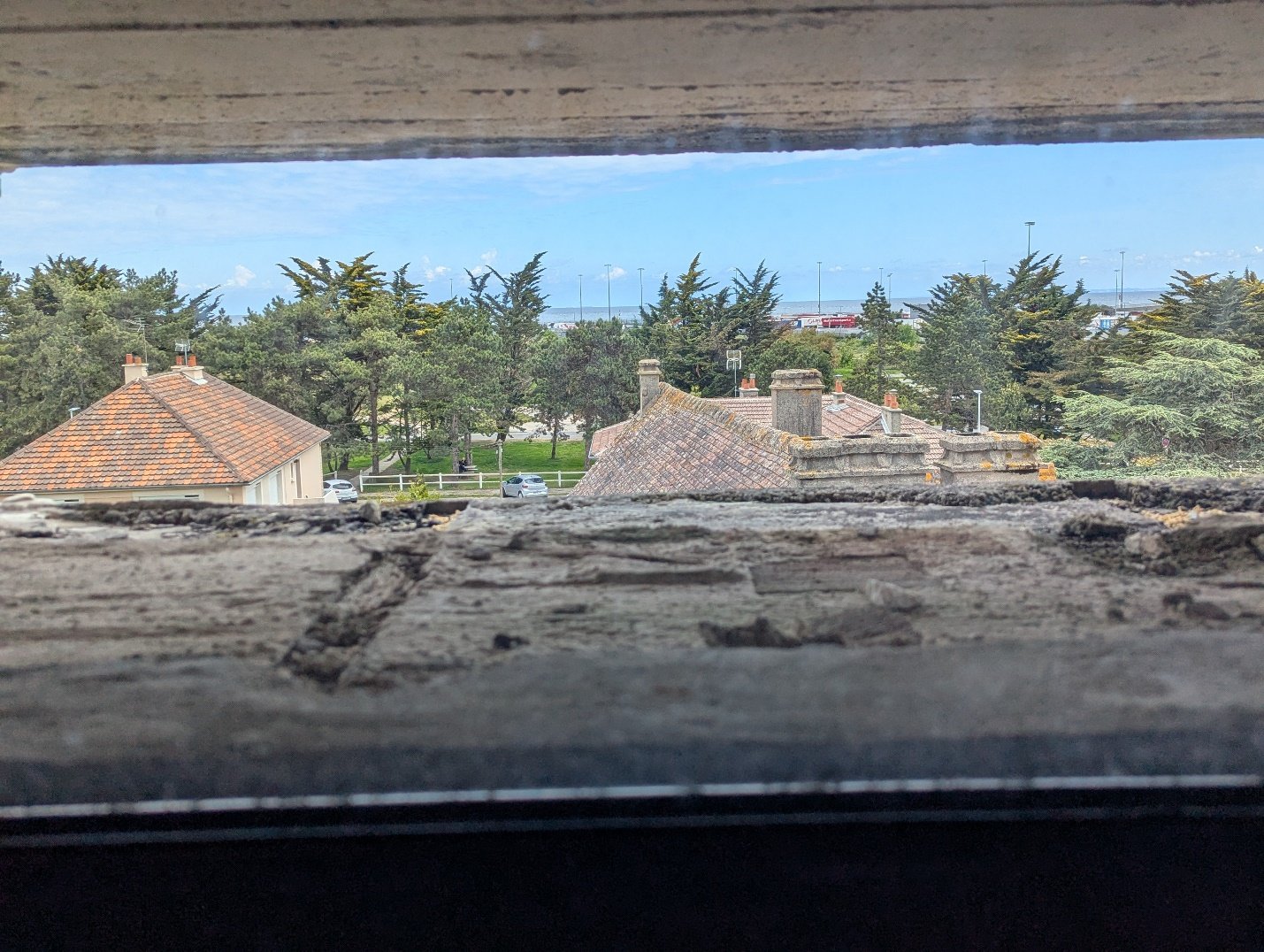
The bunker was taken intact late in the day on D-Day. Once the main door was breached, the Germans surrendered. The museum is on all 5 floors and shows the living quarters, communication areas and of course the observation deck. View from the observation slit.
The optical range finder is the highlight of the observation post.
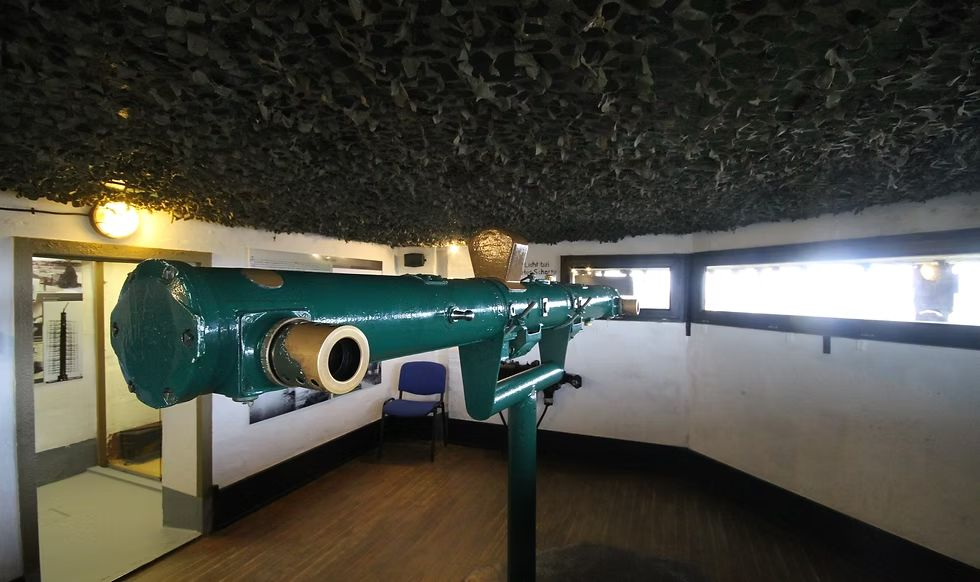
The optics of the rangefinder are very interesting. The operator looks through the eyepieces and adjusts the knobs until the images coincide and read the range off the scale. A 2m rangefinder would have an accuracy of 100 m at 10 km.
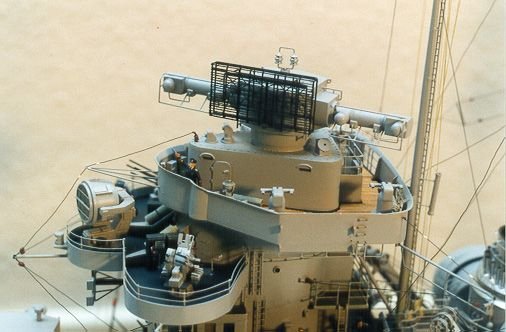
For comparison, the German battleship, the Bismarck, had a 10m rangefinder which had an accuracy of 20m at 10km, allowing the ship to have first shot kill capability. A most impressive optical instrument. A model of the integrated Radar/Rangefinder with a sailor as a reference.
Museum
There are a number of interesting artifacts outside the museum.
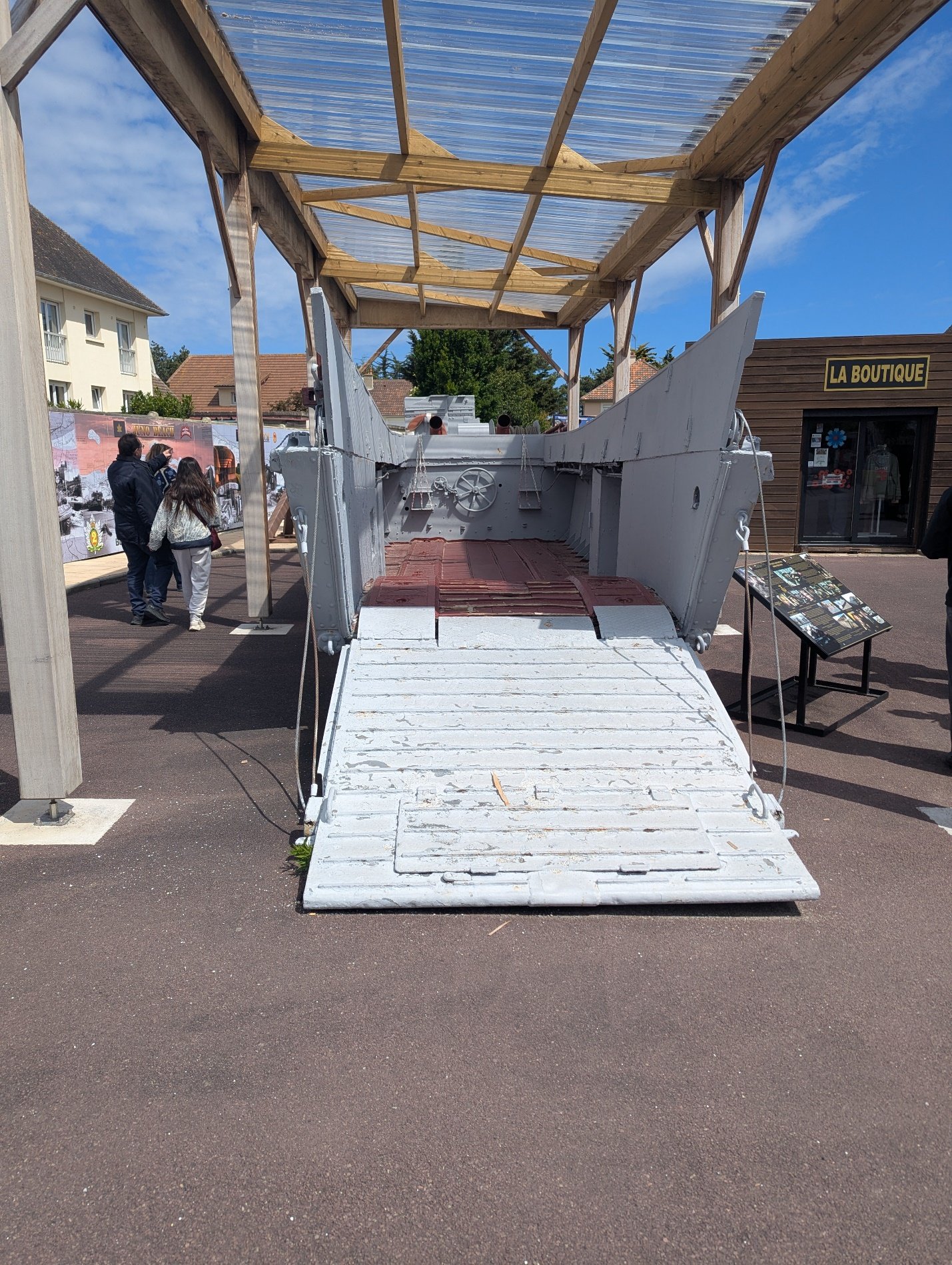
This landing craft was used in the filming of Saving Private Ryan and when the son (Jonathan) of Bob Orrell, who captured Le Grand Bunker in 1944, heard the boat was going to be destroyed he organized the salvage and shipment to the museum.
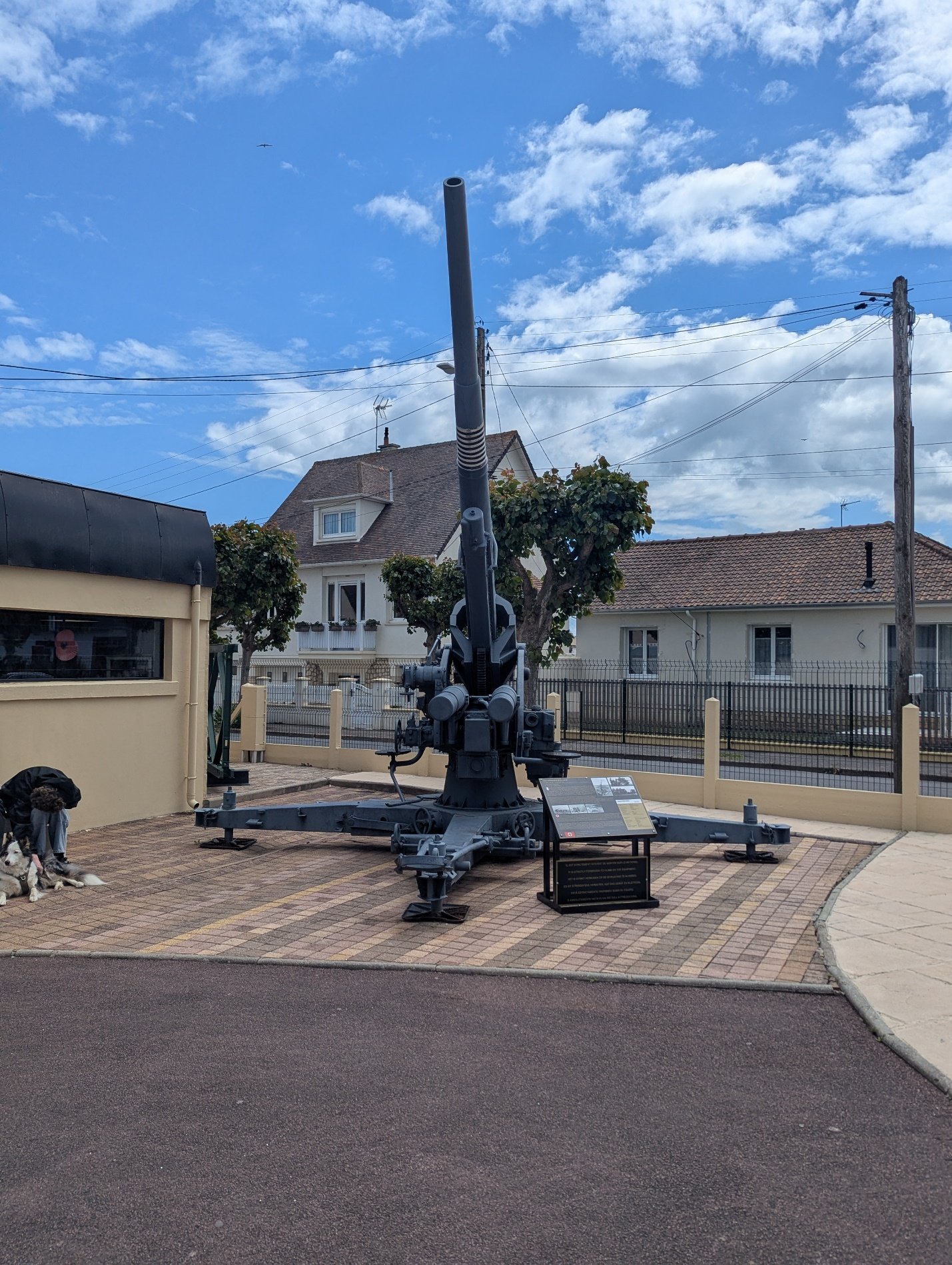
The 88mm FLAK-36 was designed as an anti-aircraft gun but was found to be so effective against armour that it was used extensively to create carnage for the Allied Armour in Normandy and beyond. The gun could fire 12-15 rounds per minute at ranges up to 16,000 yards. The same gun was later mounted on the Tiger I and II tanks.
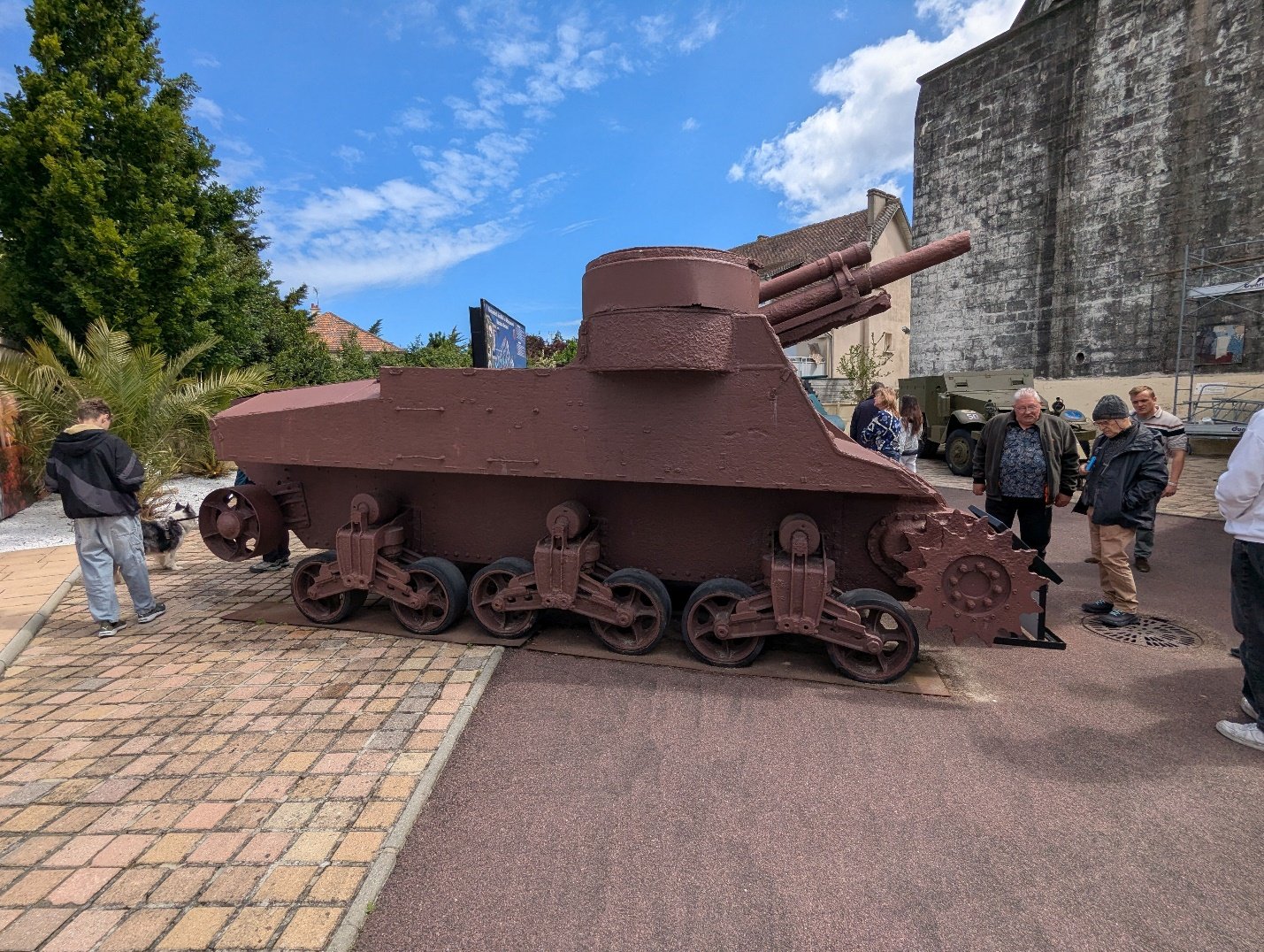
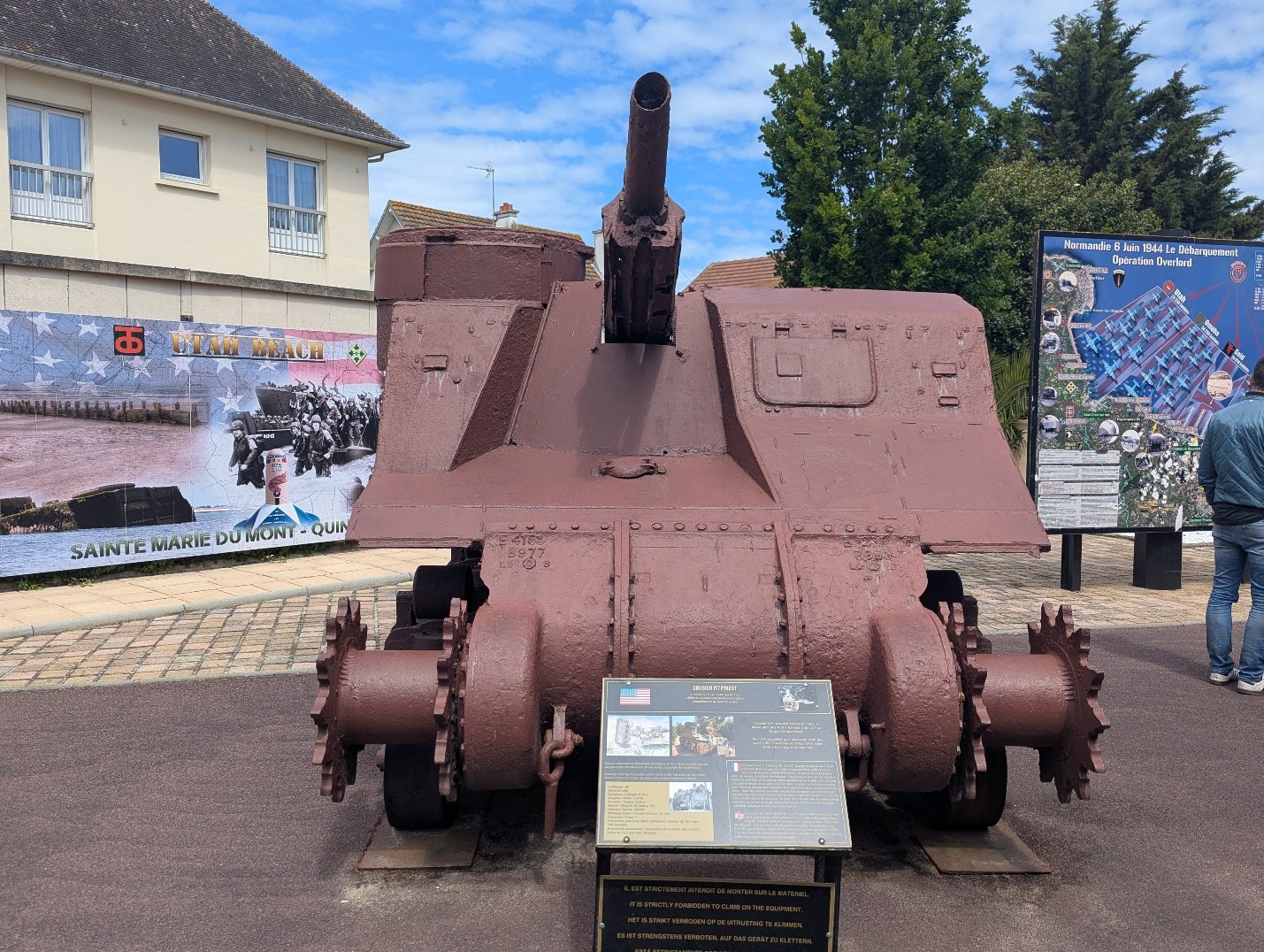
The M7 Priest 105mm Self-Propelled Artillery gun. At 0730 on D-Day the LCT of the 58th Armoured Field Artillery was hit by a shell on the way to Omaha Beach and sank. There were 4 Priests on board, and this one was retrieved in 1982. The Priests were also used by the Canadian Artillery and my buddy Jim Pickell’s dad landed on Juno Beach in a similar vehicle.
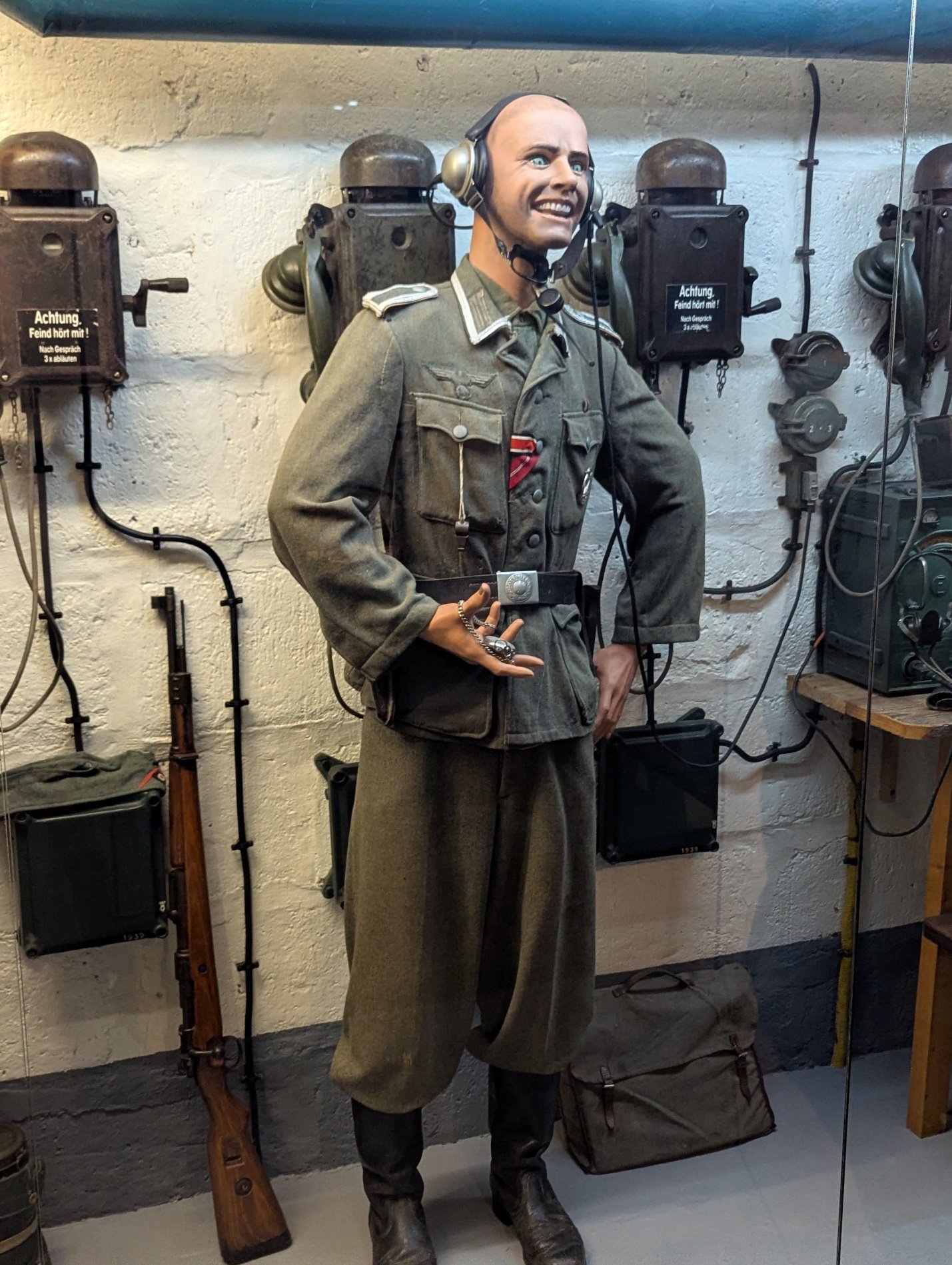
The museum showed the activities that took place on the multiple levels and included several enthusiastic mannequins.
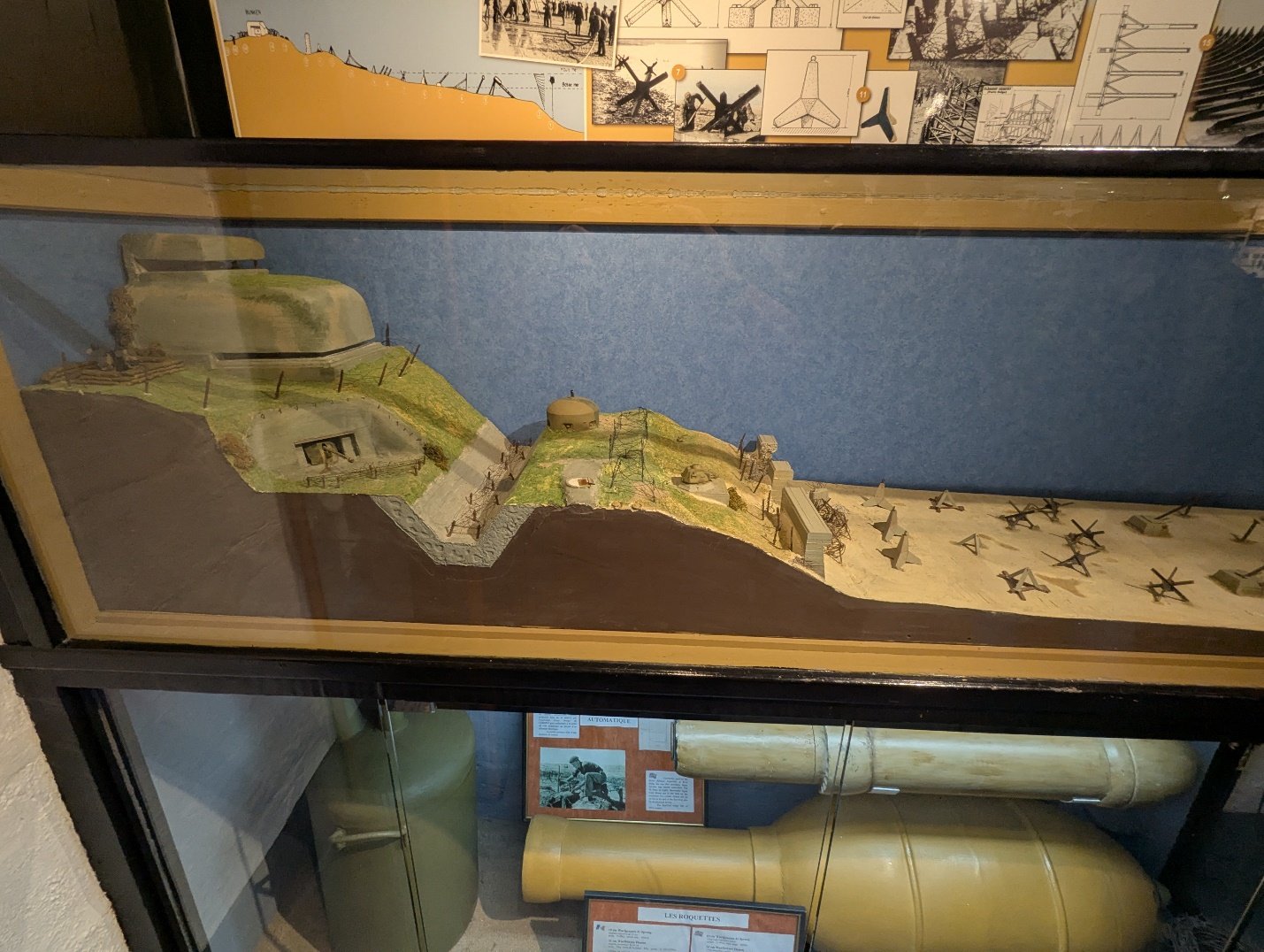
A cross-sectional model shows the defence in depth, with the beach obstacles, sea walls, anti-tank ditch, gun emplacements leading to the observation tower.
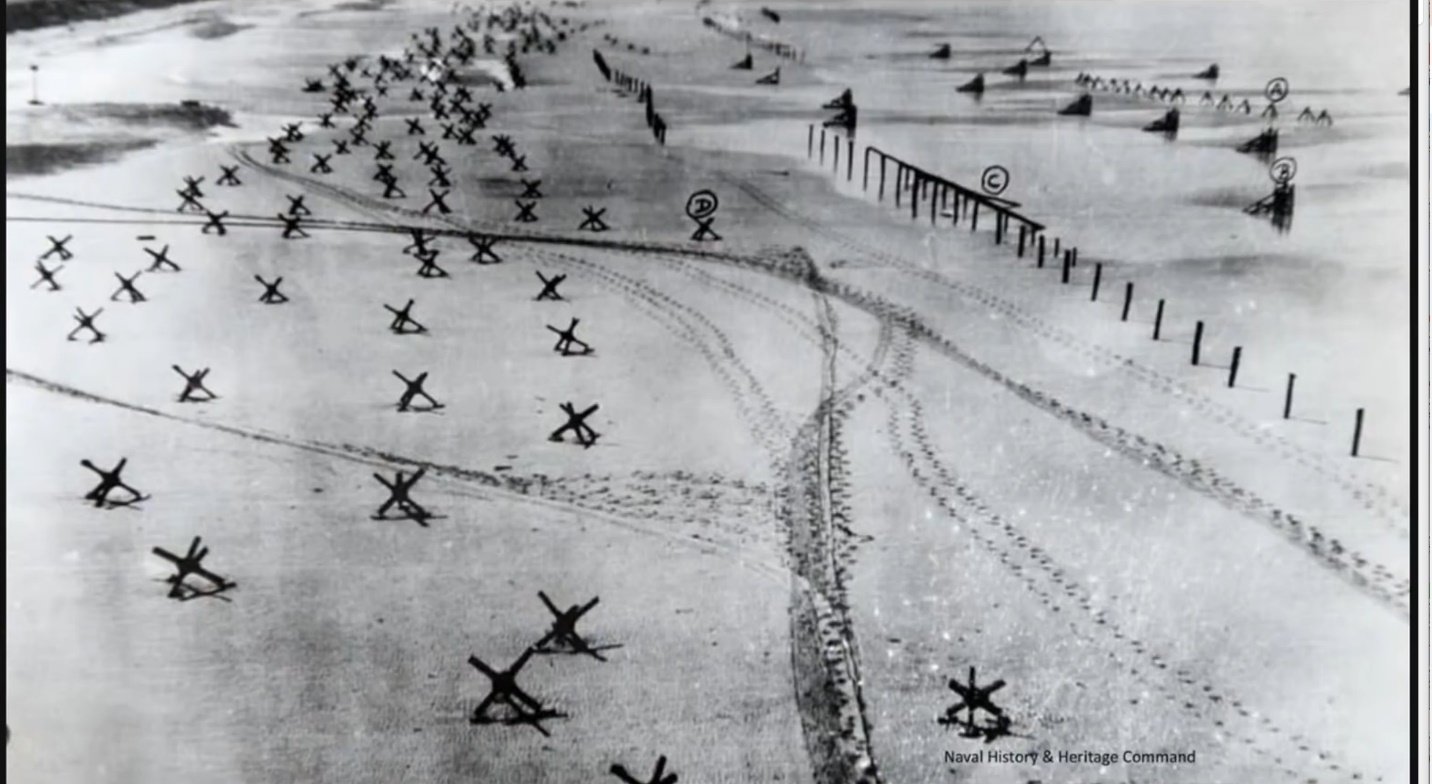
The Sword Beach obstacles shown a few days after D-Day. The Germans expected the Allies to attack at high tide, so the obstacles were placed to be under water at high tide. The Allies actually landed just before low tide, so the obstacles were visible.
The obstacles shown are:
Anti-tank Tetrahedrons
Belgian Gates
Log Ramps with mines to upset or blow up the landing craft
Czech Hedgehogs
Rows of mines and Barbed wire were installed just off the beach.
The Belgian Gates were a 3m wide, 2m high obstruction heavy enough to stop or deflect a tank or landing craft. They were often mined and used to channel vehicles and infantry into pre-sighted kill zones.
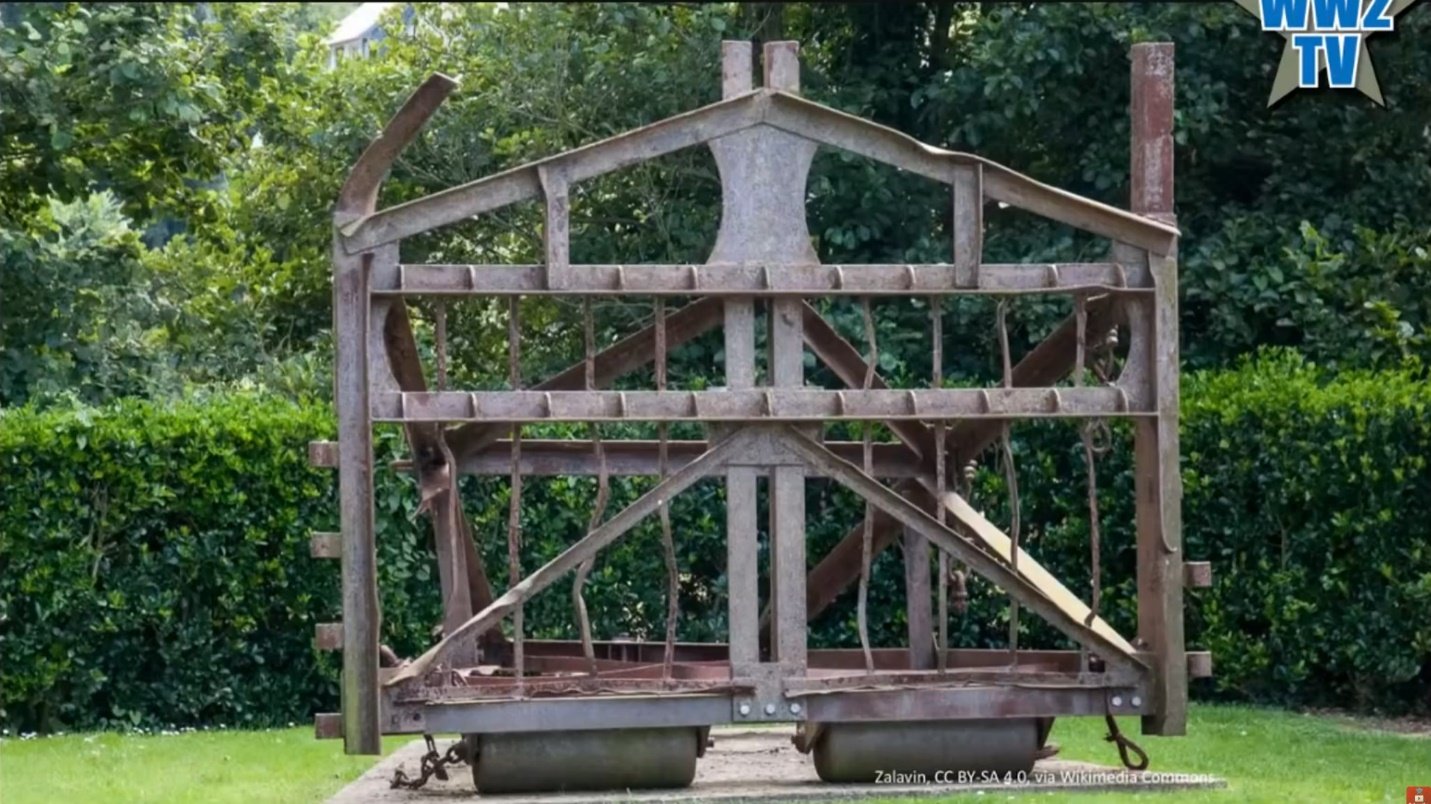
Armour on the Beach
DD Tanks
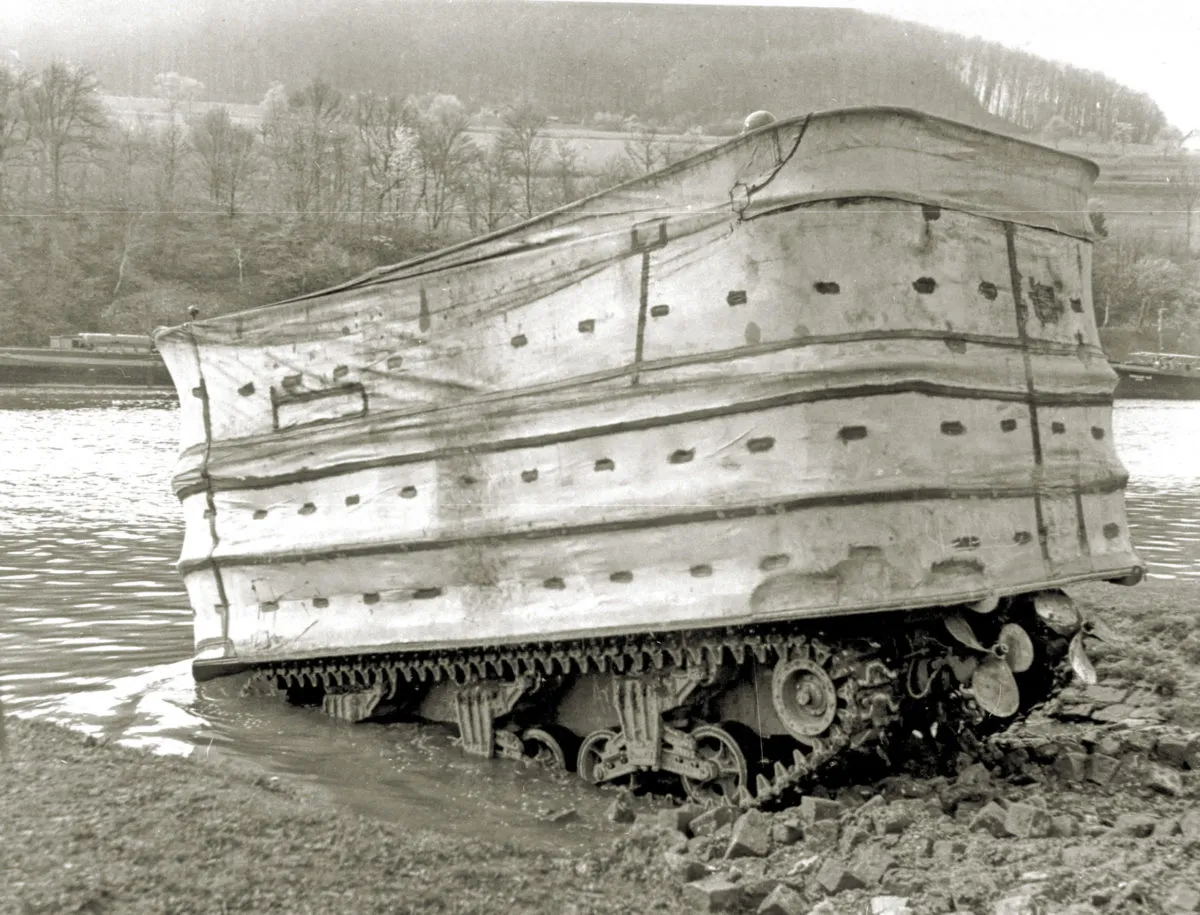
The Duplex Drive (DD) Sherman Tanks were used to ensure that some tanks made it ashore. There were concerns that bringing all of the armour directly to the beach on Landing Craft Tanks (LCT) was dangerous because if an LCT was hit 6 tanks would be lost at once. The DD tanks were a regular 30-ton Sherman with an inflatable screen to provide buoyancy, and two steerable propellers on the back to propel the tank through the water.
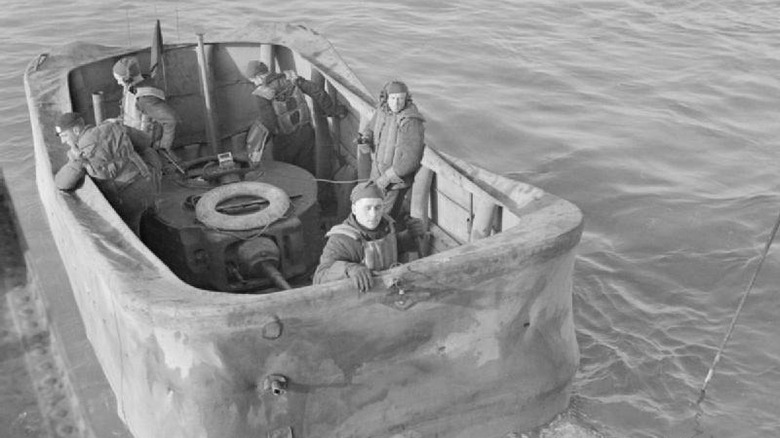
Demonstrating remarkable faith in Archimedes and his principles, the tank inflated the screen, drove off the LCT then headed to shore. The driver was inside and the rest of the crew were outside just in case Archimedes had made it all up, the screen tore, or a wave swamped the tank. The tanks moved about four miles per hour and had about 3 feet of clearance in calm seas.
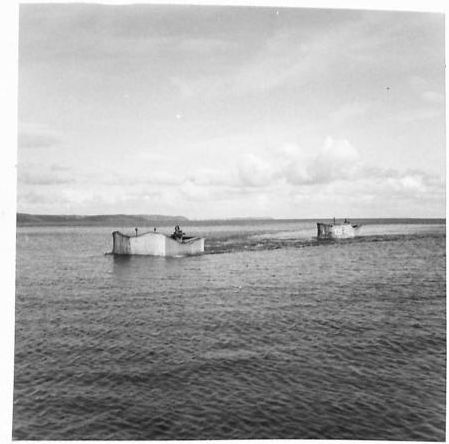
It was anything but calm, so the ships released the tanks around 4,000 yards from shore rather than the prescribed 6,000 yards. Only 3 tanks sank on the way in, a remarkable achievement. Once the tanks landed it was a different story as most of the initial wave were destroyed before making it off the beach. This shows the screen fully inflated, and the two propellers in place. The propellers were driven from a track cog, so the tracks were turning the whole time the tank was in the water.
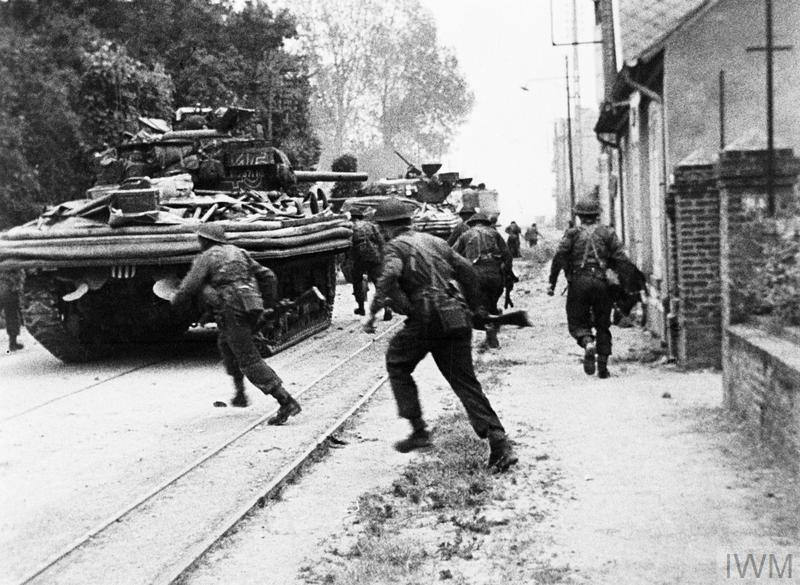
Once the tank made the beach, they would deflate the skirt and immediately start firing. A DD Tank inland supporting the infantry. Note the skirt in the deflated position.
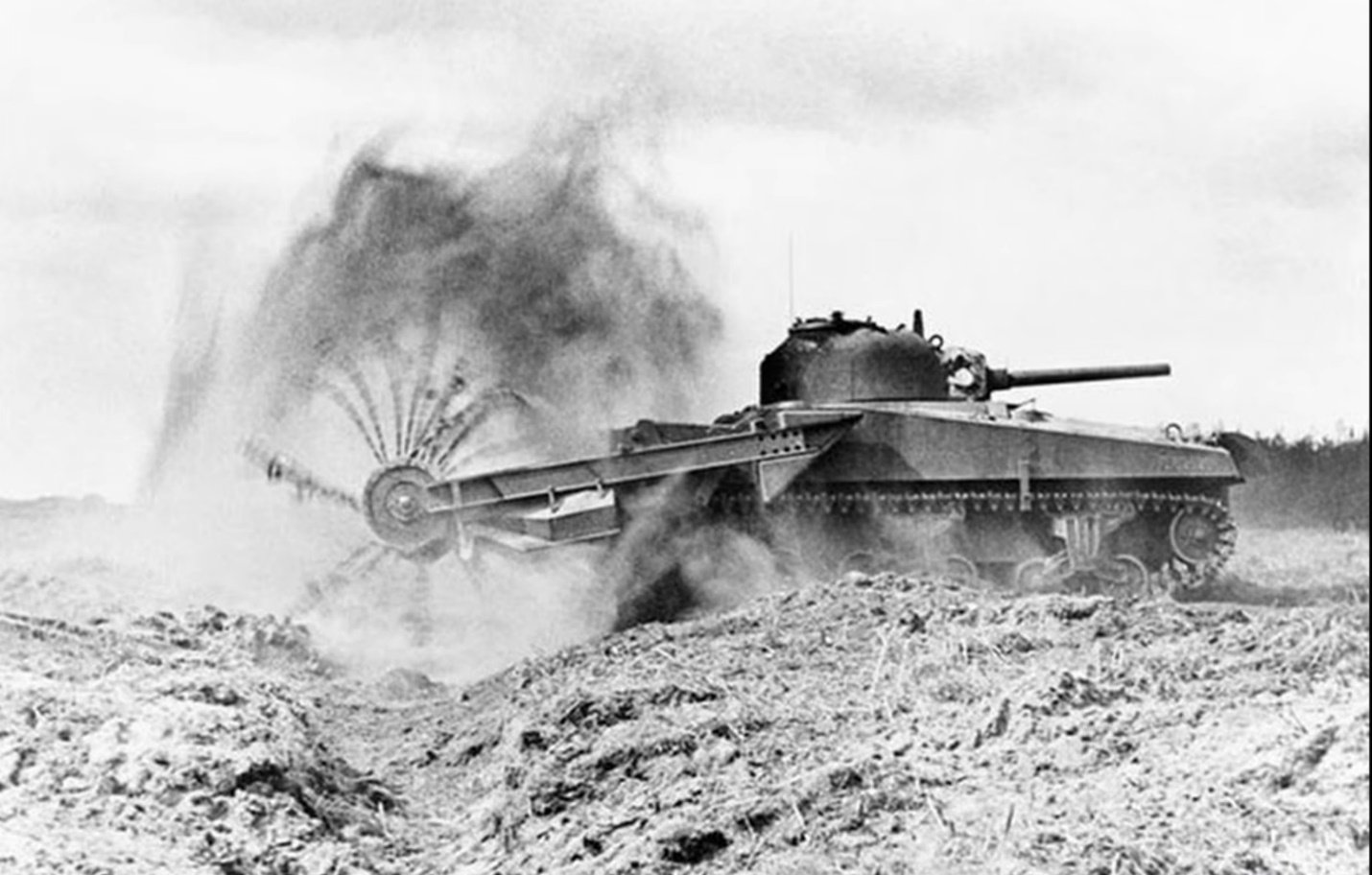
Flail Tanks
Another unique tank variant that was critical for clearing a path through the mine fields was the Flail tank. Again, it was a standard Sherman tank with a series of spinning chains that set off anti-tank mines to clear a path off of the beach. They usually worked in tandem, like snowplows on a four-lane highway, beating a path two tanks wide at a one mile per hour clip. It must have been exciting to operate.
Armoured Vehicle Royal Engineers (AVRE)
Carpet Layer
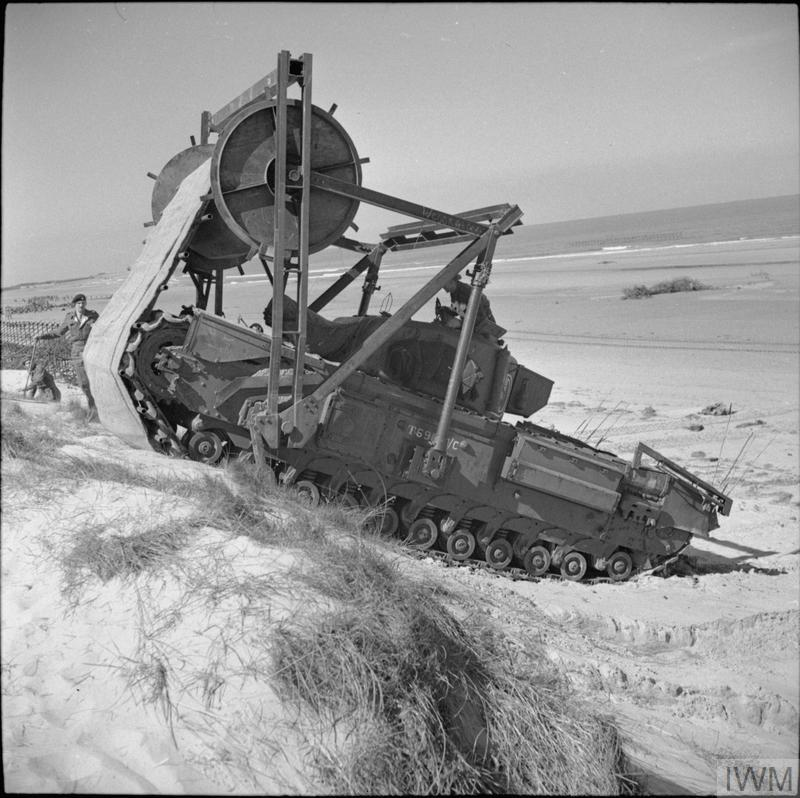
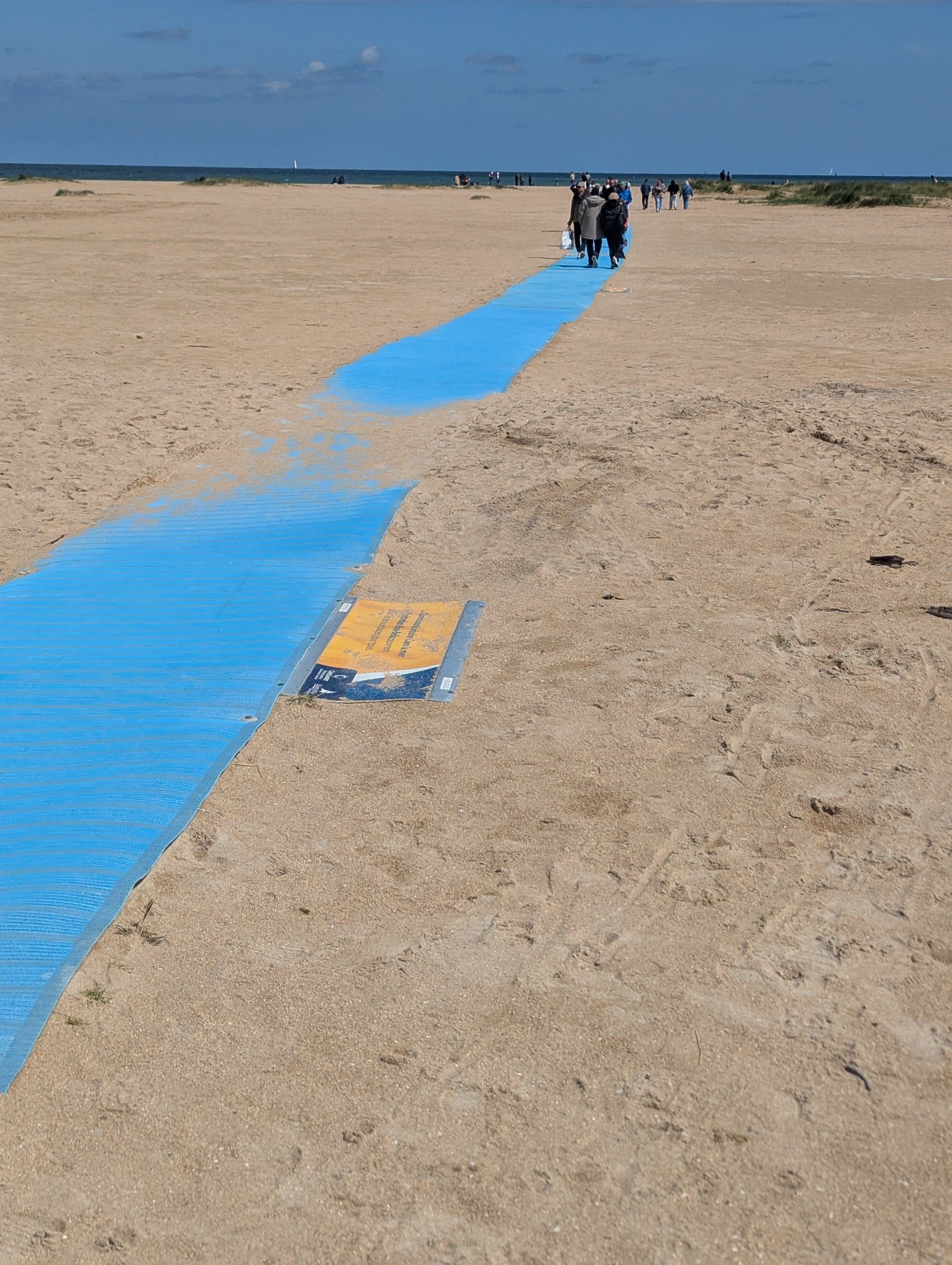
The AVRE Tanks were specialist tanks built on the British Churchill chassis. The carpet layer tank had a giant bobbin and laid carpet to allow vehicles to cross soft beach sand.
The tradition remains on Sword Beach, but now it is used to get strollers, wagons and wheelchairs down to the shore.
Fascines
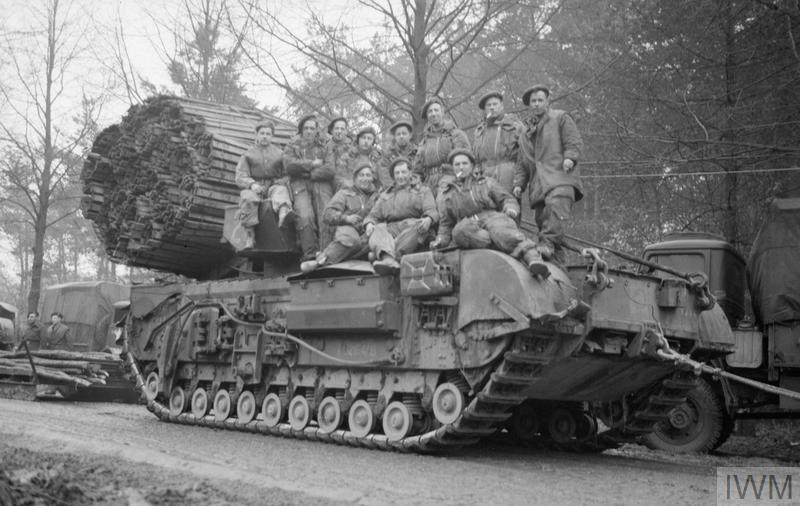
The AVRE tanks also often carried Fascines, large bundles of wood that were dumped into an anti-tank ditch to allow the vehicle to cross.
Crocodile
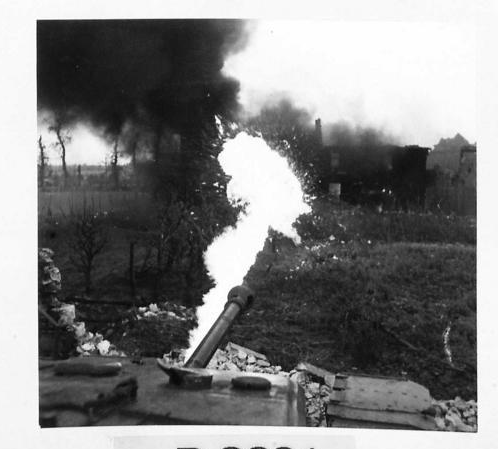
The Crocodile tank was a flame thrower that could project its flame more than 150 yards and was very useful for convincing troops to abandon their bunkers.
Petard Spigot Mortar
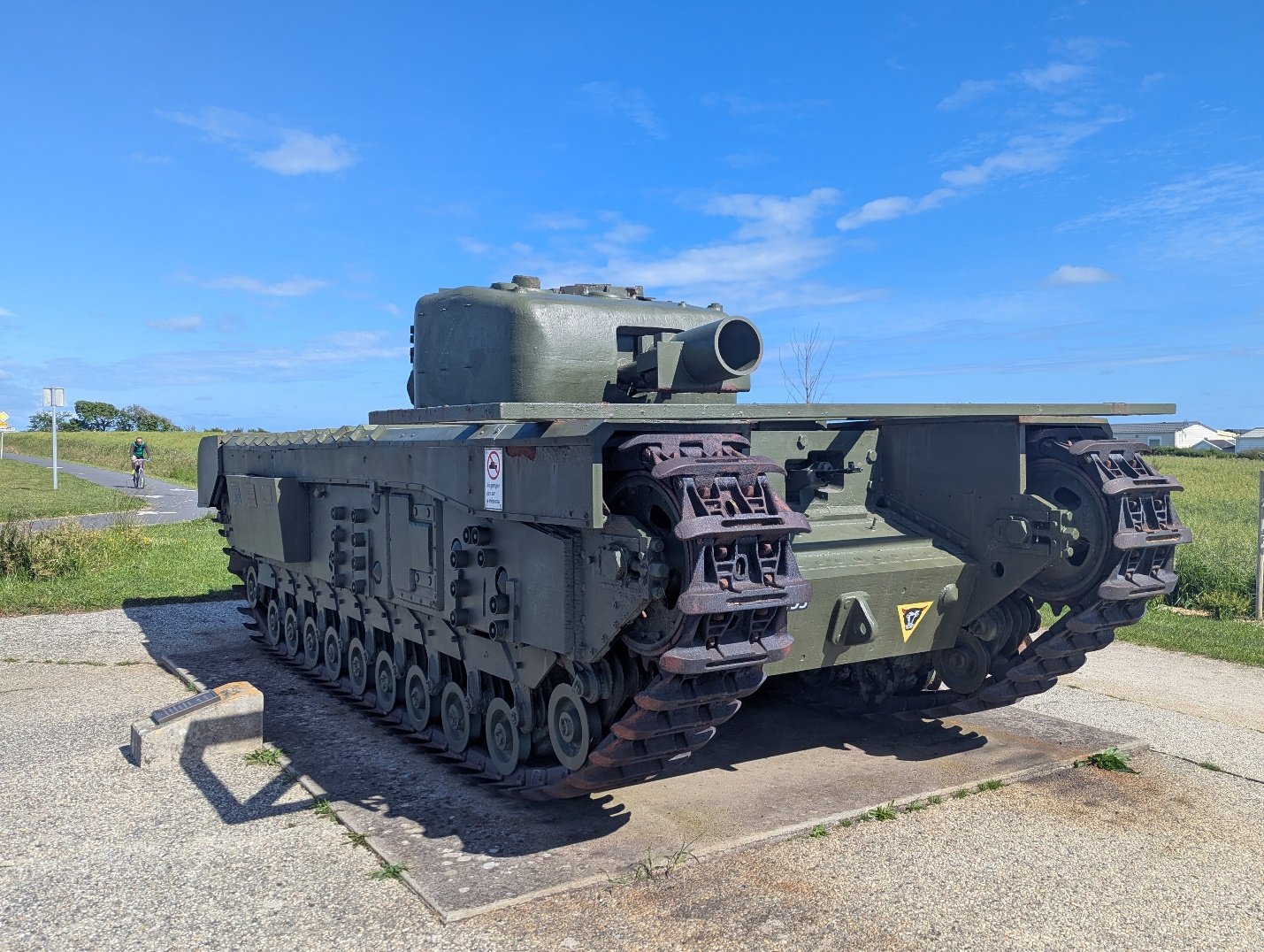
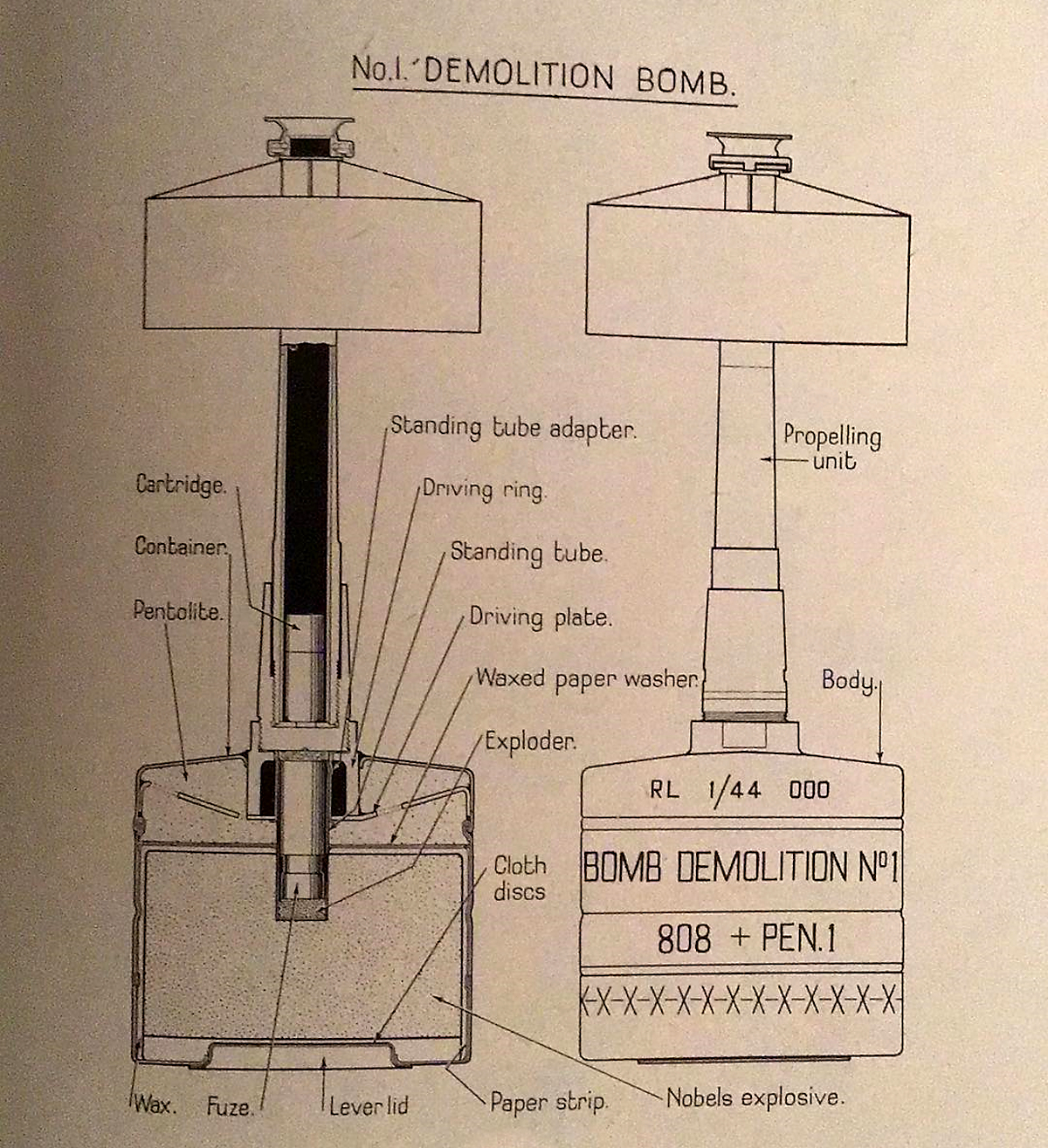
The Petard Spigot Mortar AVRE Tank is the one most often mounted as a memorial. The 240 mm mortar, nicknamed the flying dustbin, launched a 40-pound demolition charge a maximum of 80 yards and was used to blast apart sea walls, concrete bunkers or steel obstacles. The tank was heavily armoured as it had to get very close to its target to be effective.
The round had a small propelling charge and a large warhead.
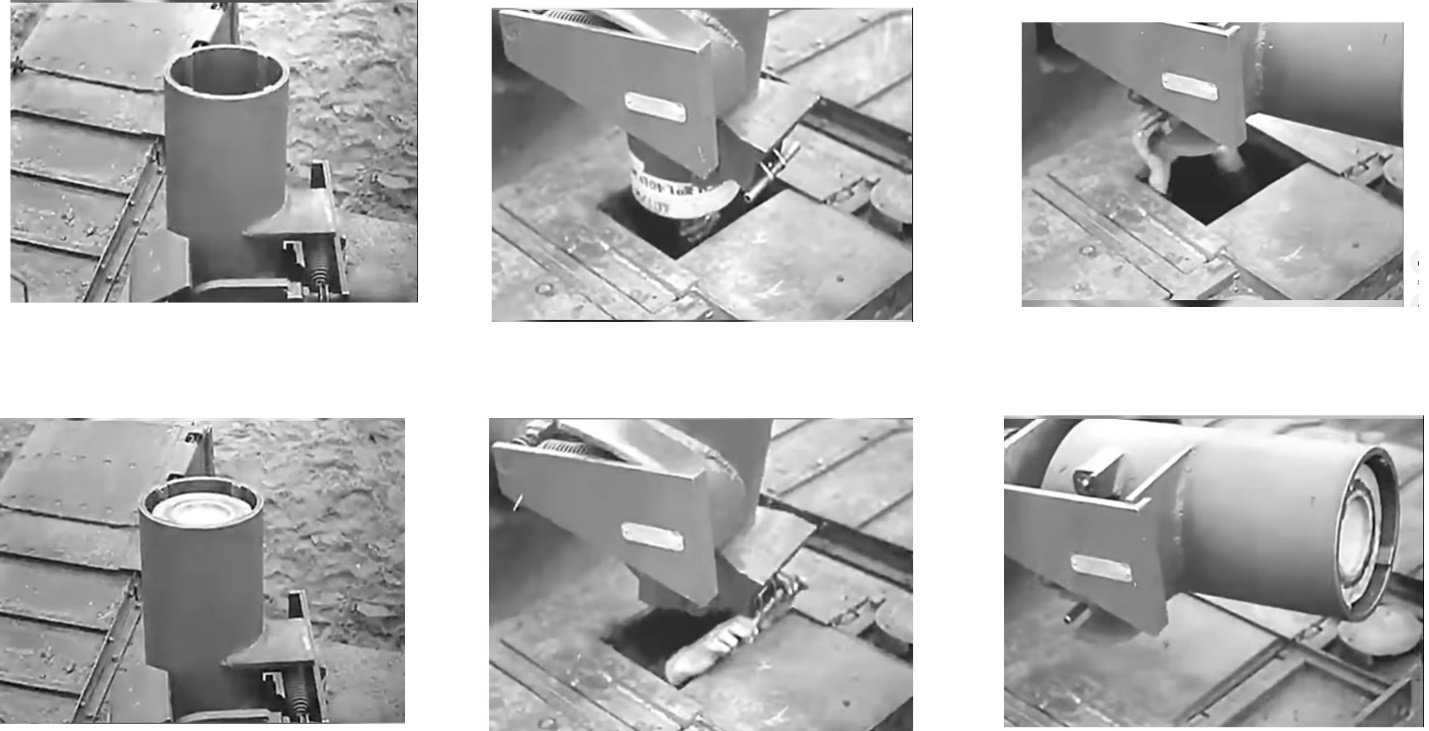
This is a fascinating weapon. because it was a spigot mortar, it couldn’t be reloaded from inside the turret. The co-driver had to slide open a special hatch in the hull floor, break open the mortar by tilting the barrel up, and slide a new round onto the spigot from the inside, tilt the barrel back down, ready to fire. This method left them momentarily vulnerable but was vastly safer than loading from the outside.
Memorials
Third Division
There are a great many memorials in the beach area. Memorial to the 3rd Division who landed on D-Day.
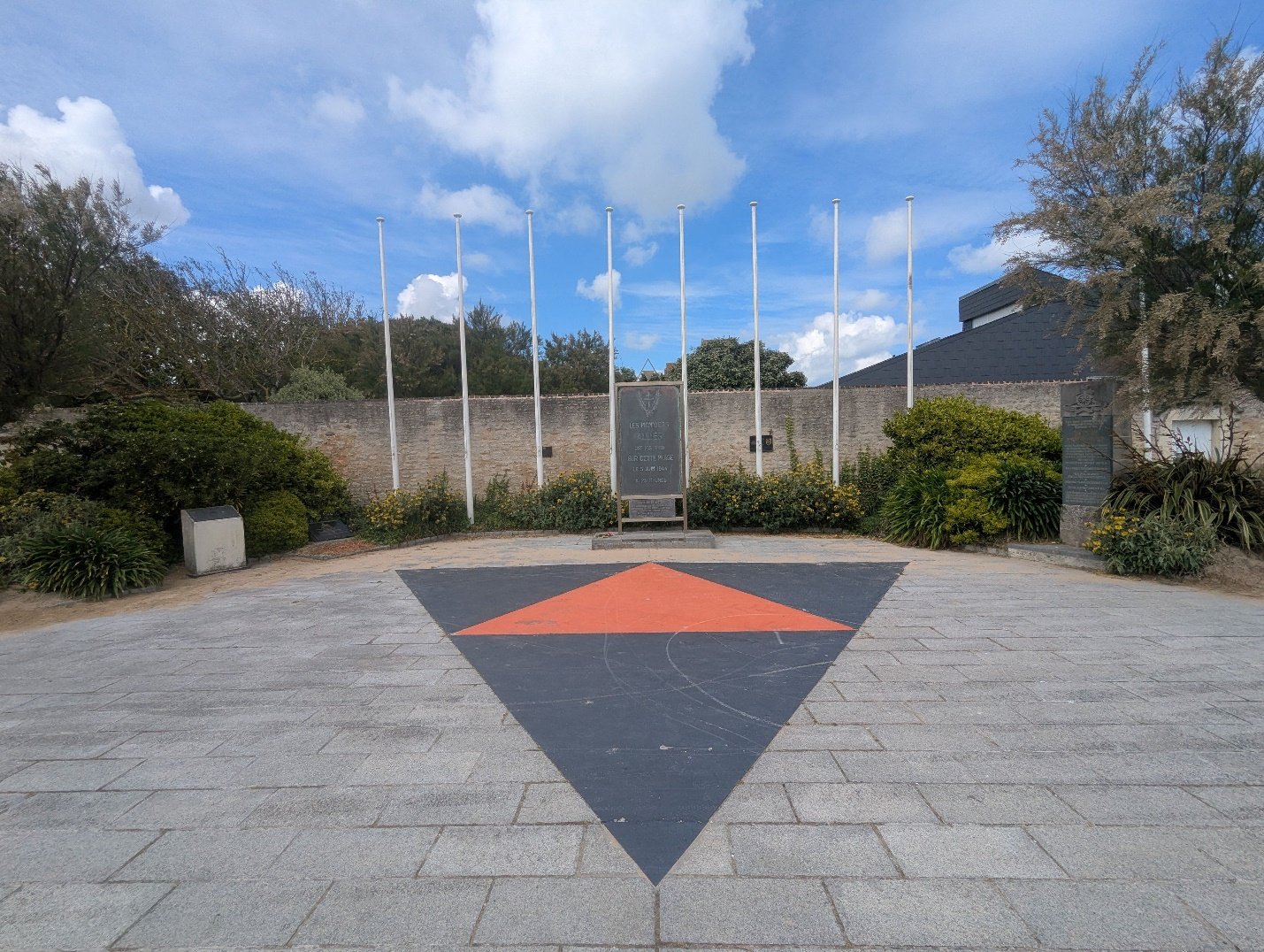
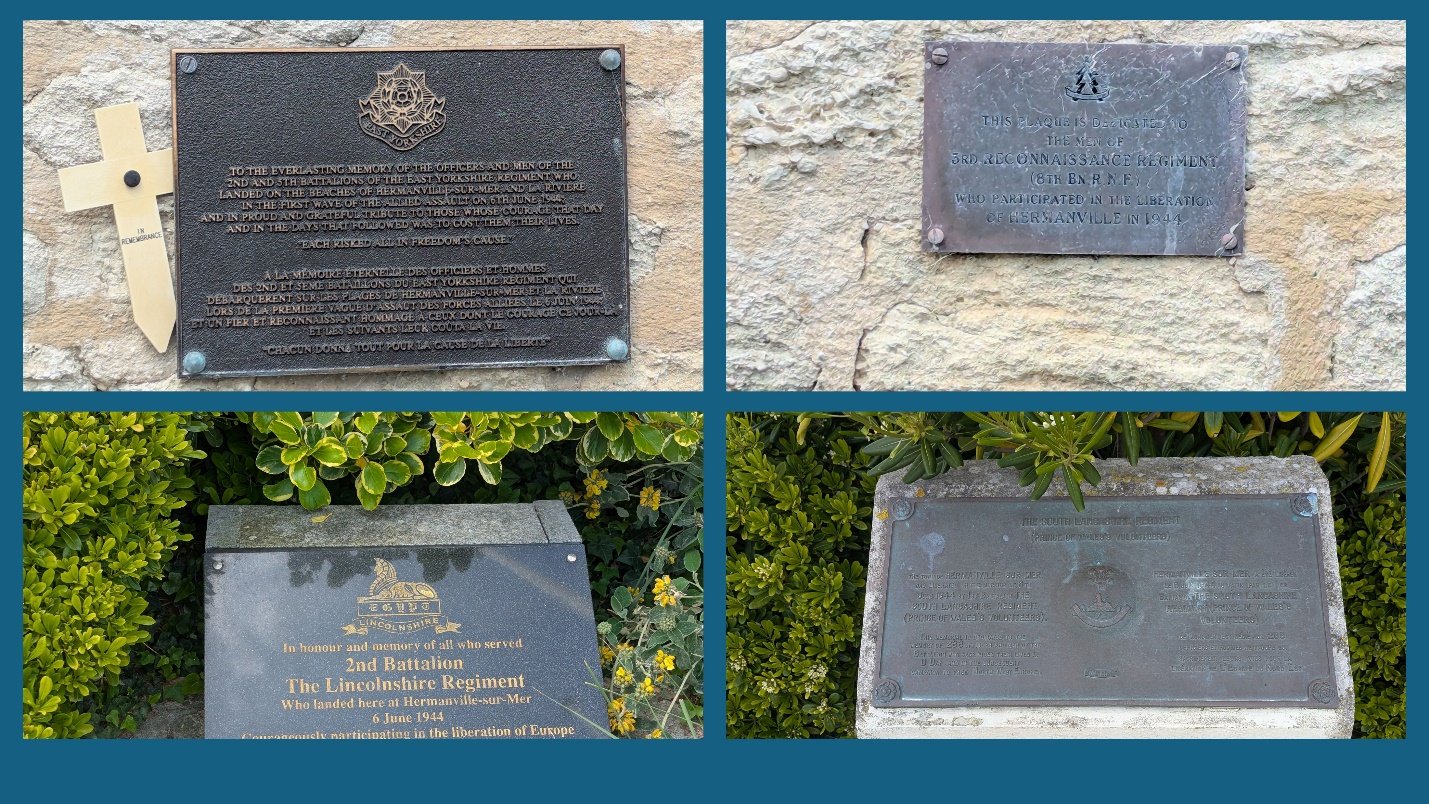
Grouped around the memorial are several unit plaques to the East Yorkshires, 3rd Reconnaissance Regiment, The Lincolnshires and the South Lancashire Regiment.
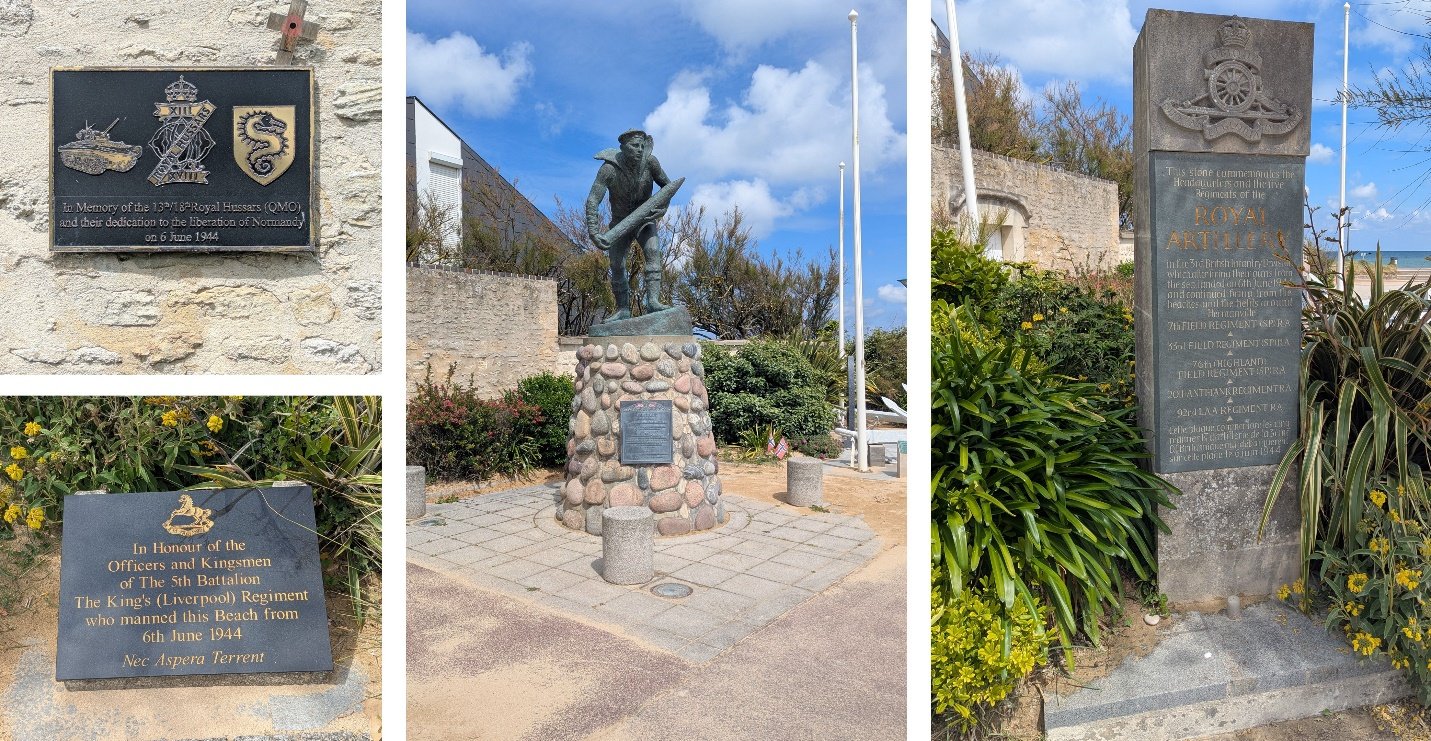
More plaques to the 13/18th Hussars Tank Regiment, the King’s (Liverpool) Regiment, Memorial to the Norwegian sailors lost on D-Day and the Royal Artillery Regiments who landed on D-Day. Seeing all the unit plaques reminds me of the lack of memorials for the Italian Campaign that we noted earlier this spring.
French Commandos
There were 177 French Commandos who landed with the British Commandos on D-Day. There are multiple memorials to the only French soldiers who participated in the landings. The major success for the Commandos was to capture the Casino that had been turned into a strong point. One of the Commandos is reported to have said:
It is my pleasure to capture the casino as I have lost several fortunes there.
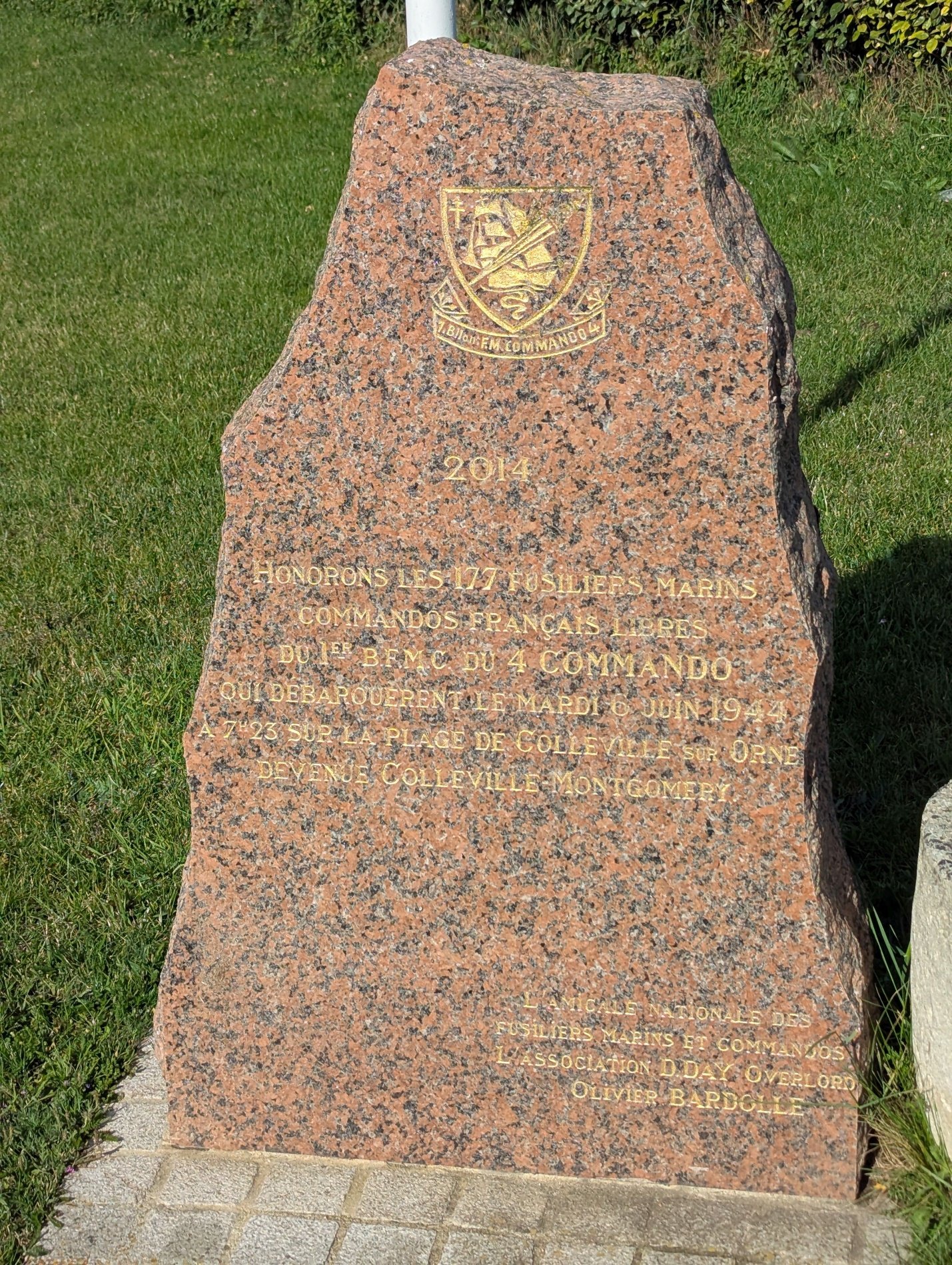
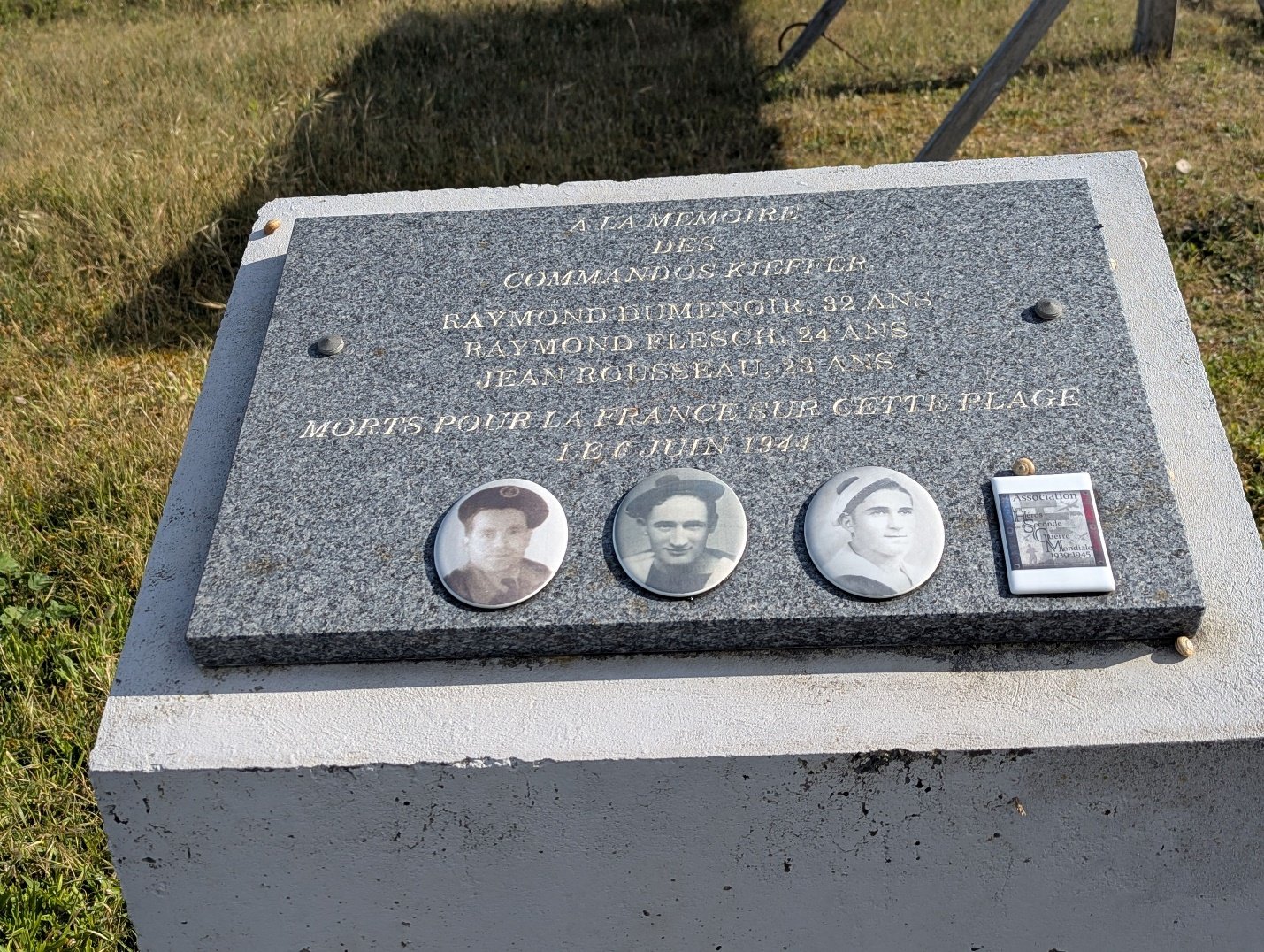
10 French Commandos were killed on D-Day. This plaque is located where 3 of them were killed during the beach landings.
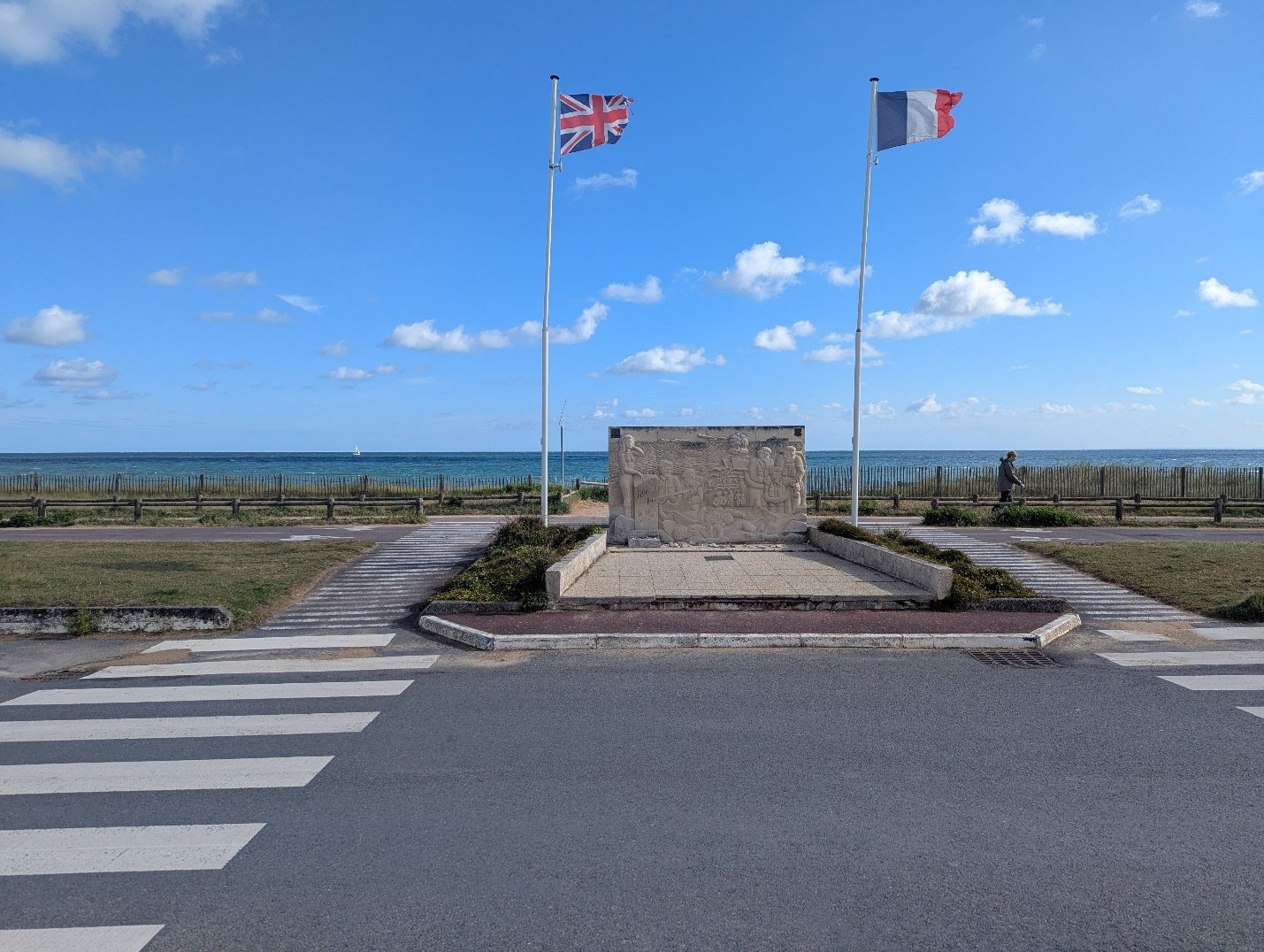
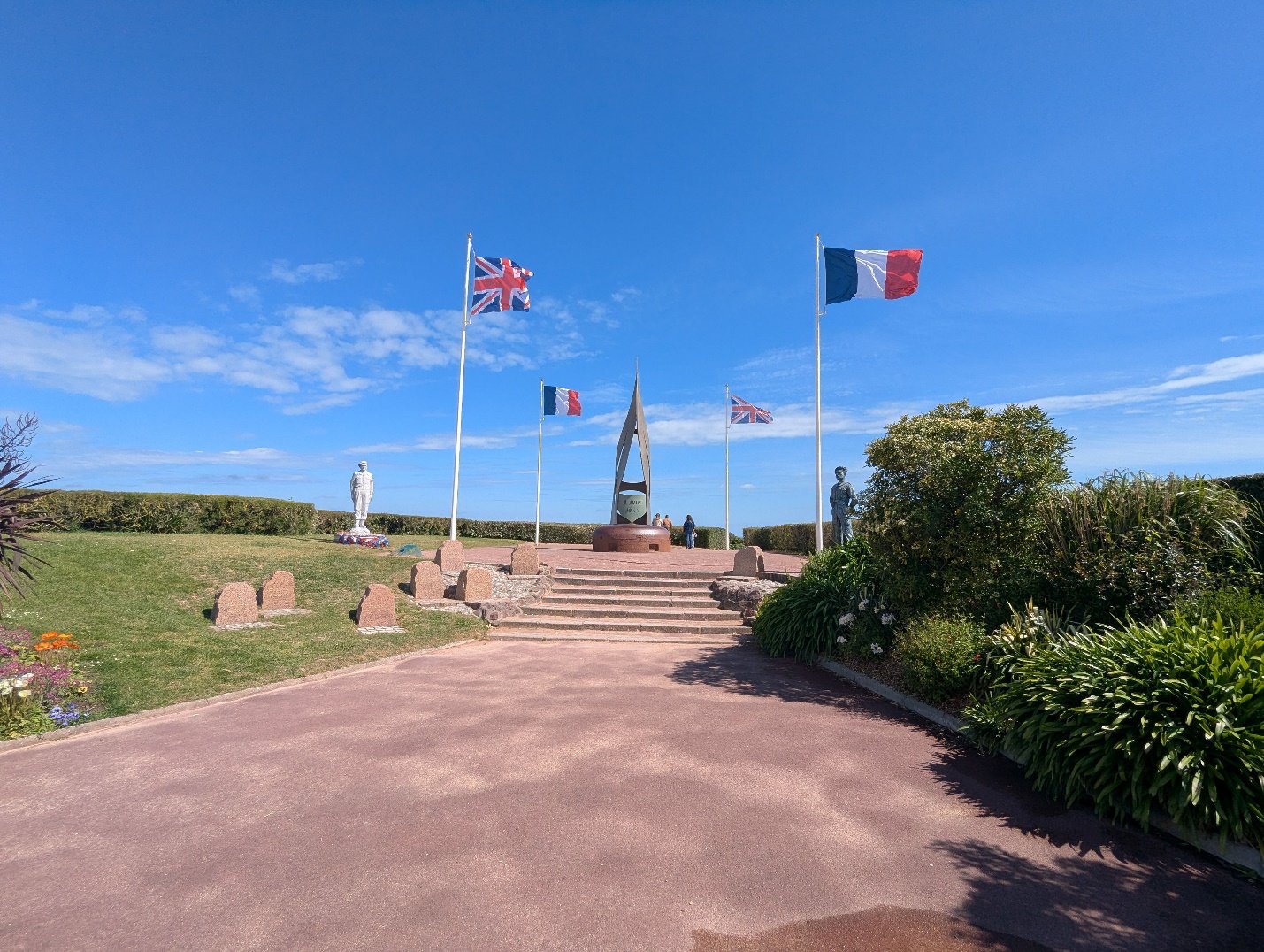
There is a major memorial to the French Commandos, called La Flamme, built atop a bunker at Strong Point (SP)10. The metal gun emplacement holds up the flame; the stones honour the 10 commandos who died. The white statue is of Col Keiffer, commander of the French unit, and the statue on the right is of Brigadier Lord Lovat, the British Commander.
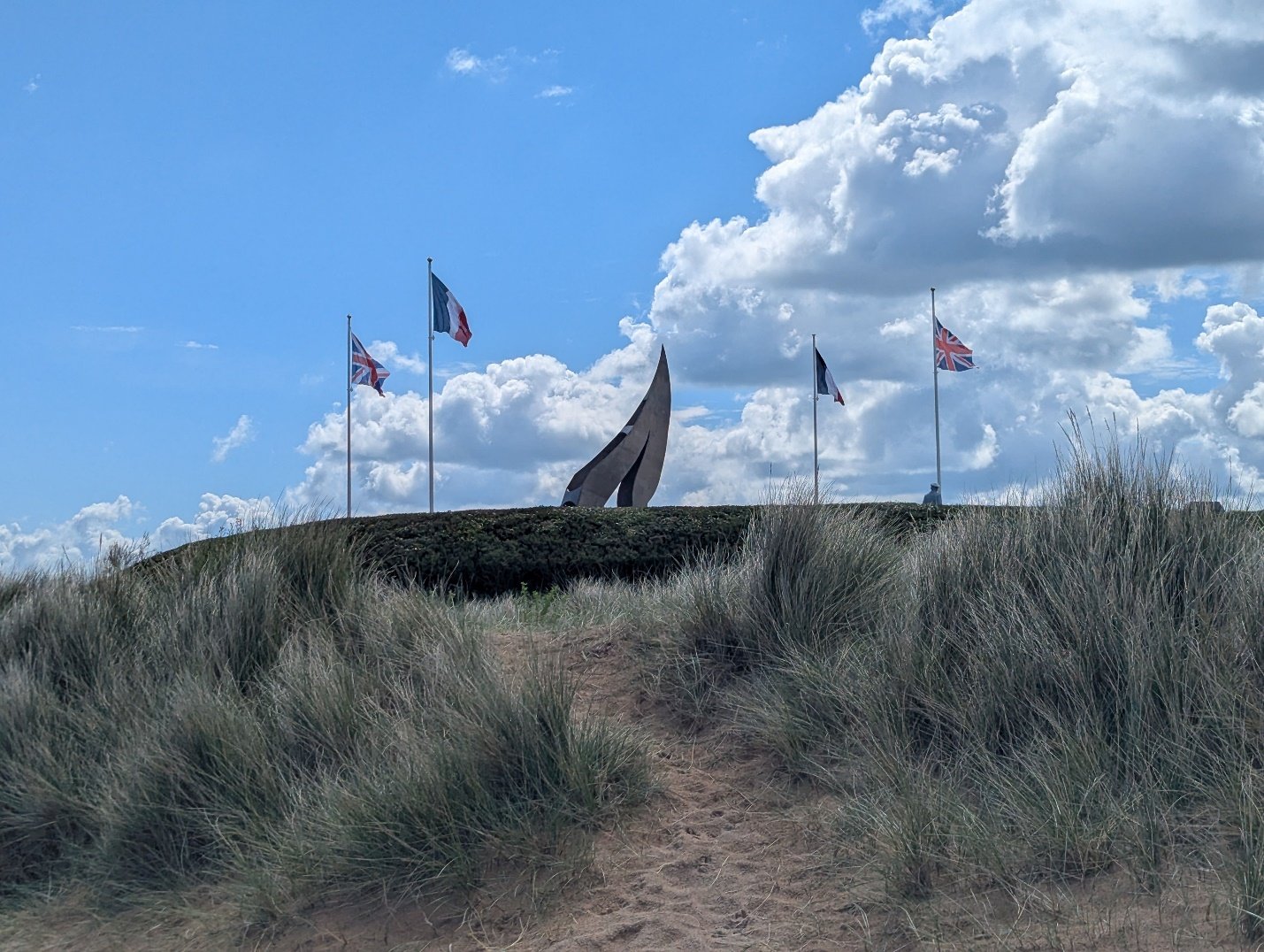
La Flamme is visible for a long way down the beach.
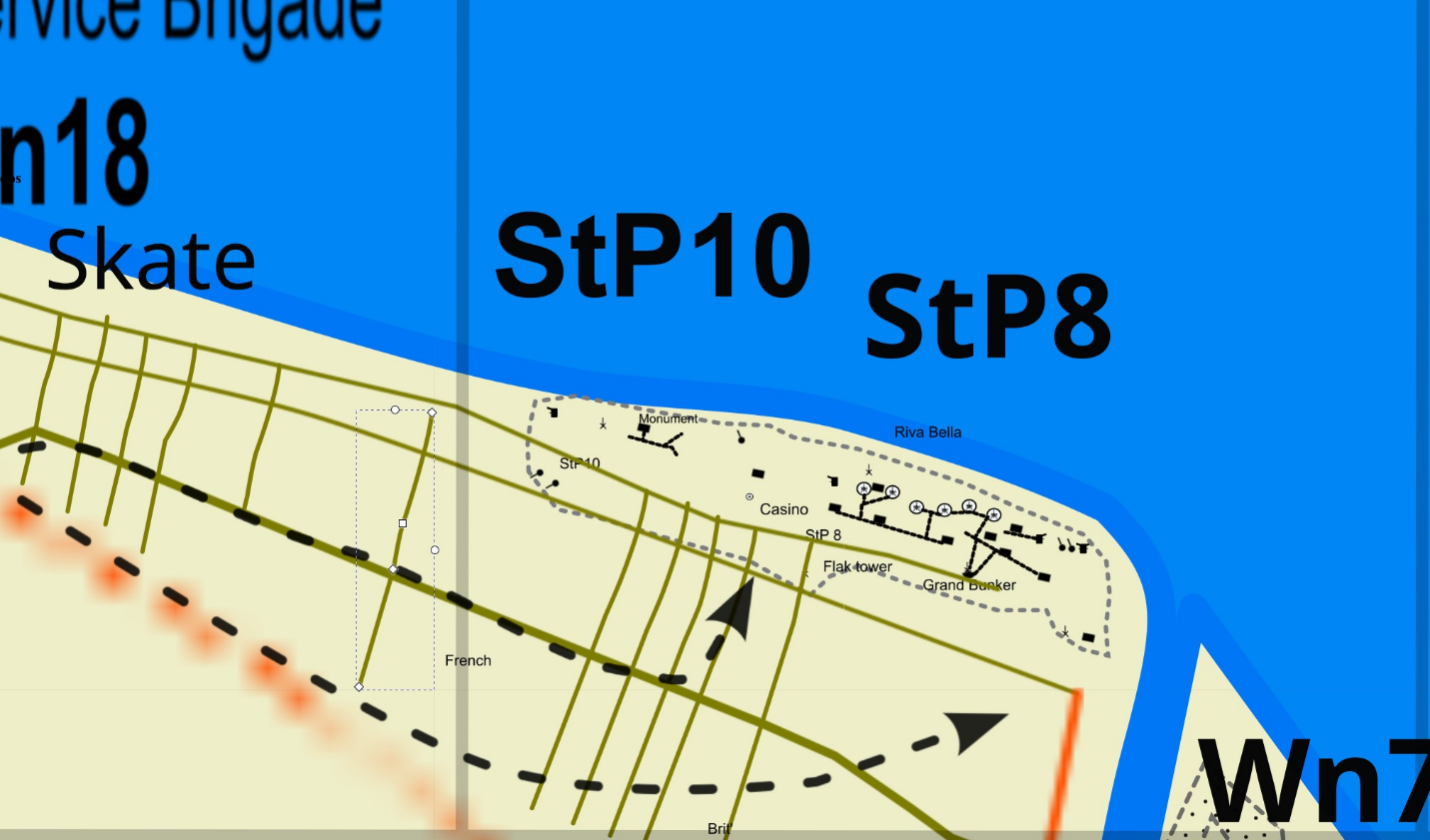
The site of the monument is SP10. The Casino the French Commandos captured is nearby as is the Flak Tower and Grand Bunker.
D-Day Memorial
Close to the port of Ouistreham, the beach is very wide and there is an impressive D-Day memorial which commemorates the 28,668 soldiers who landed on Sword Beach, the 1,304 casualties (other sources report 630), the 2,200 civilians killed and of course the 177 French Commandos. Surrounding the memorial there are 177 trees planted to honour the Commandos.
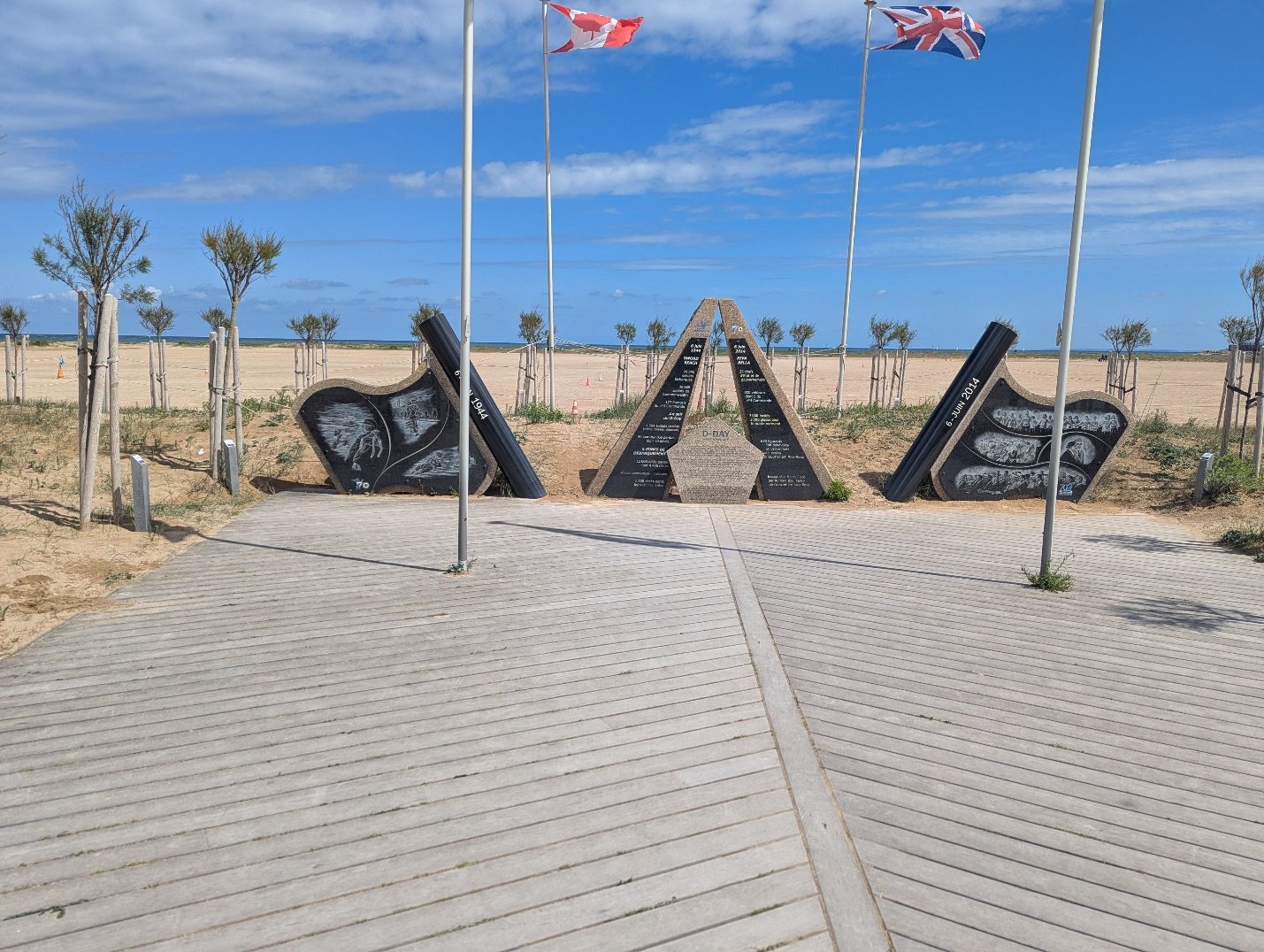
I like that this memorial and La Flamme are both on the beach right next to a number of recreation areas. The past and the present co-exist and I think more people see the memorials on their way to somewhere else than would otherwise.
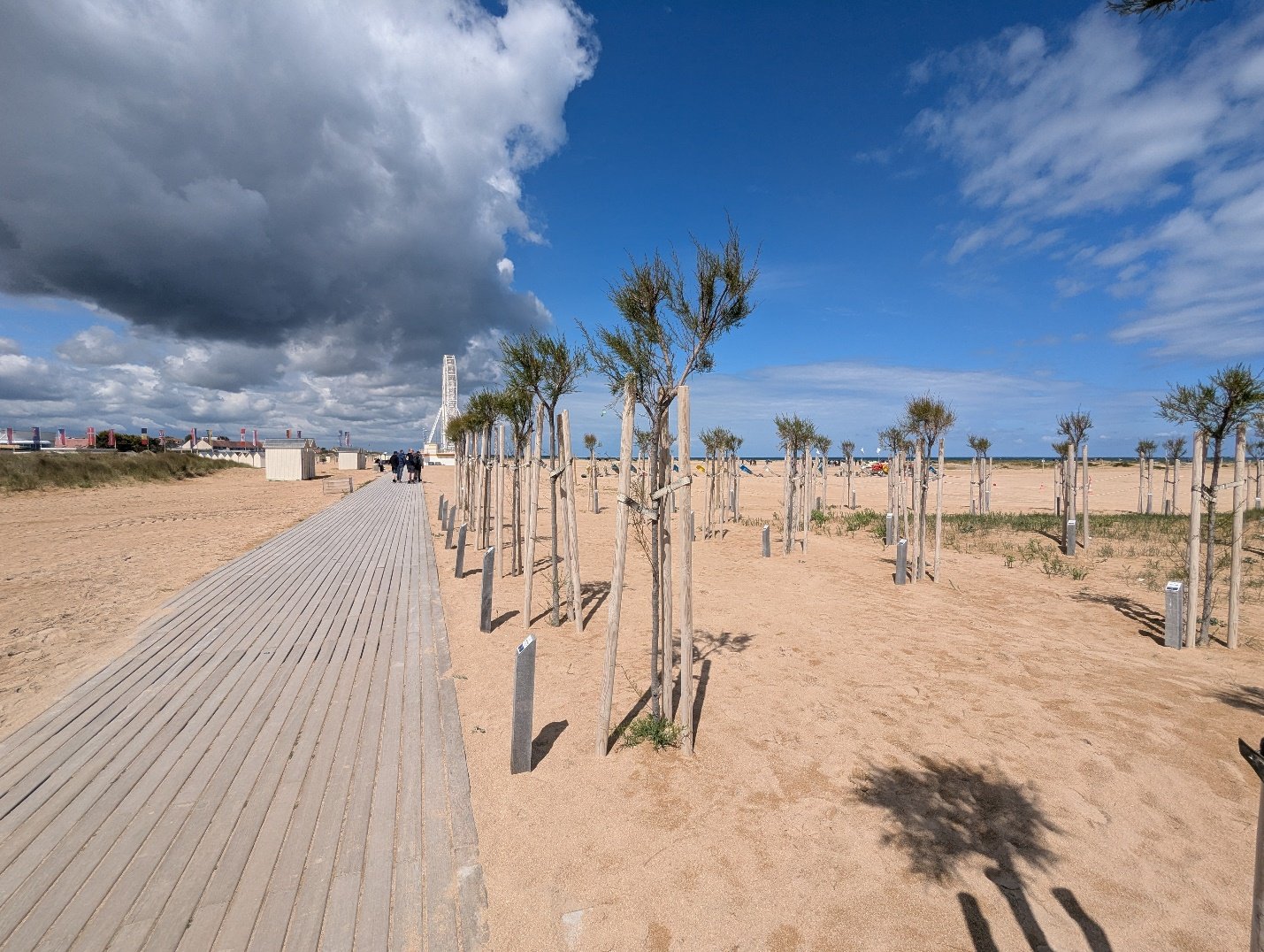
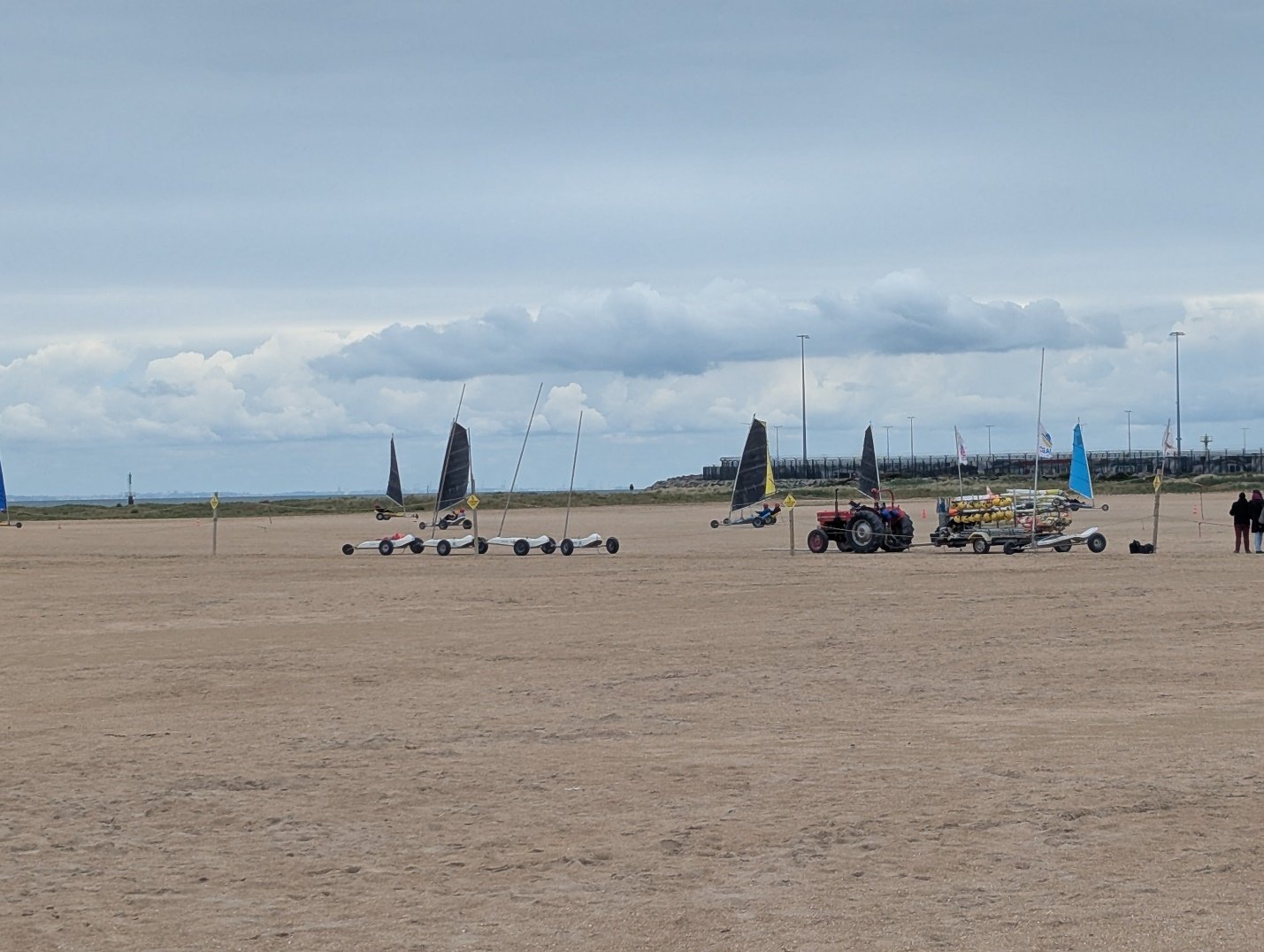
In addition to the giant Ferris wheel, there is a riding centre, go cart track, skateboard track and a large sand racer park.
Piper Millin
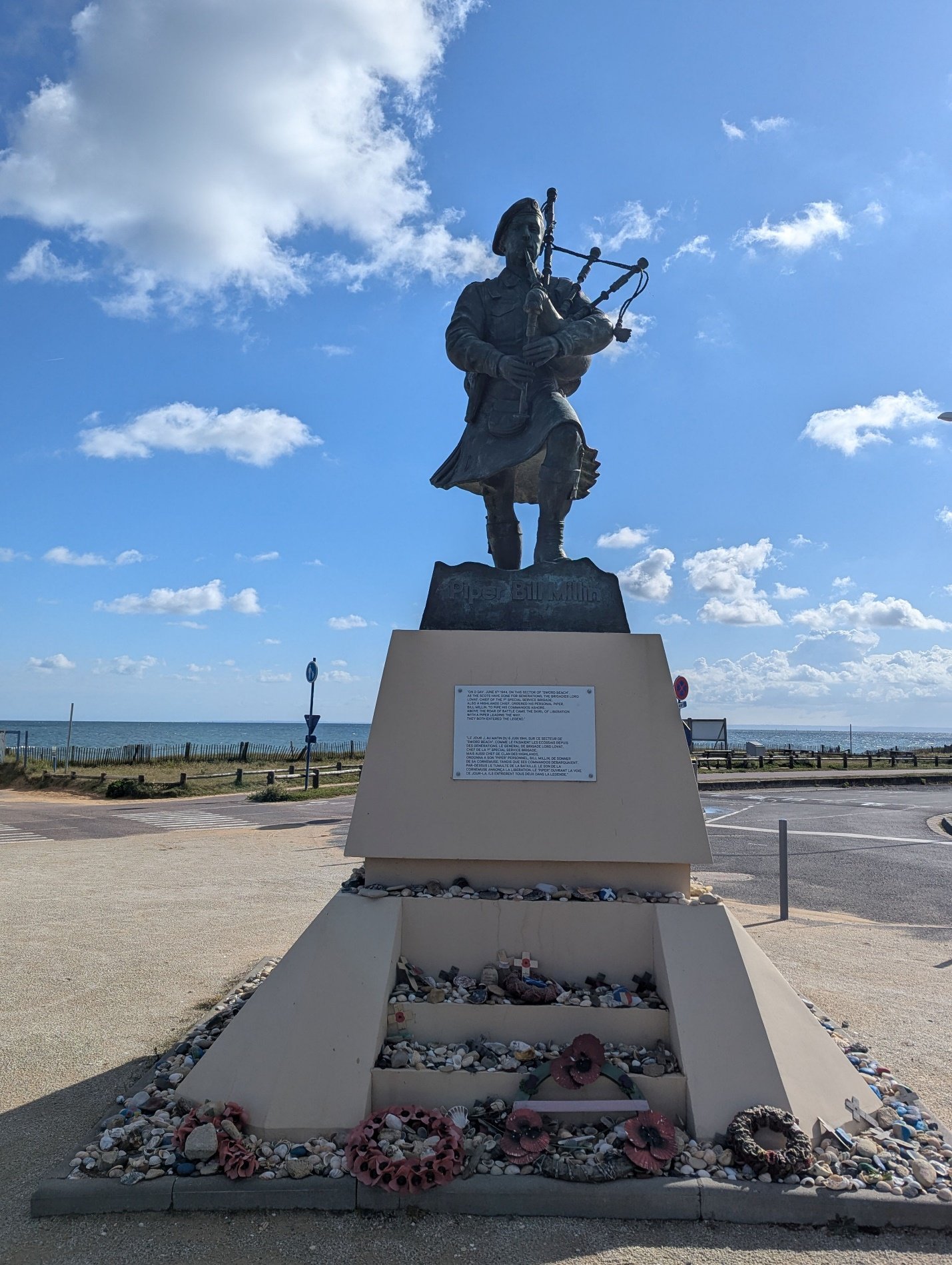
There is also a memorial to Piper Bill Millin, mentioned above, who piped Lord Lovat’s commandos ashore and continued playing his pipes as they advanced. After the war a German said they did not shoot him as they all thought he was mad. Millin survived the war.
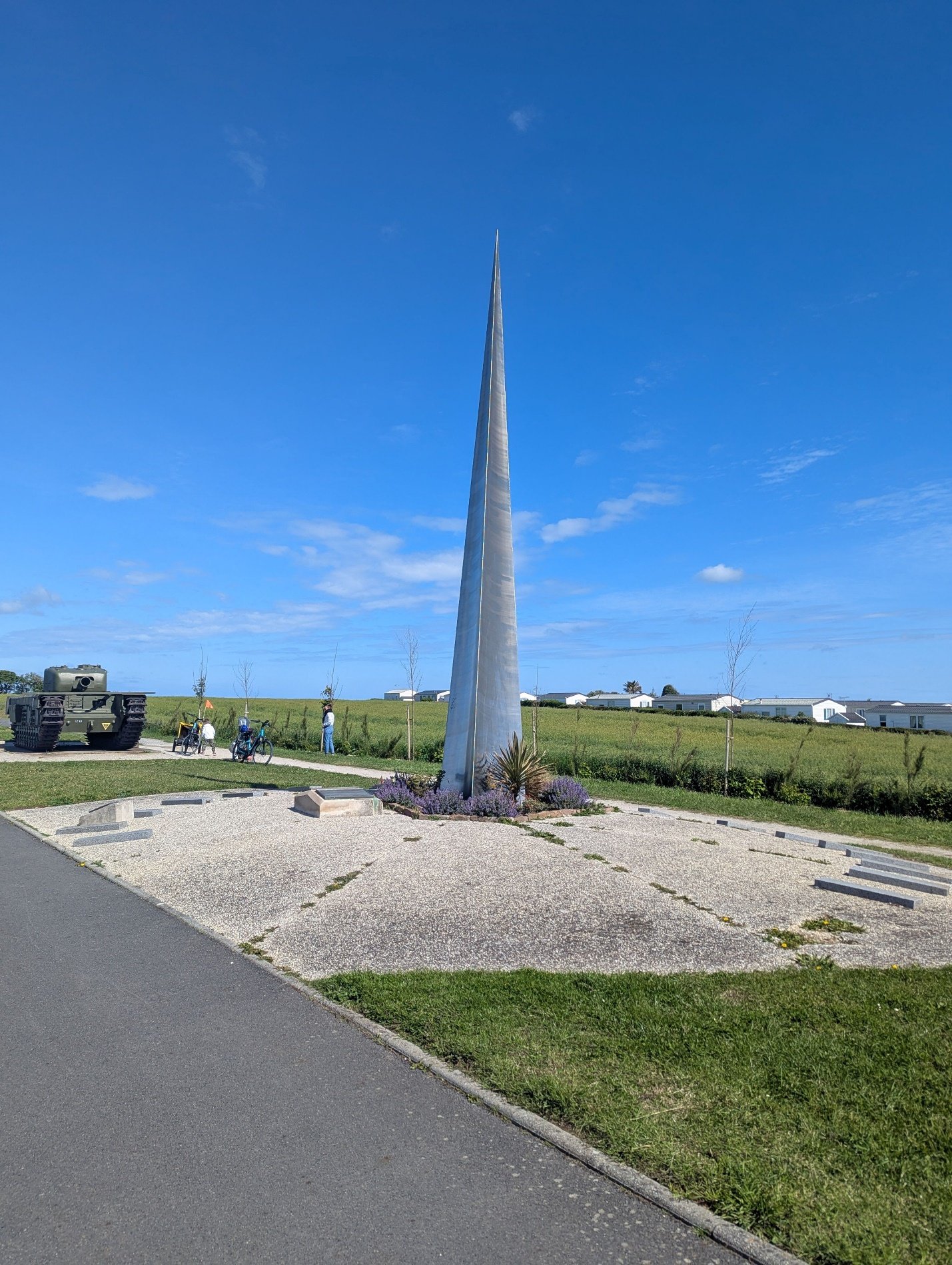
The AVRE Petard Tank is located at a Sundial memorial to the 41st Royal Marine Commandos who liberated Lion-sur-Mer on D-Day. The Roll of Honour lists the Marines killed, and the sundial has a mark indicating the H-Hour, the hour that the Marines came ashore.
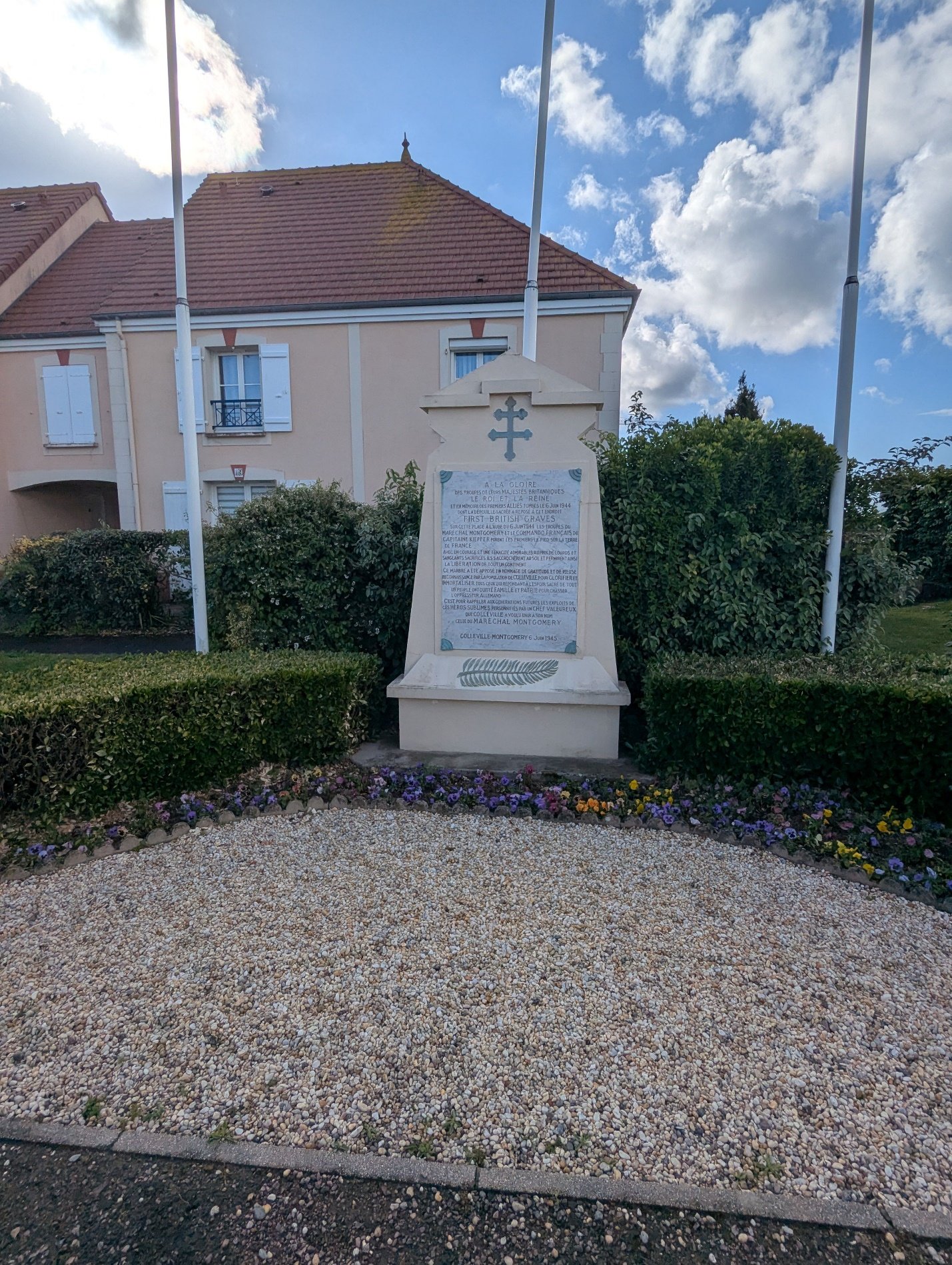
Near the Third Division Memorial is this plaque that indicates where the
first British soldiers killed at Sword Beach were buried. The plaque
says in part:
TO THE GLORY
OF THEIR BRITISH MAJESTIES’ TROOPS
THE KING AND QUEEN
AND IN MEMORY OF THE FIRST ALLIES WHO FELL ON 6 JUNE 1944, WHOSE SACRED REMAINS RESTED ON THIS SPOT
FIRST BRITISH GRAVES
ON THIS BEACH AT DAWN ON 6 JUNE 1944, FIELD MARSHAL MONTGOMERY’S TROOPS AND CAPTAIN KIEFFER’S FRENCH COMMANDO WERE THE FIRST TO SET FOOT ON FRENCH SOIL
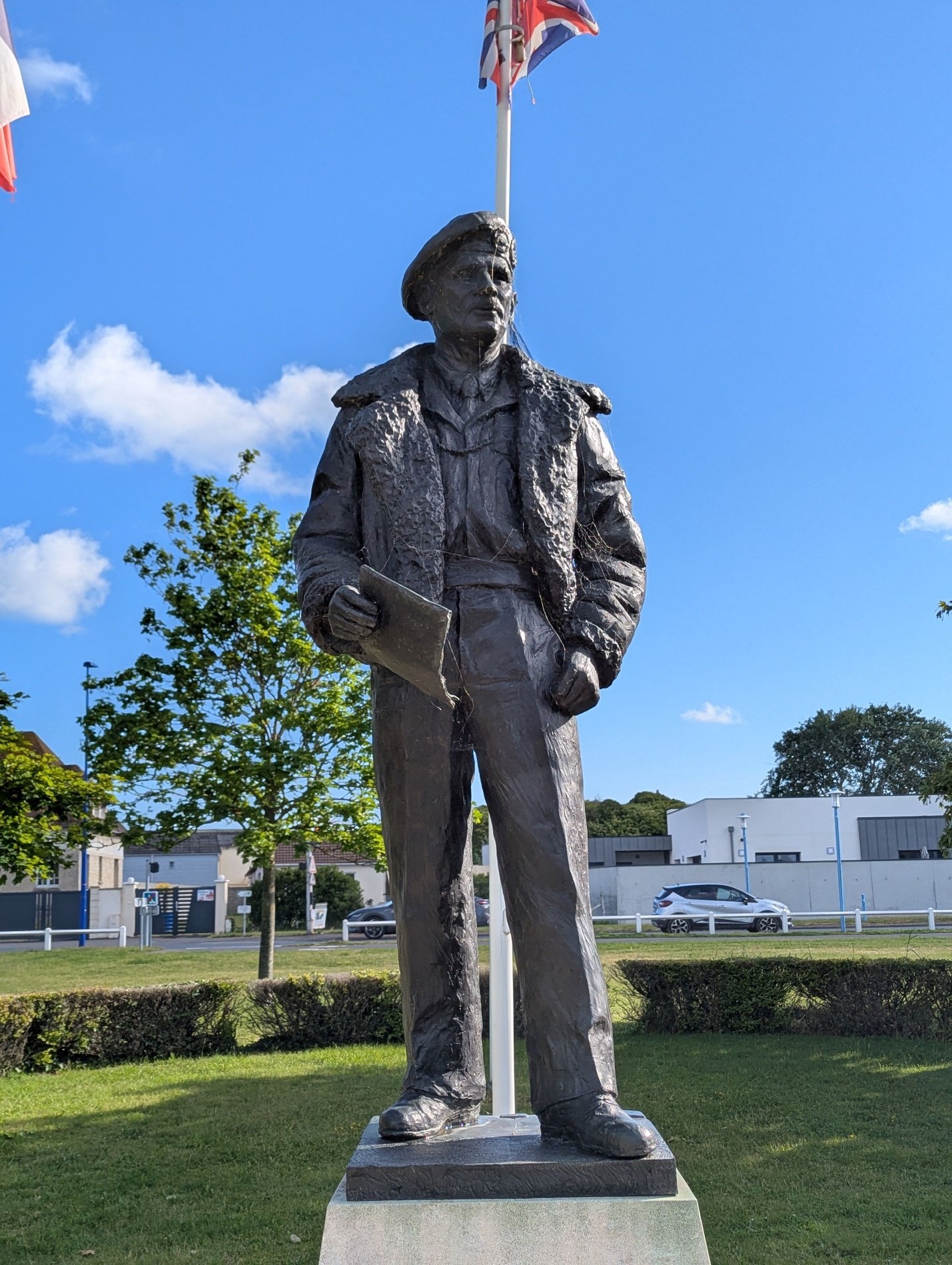
In Colleville-Montgomery, just off the beach, is the statue of Montgomery. Love him or hate him, this is a great statue.
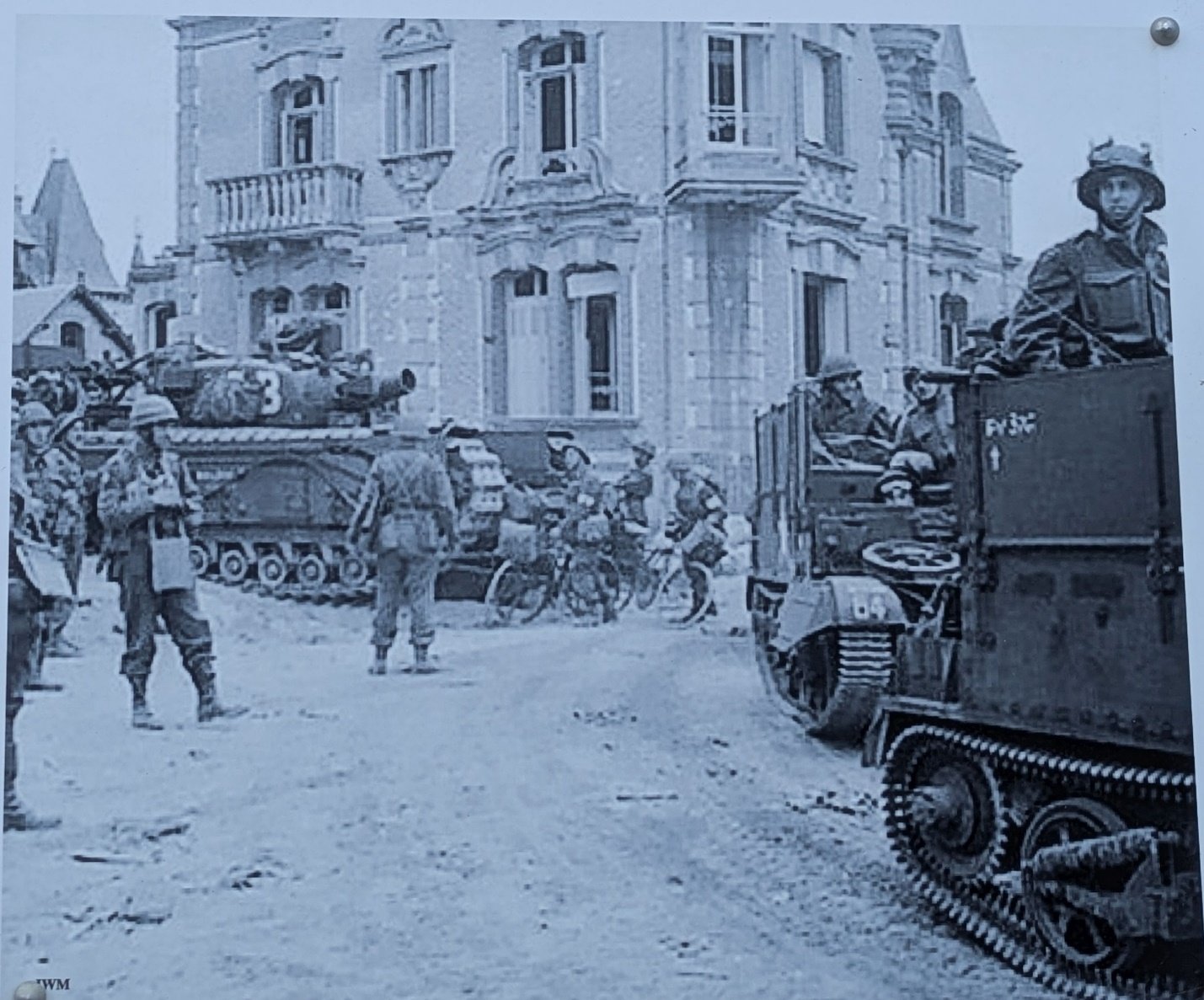
Then and Now
Some folks are really good at the then and now pictures, unfortunately I am not one of them.
The troops just inland from the beach on the morning of D-Day.
The present-day chateau on a square with a number of memorials.
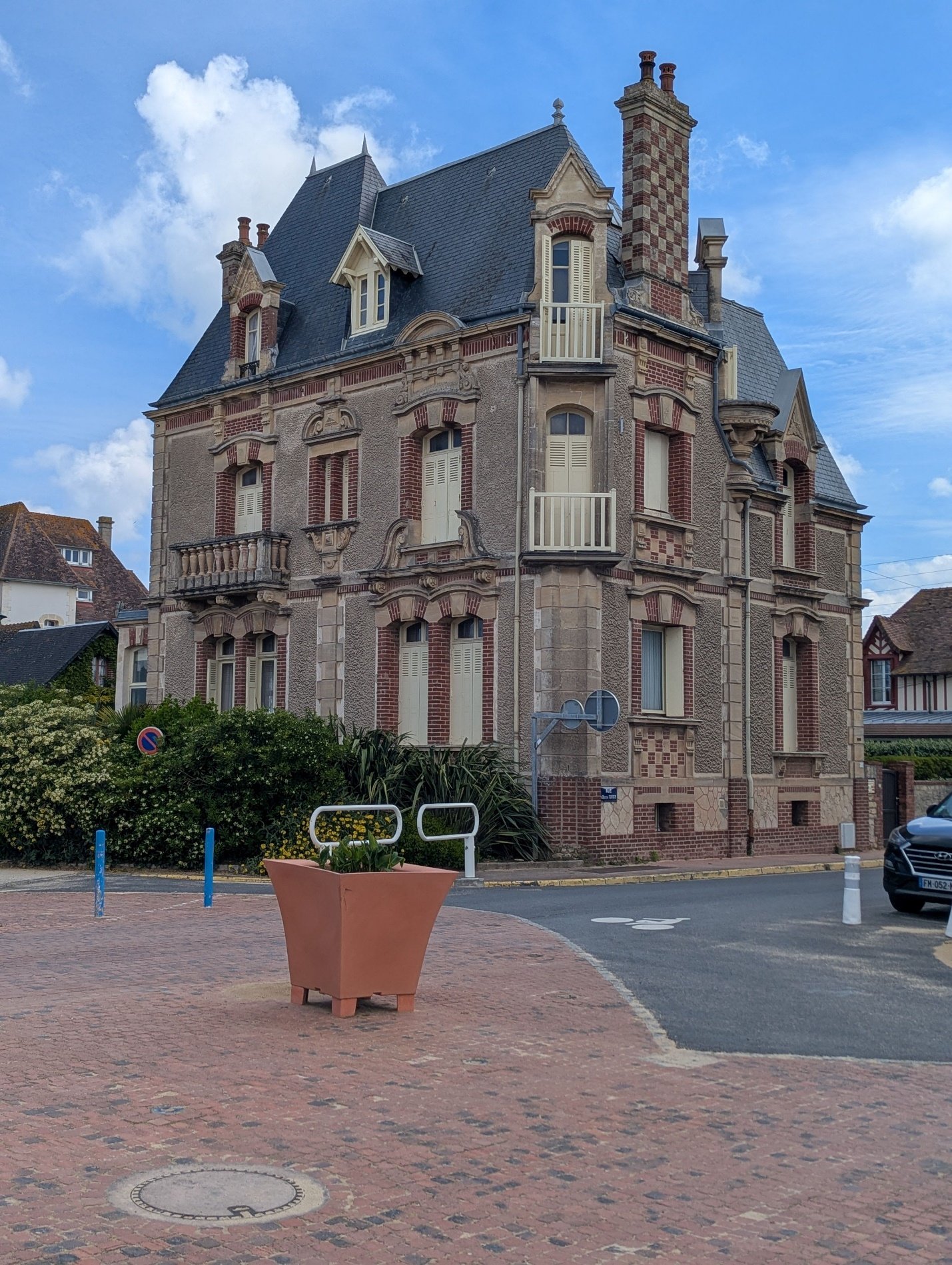
`
Beach Views
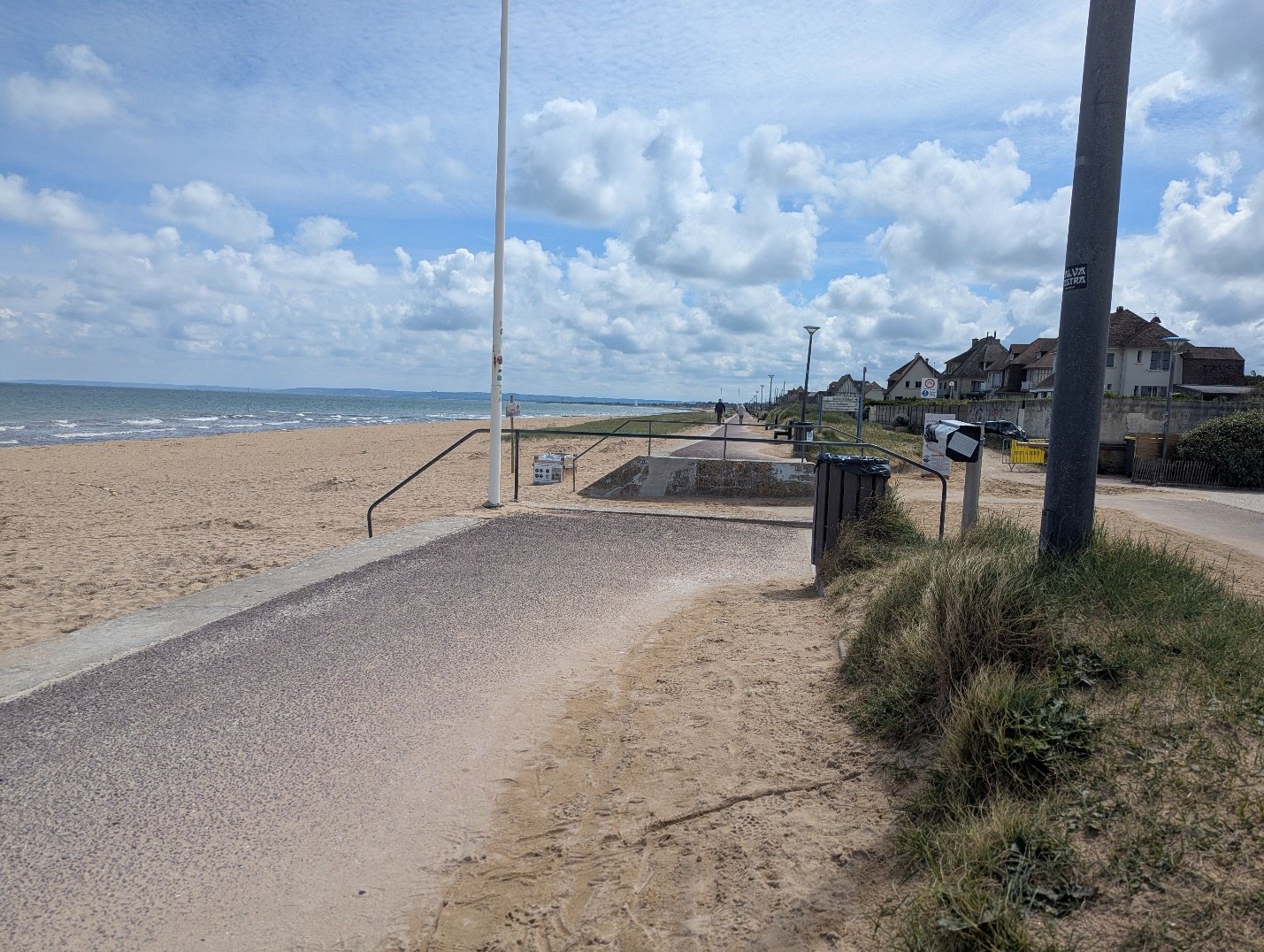
A recent view down Sword Beach.
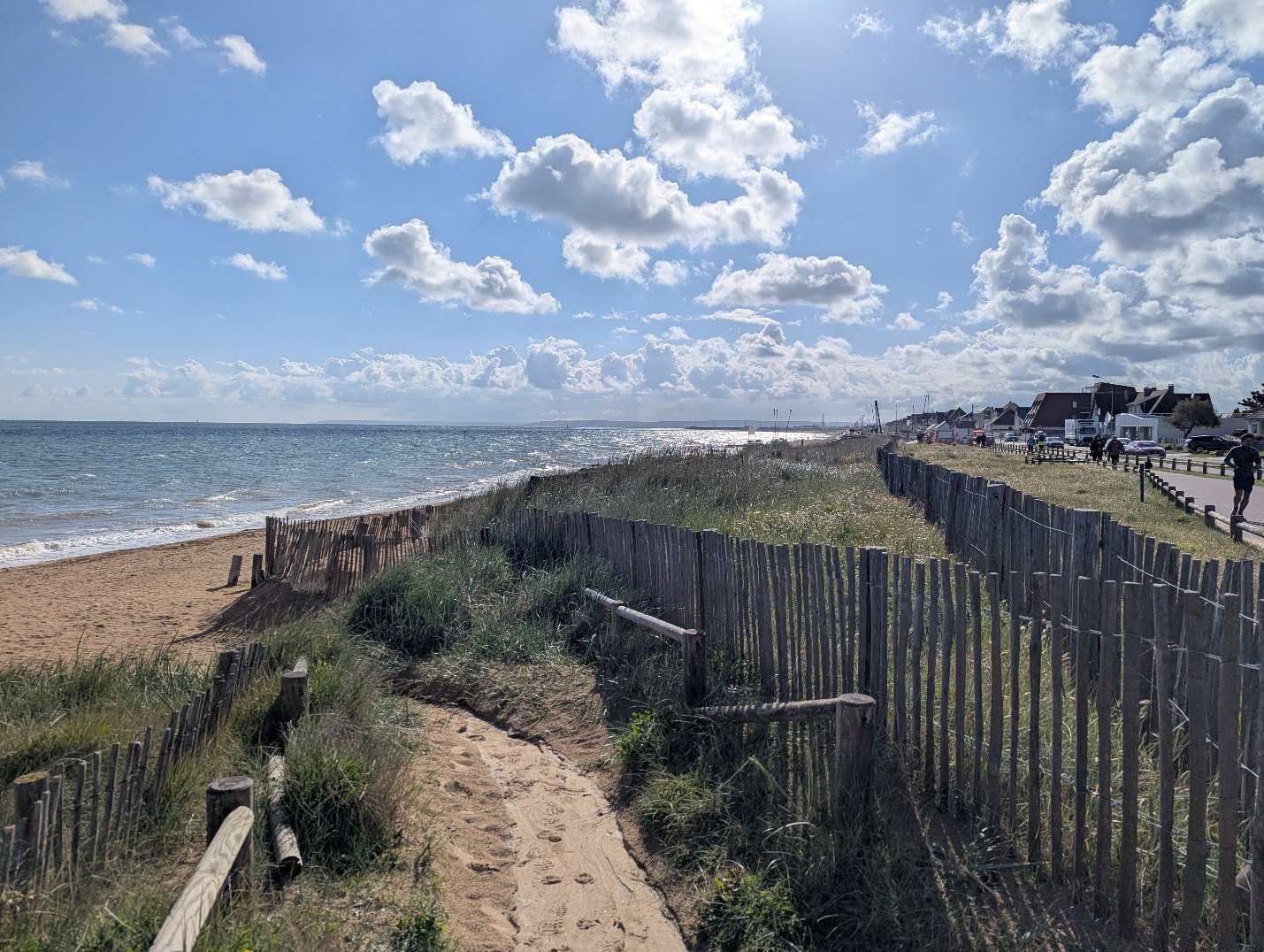
Later on, the tide is in.
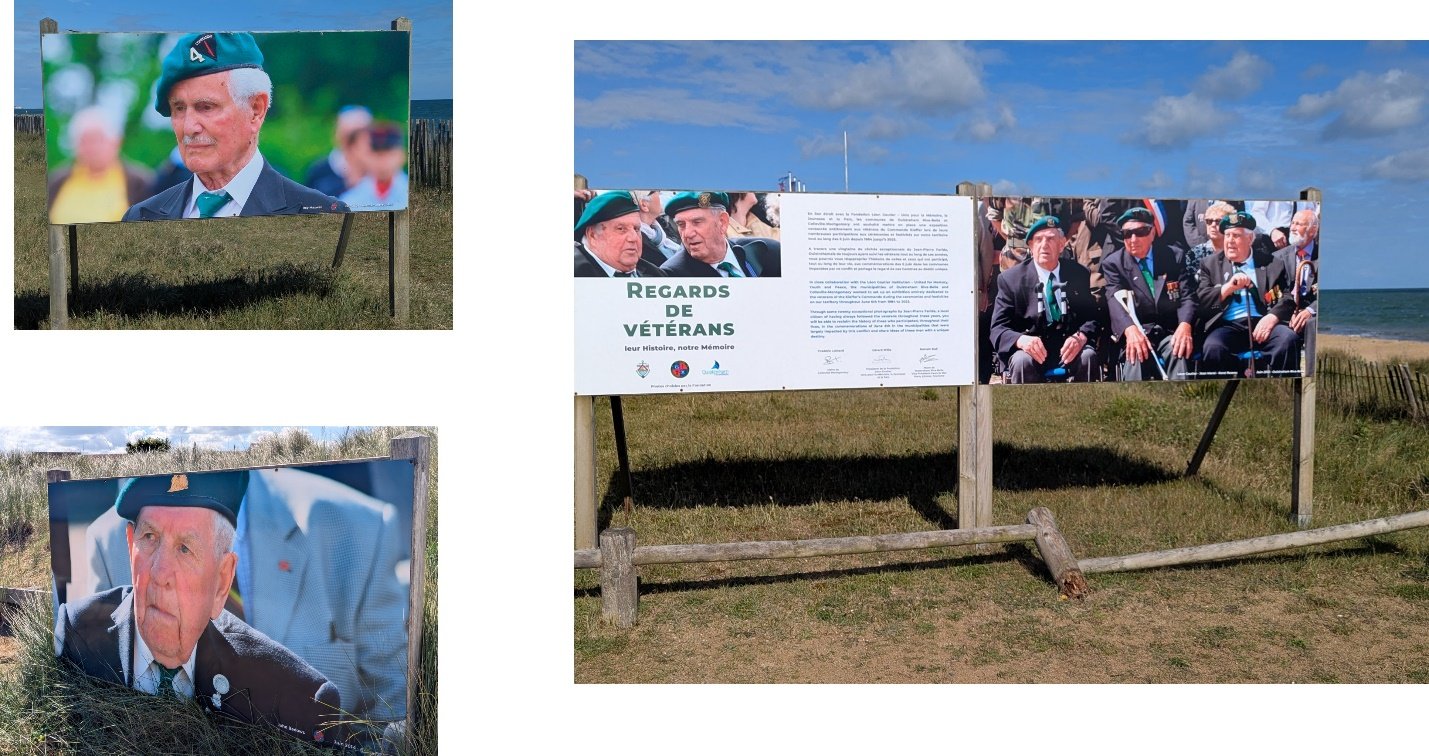
There is a collection of photos of Veterans during previous D-Day Anniversaries. A great reminder of those who survived the landings and the war.
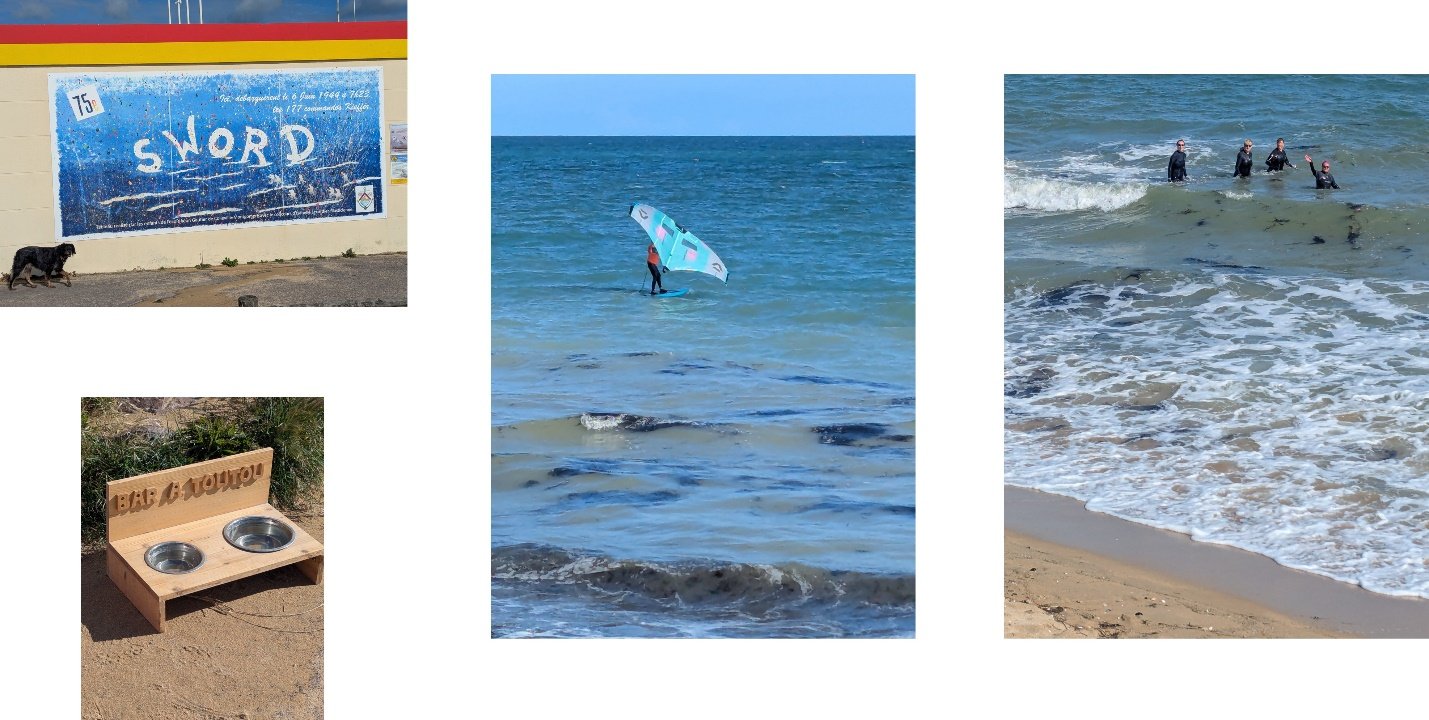
Everyone can get a drink at Sword Beach. I’m not sure what the kite activity is called but the surfboard has a big keel, and some friendly water walkers getting some exercise. I saw several groups of folks walking in the water, wet suits were mandatory.
Final Thoughts
Each of the landing beaches has a different topography and difficulties clearing the beach. Sword Beach is considered by some to be a failure as the troops did not meet their objective of capturing Caen on the first day and the Allies spent the next month before actually taking the city. In my opinion, it was hopelessly optimistic to think the troops could reach Caen as the defenses were severely under-estimated. The 21 Panzer counterattack also slowed progress, and the hardened structures inland slowed the British progress.
Almost 29,000 soldiers and 630 tanks landed on Sword Beach on the first day suffering a relatively light 630 casualties. The Commandos made it to Pegasus Bridge, relieving the beleaguered Paratroopers and maintaining control of those critical bridges.
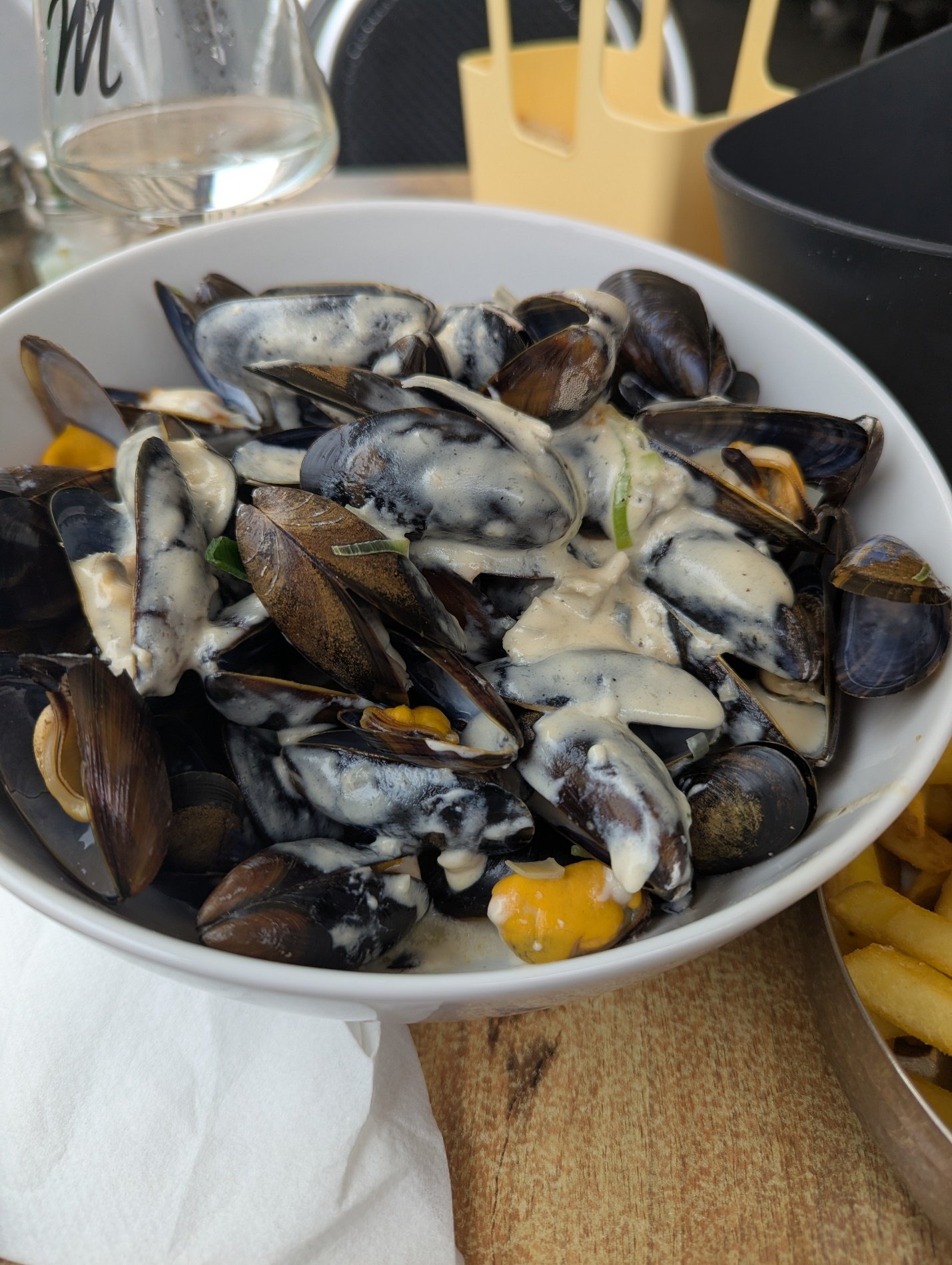
After storming Sword Beach, it was only appropriate that I celebrate the accomplishment with some awesome Moules et Frites.