cyrsullivan
Jun 29, 2025
5 min read
Updated: Oct 2, 2025
After two leisurely weeks exploring beautiful Malta, we caught our flight to Sicily, Italy. Our itinerary for the next five weeks was rather full, but we tried to maintained a somewhat relaxed pace. We began in Catania, followed by a few days in the terraced town of Taormina, in the shadow of Mount Etna. From there we pressed north-west to Palermo, before we hopped a train, on the last train-ferry, to the mainland. After a week in Naples, we proceeded to the Puglia region, the breadbasket of Italy, before finally making our way to “Rome and Home”.
Again, our travels focused on discovering Italy’s charming towns. Our time was spent exploring their historical, architectural, and natural attractions, with breaks for cappuccinos and culinary delights along the way. We also arranged several excursions, including visits to: the Parthenon at Segesta, Mount Etna, Pompeii, Mount Vesuvius and the charming UNESCO villages of Alberobello and Matera. Overall, it was an excellent introduction to the beautiful and more relaxed atmosphere of Southern Italy.
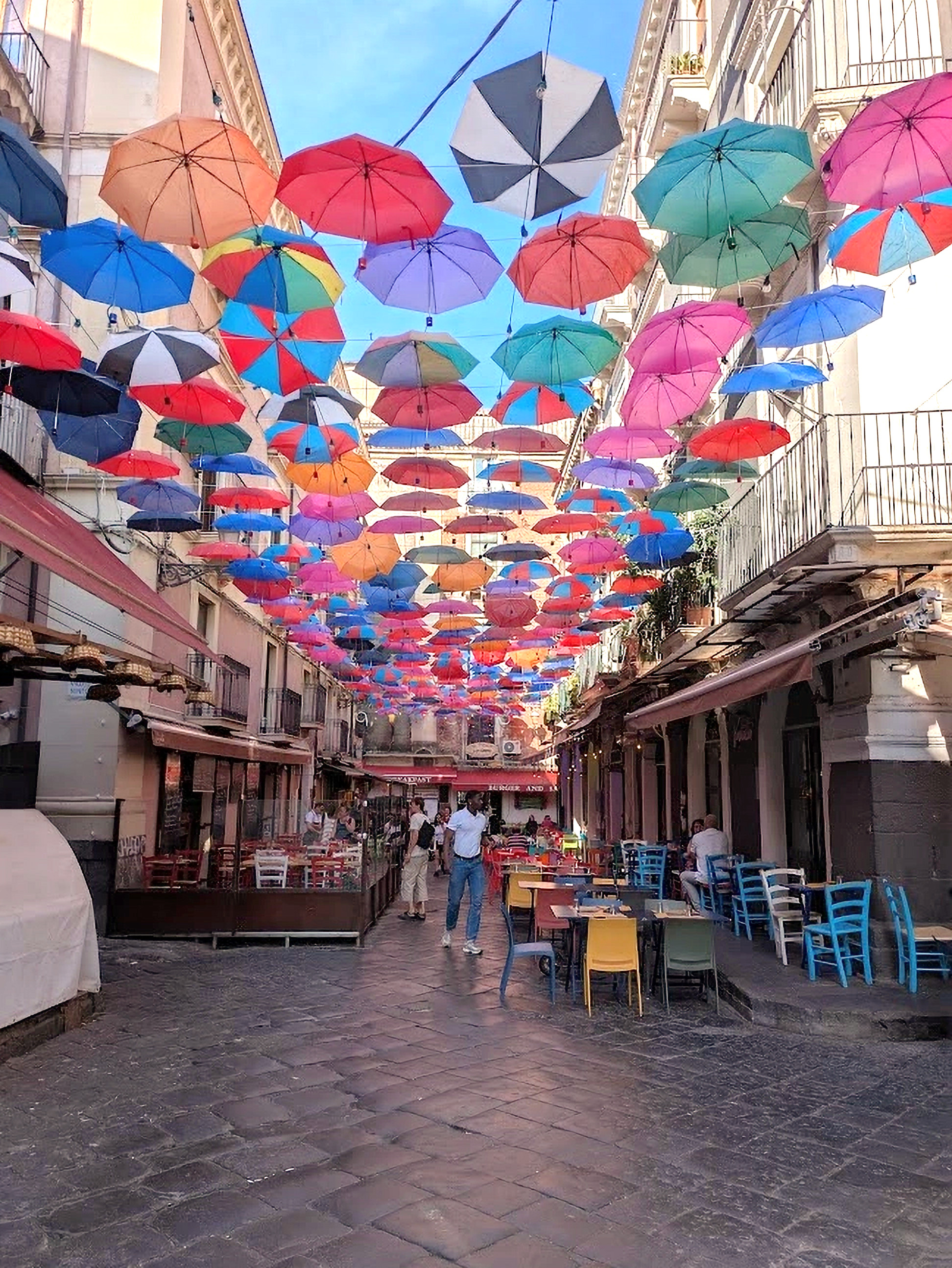
We arrived in Catania to discover our lodgings on a quirky side street near the main square. Situated on the fourth floor (85 steps up), we were just above the clamour of the lively morning markets that later transformed into bustling pop-up restaurant patios. Around noon, witnessing the transition as the markets recede behind garage doors and the restaurant tables and chairs spill out into the street was a marvel. The entire ballet repeats every morning.
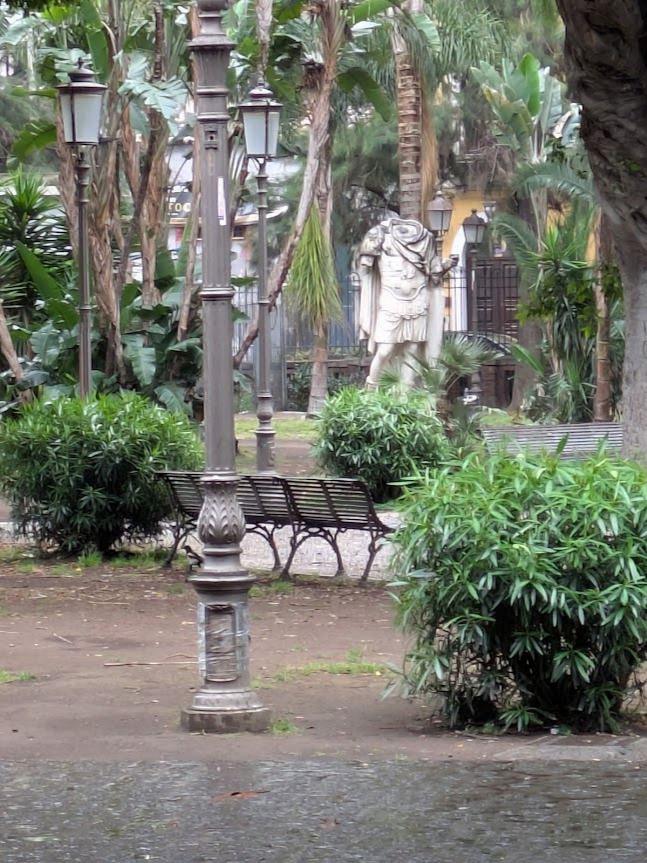
A nearby park exhibits one of many statues of Bourbon kings beheaded by the angry crowds fed up with foreign rulers.
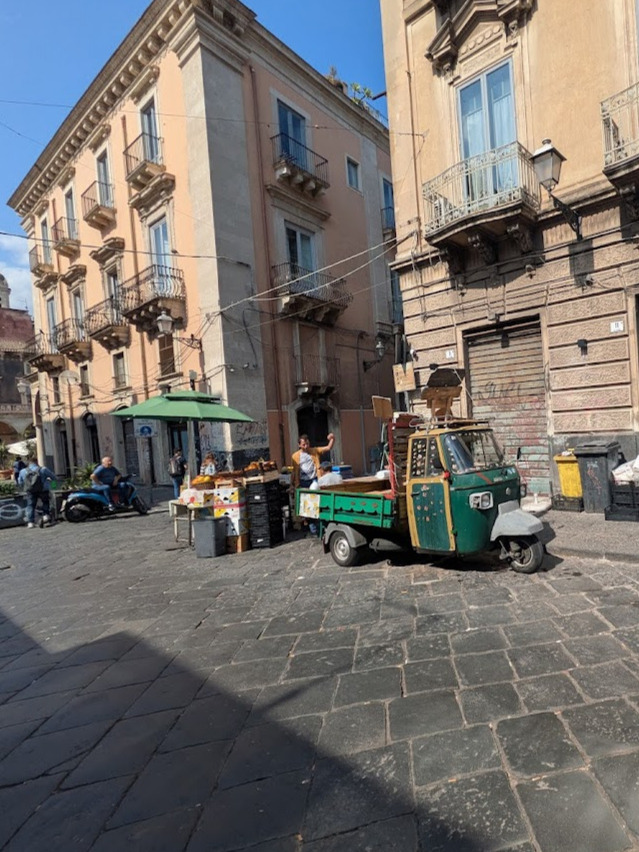
This mobile, pop-up market is a fine example of the entrepreneurial spirit of the Sicilians.
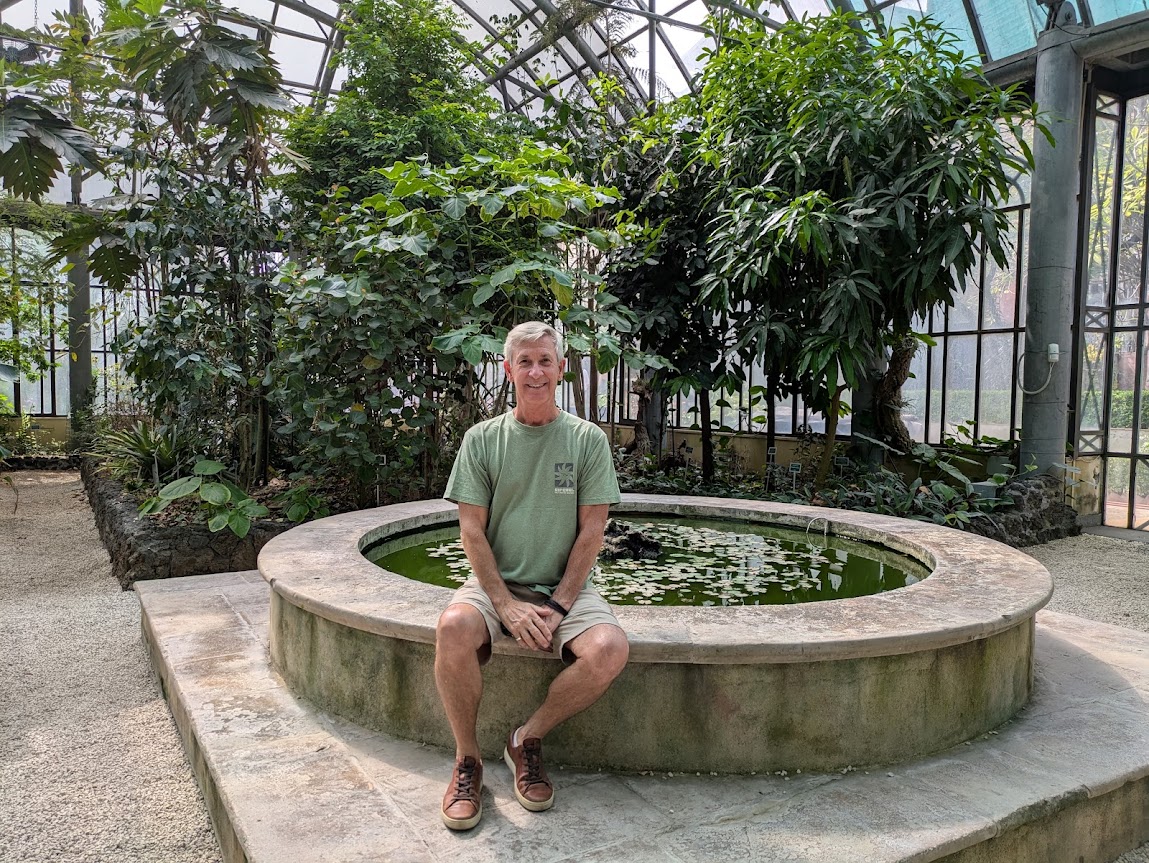
During our time in Catania, we explored the vast Bellini Gardens, which offered breathtaking views of Mount Etna. We also visited the small yet densely populated University Botanical Gardens, featuring a diverse cactus collection and a 19th century greenhouse or tepidarium, shown here. It was an excellent place to enjoy the solitude and relax for an hour with an audiobook.
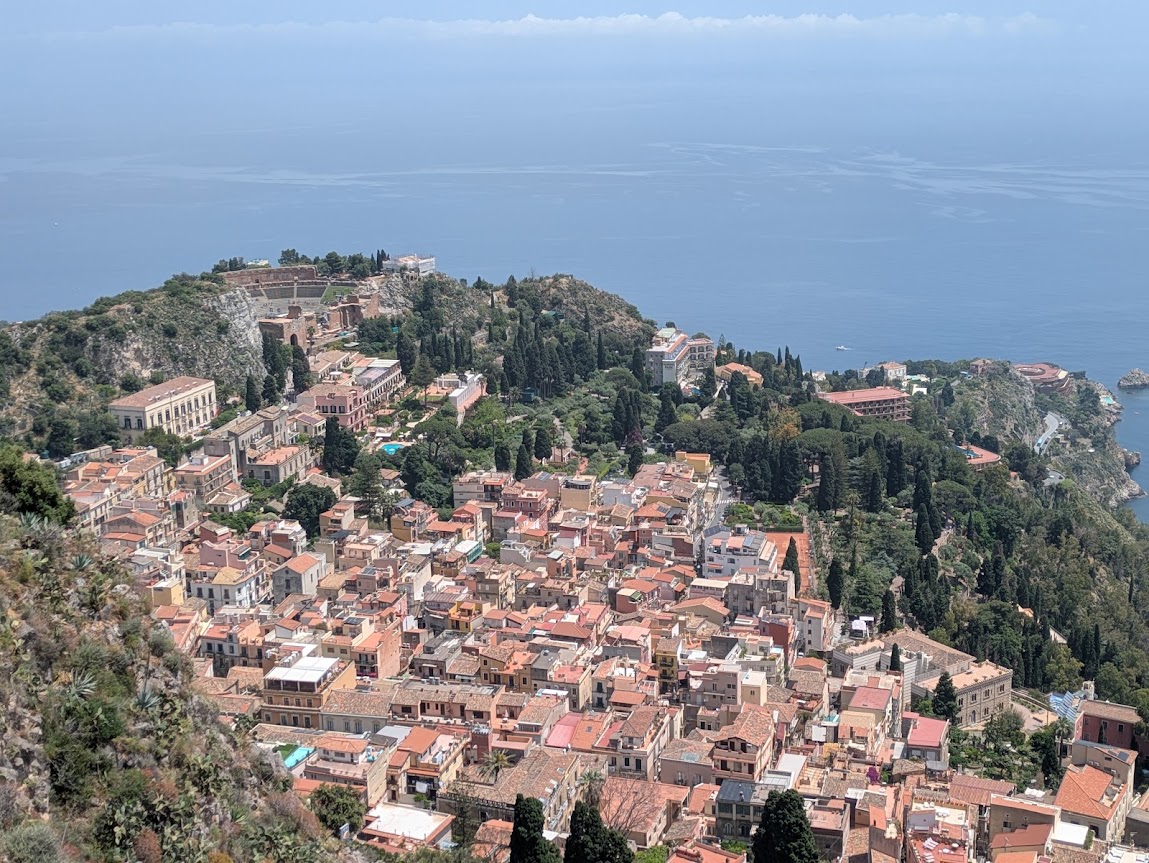
Sitting high up on Monte Tauro is the Castello di Taormina. Although a bit of a of a hike up, the castle provides sweeping views of the Ionian coast. Pictured here is Taormina, with its third century BC Greek Teatro Antico di Taormina, one of it’s major draws seen in the upper left corner.
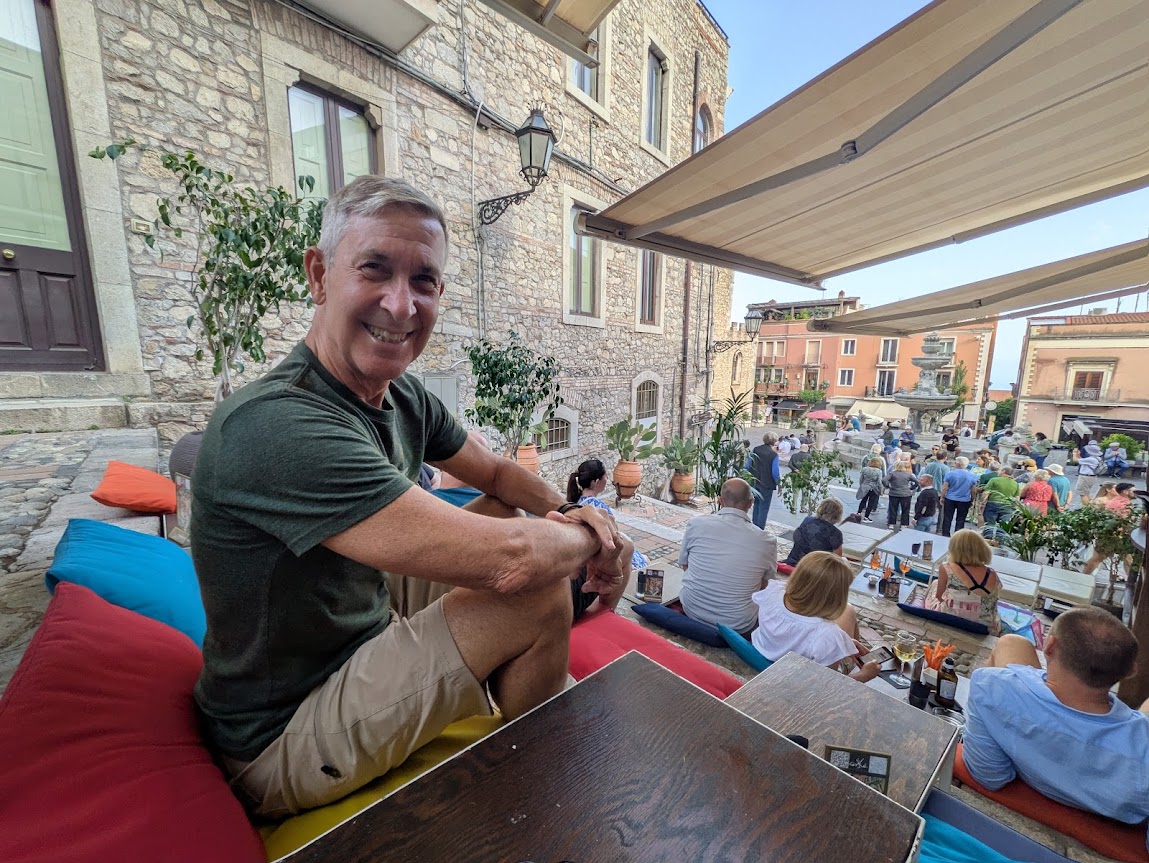
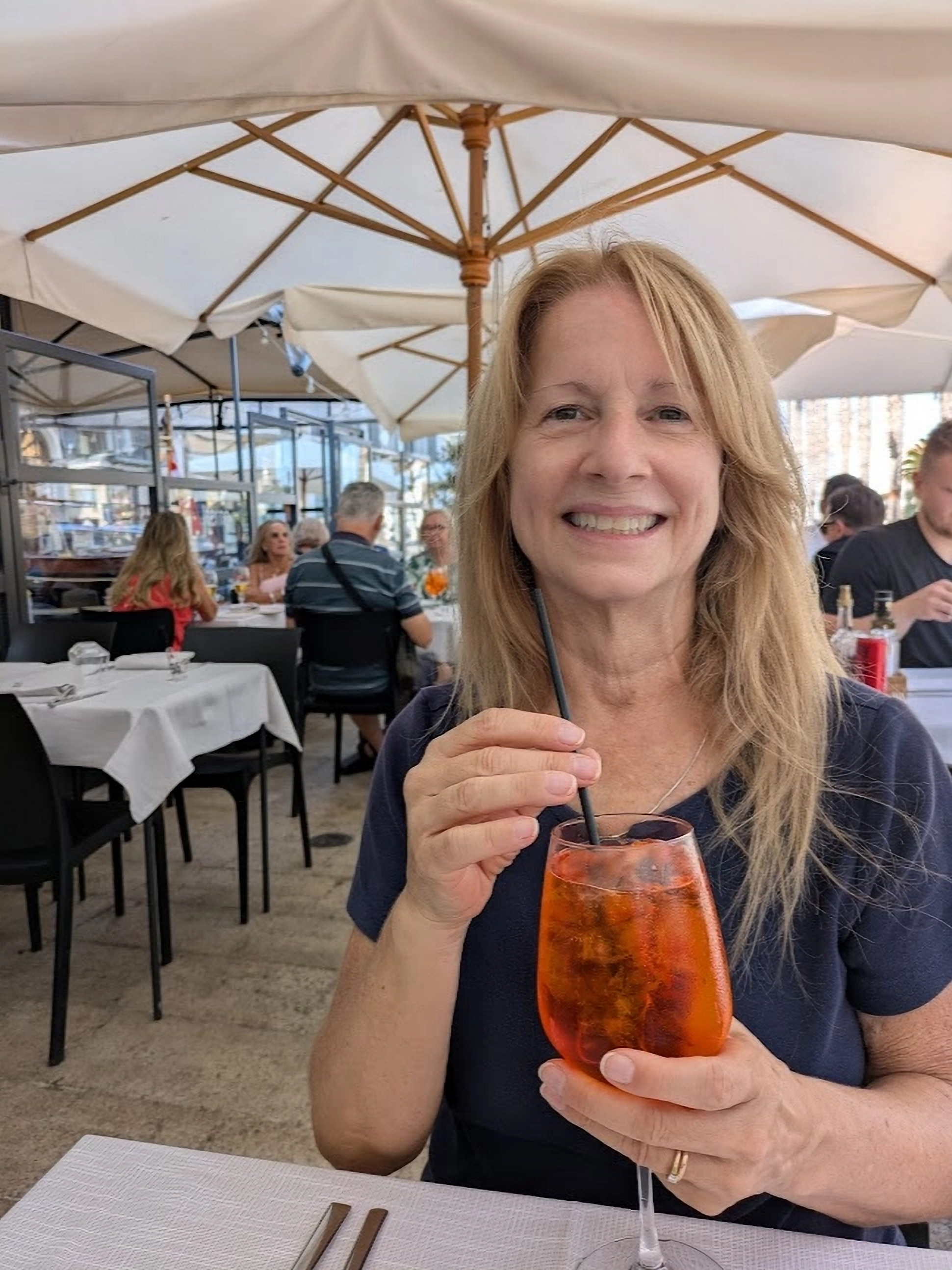
In a terraced town like Taormina, stairs are inevitable, and Taormina certainly has its share. After a fun filled day, we seized the opportunity to savour a late afternoon aperitif at one of the numerous pop-up patios lining the staircases.
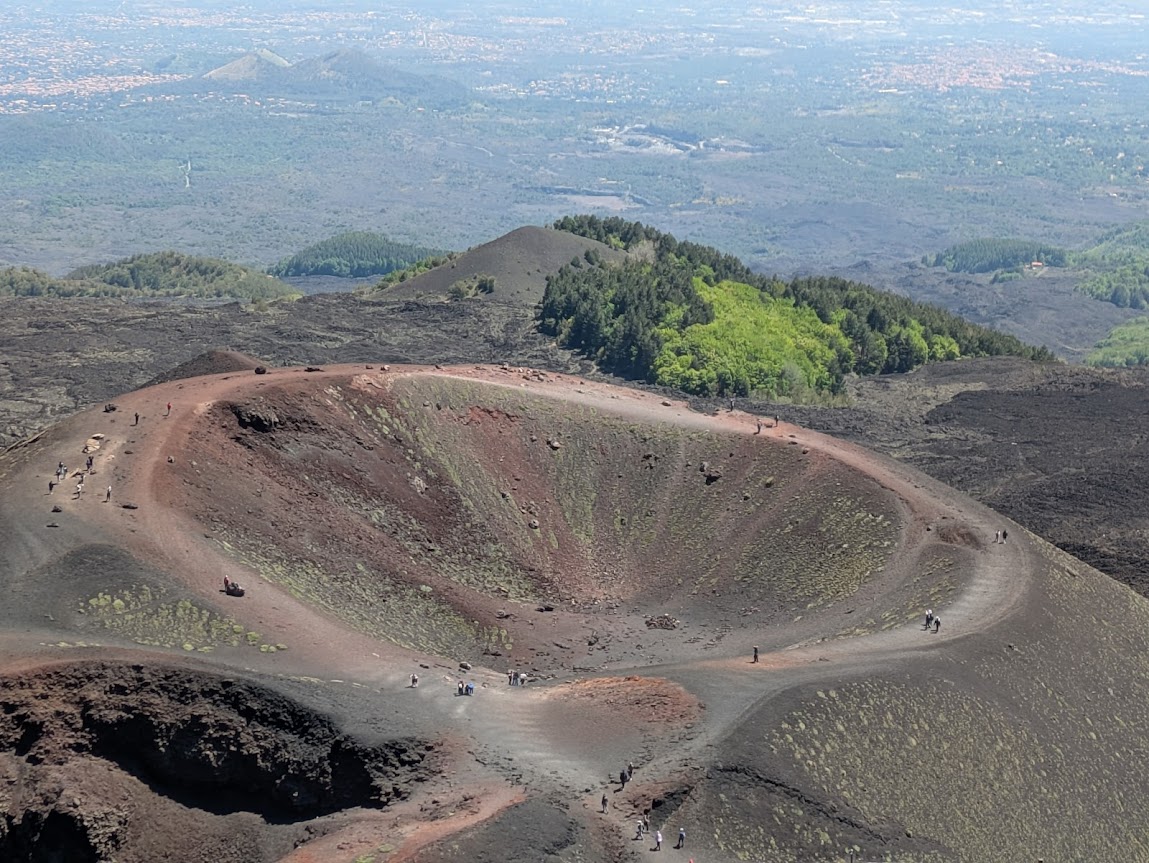
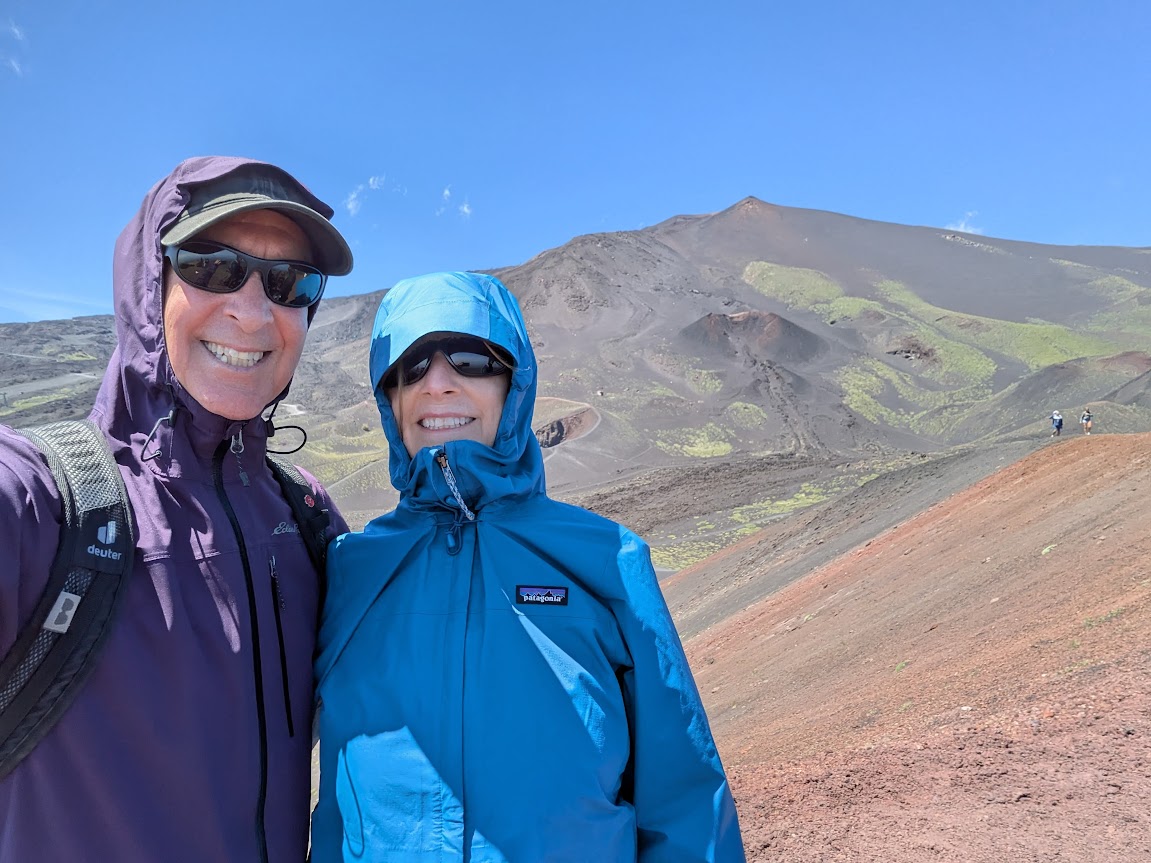
During our stay in Taormina, we took an excursion to Mount Etna, luckily the week before it erupted and sent tourists fleeing in terror. Our guide, a volcanologist, shared his extensive knowledge of Italy’s major volcanoes as he led us on an energetic and challenging hike around Etna’s numerous craters.
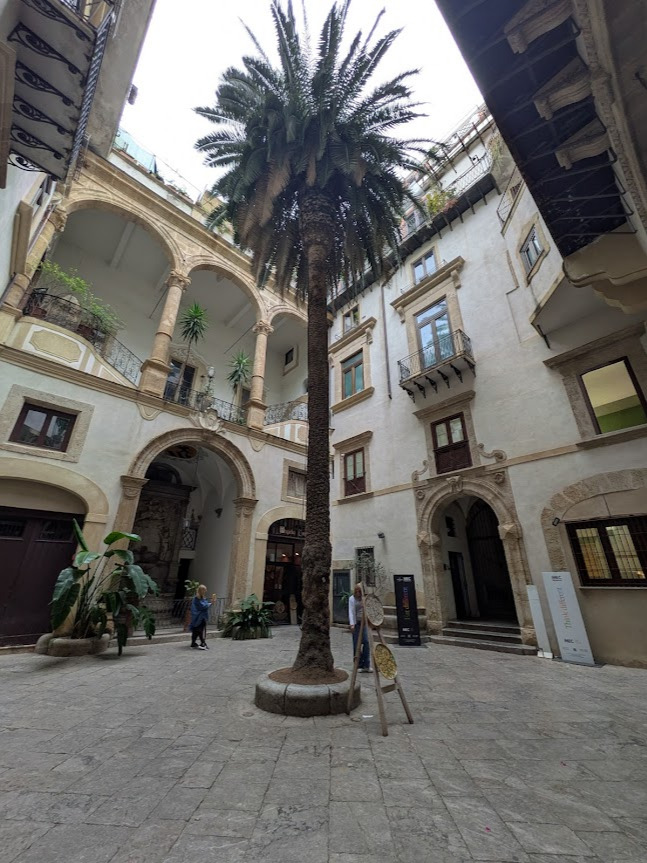
One of the numerous courtyards concealed behind Palermo’s doors. Inner courtyards are historically popular across Europe for their tranquility, privacy, and “security”.
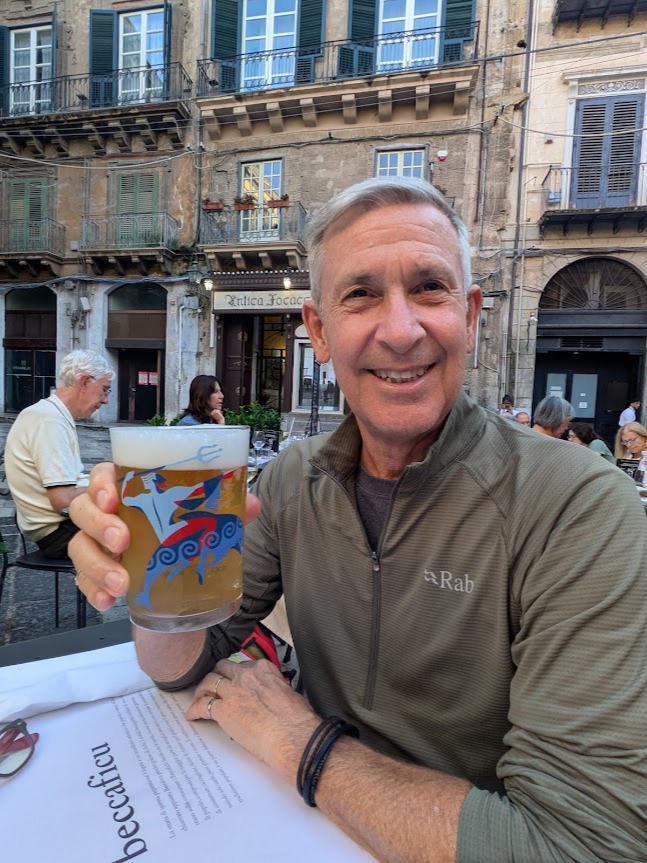
Enjoying a Raffo and pizza at the ancient Saint Francis Focaccia Shop. The beer, served in a glass featuring a man with a trident riding a dolphin was definitely an excellent choice.
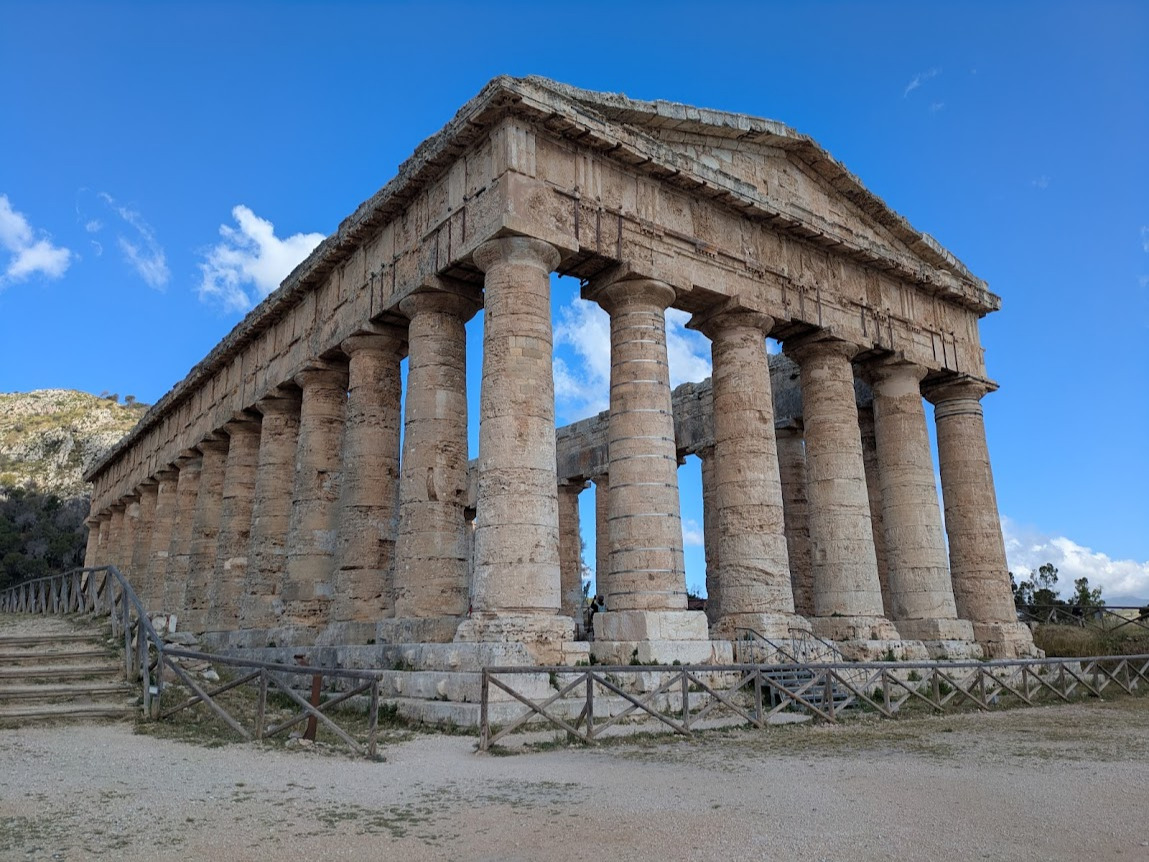
One of our day trips from Palermo took us to Segesta, an important Elymian settlement. The site featured several 5th-century BCE monuments, including this Greek Doric temple pictured here.
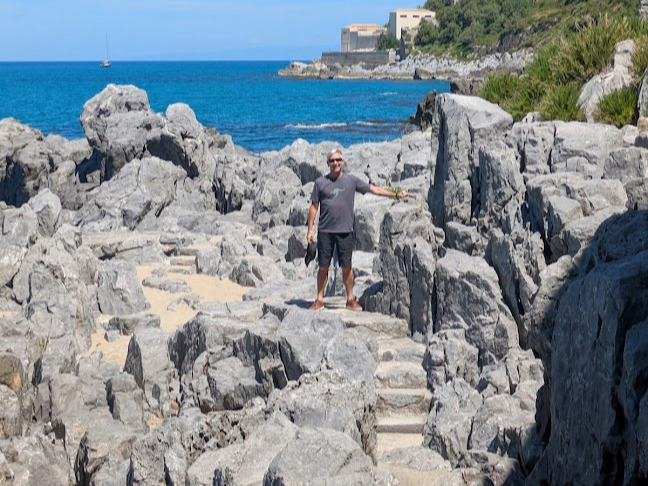
Just east of Parlemo, lies Cefalù, a medieval town characterized by its narrow, winding streets and a beautiful white sandy beach. It also boasts a precarious seaside hike carved into its rocky shoreline.
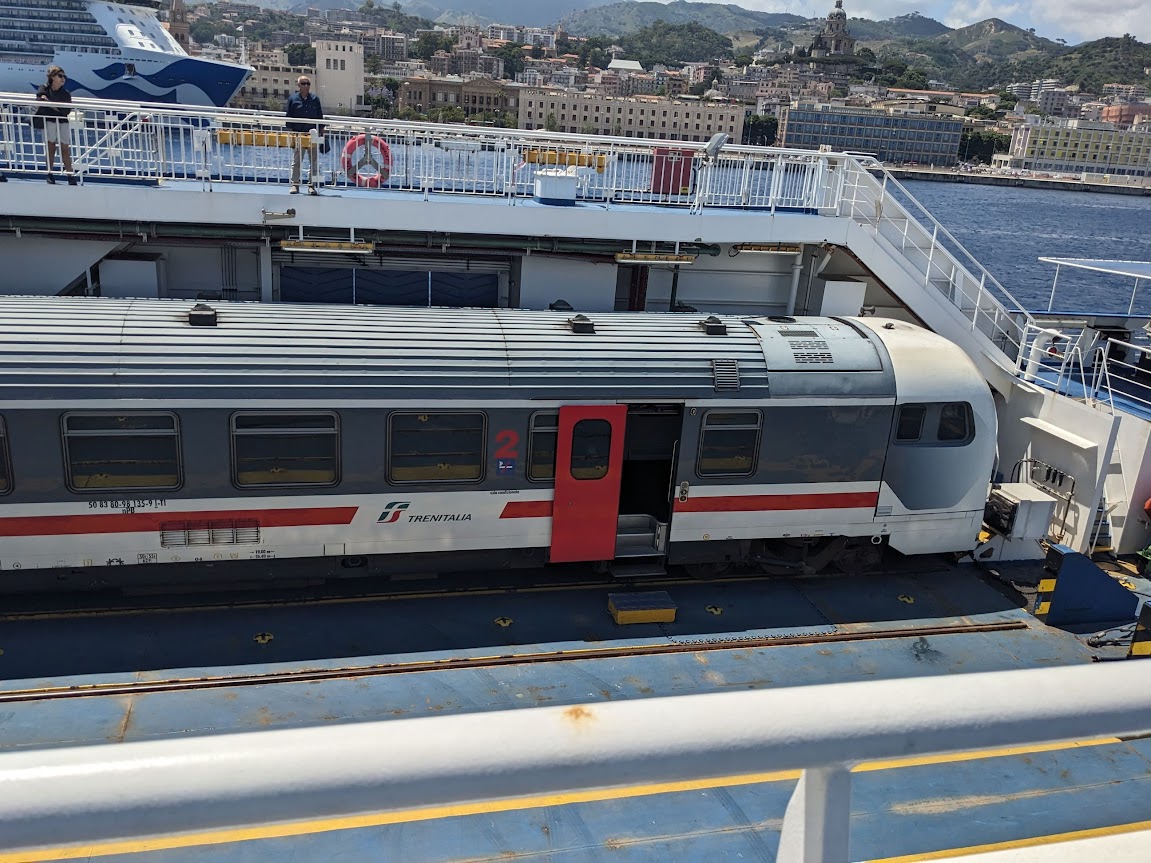
We travelled by train from Palermo to Naples on the last ferry train in Europe. Our train was loaded onto a ferry in Messina for a thirty-minute crossing before continuing north along the Italian coast to Naples. The entire process was amazing to observe and experience.
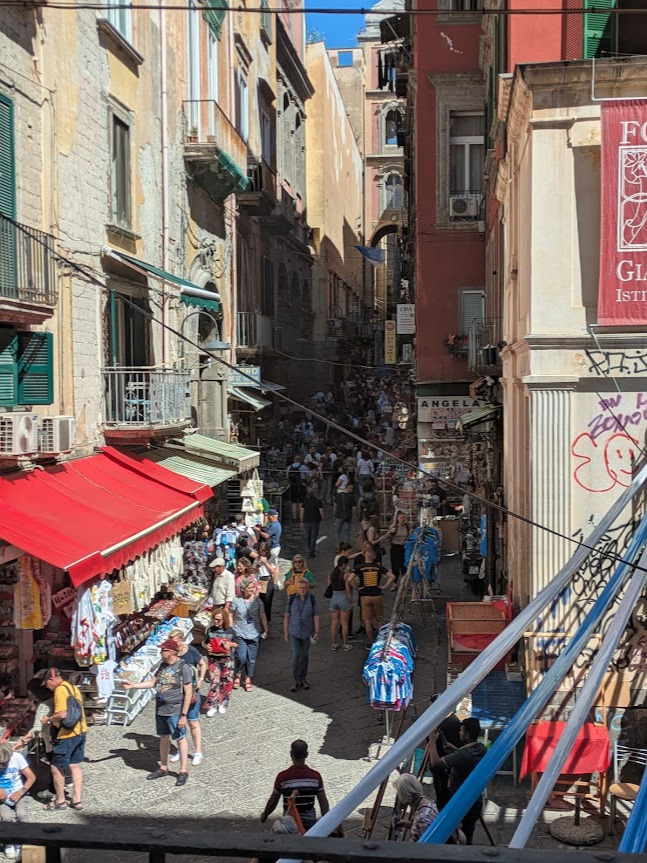
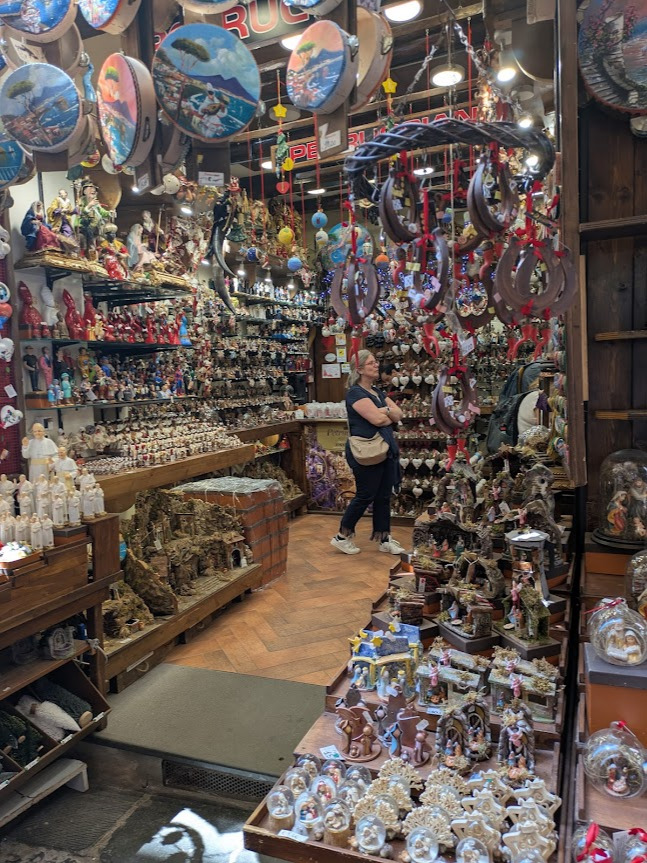
Our apartment in Naples’ historic centre was located at the crossroads of two bustling pedestrian streets, packed with restaurants, shops, and churches. Interestingly, the entire block next to us was filled with dozens of shops entirely devoted to religious, political, and sports-themed dioramas, along with the figures, and scenery needed to create them.
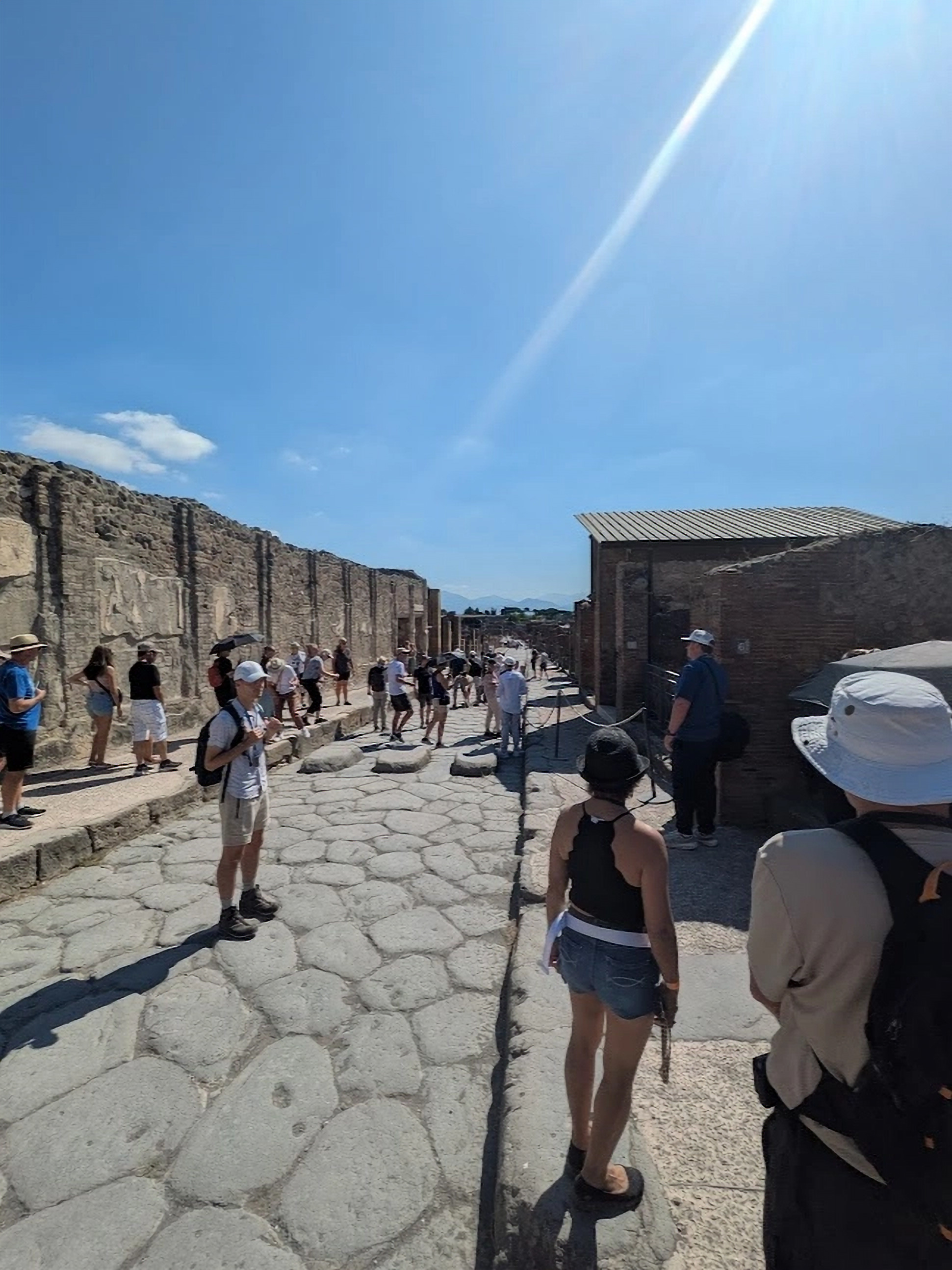
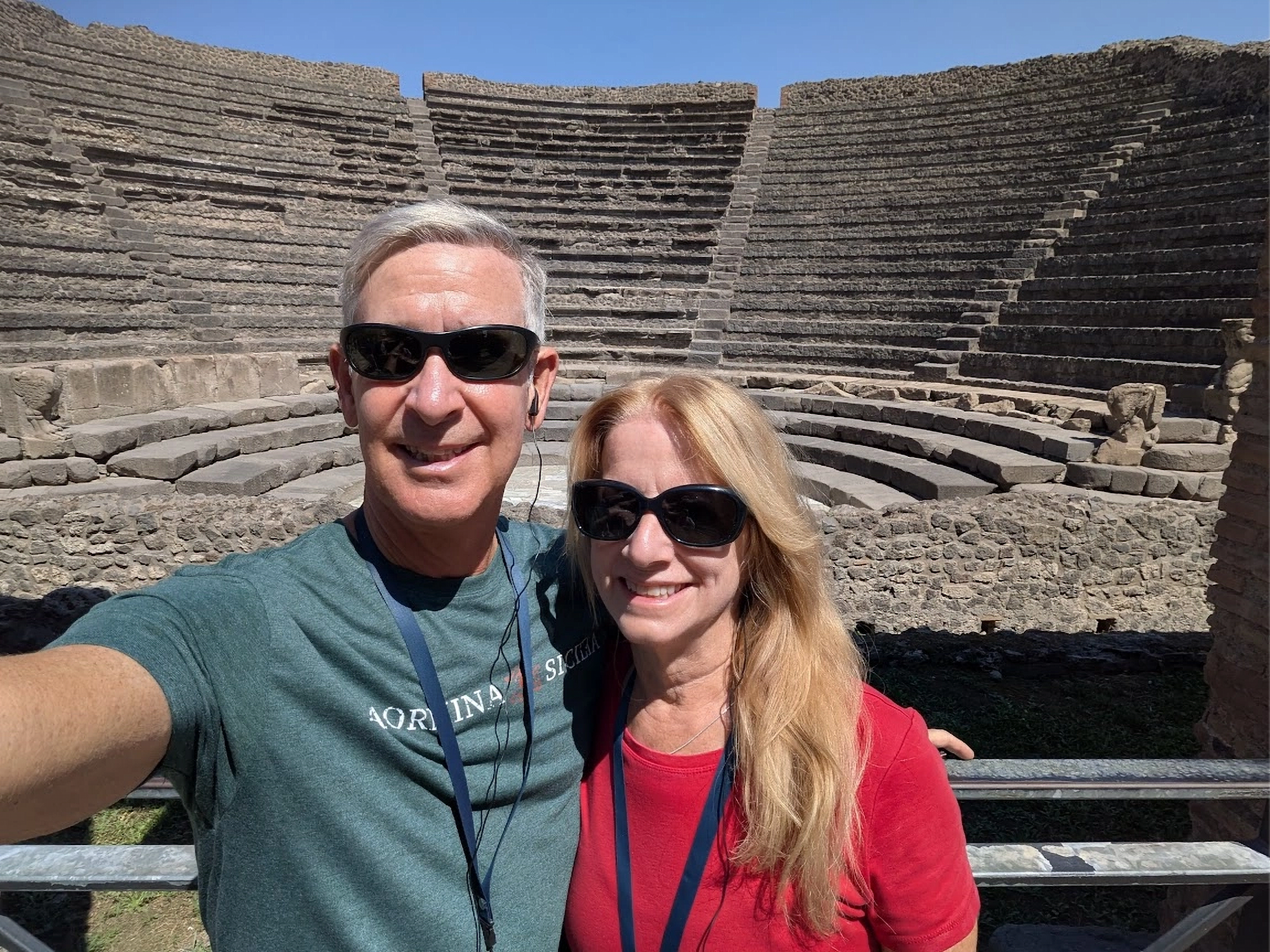
The Archaeological Park of Pompeii, a UNESCO World Heritage Site, encompasses a sprawling 12 km² area of a well-preserved ancient Roman city. This site was buried by the eruption of Mount Vesuvius in 79 AD, maintaining an exceptional state of preservation that provides a rare insight into Roman life. It’s a fantastic experience and highly recommended.
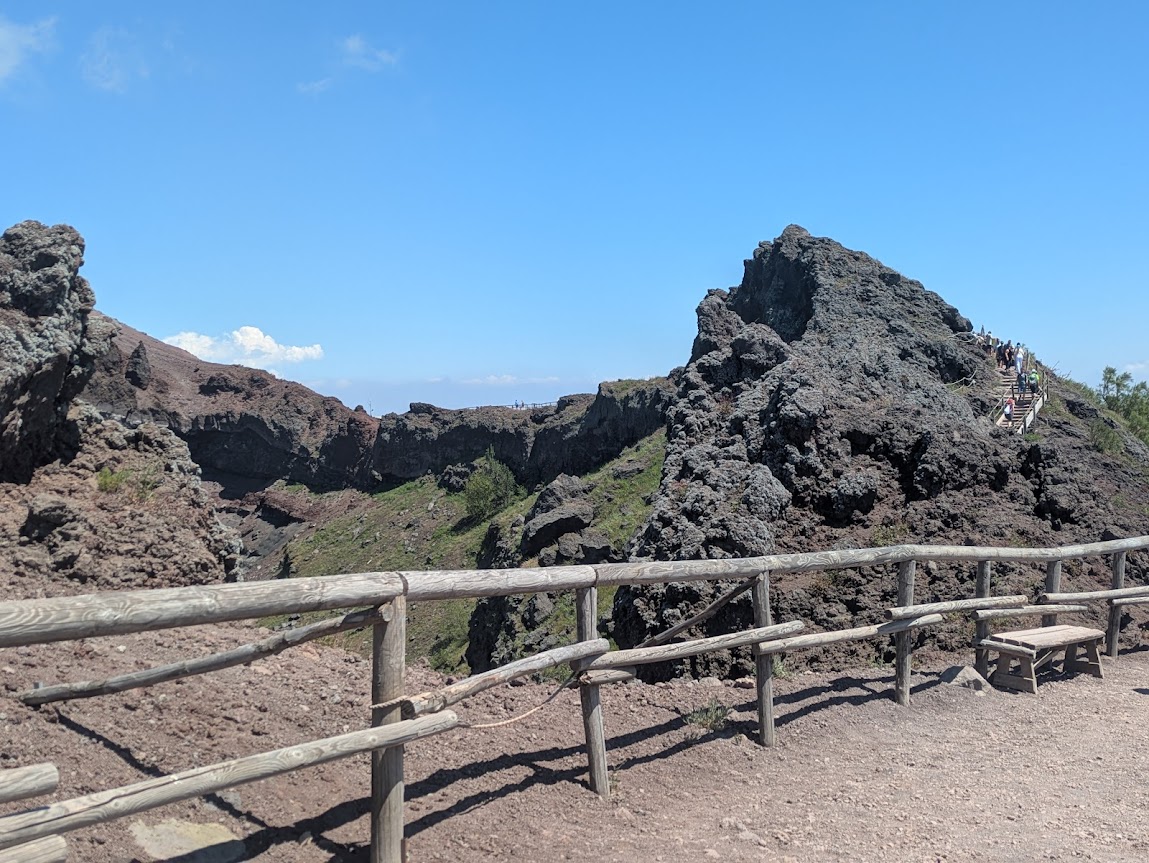
Rising approximately 1,200 meters above Pompeii, Mount Vesuvius stands as an imposing landmark. After spending a few hours exploring Pompeii, it felt natural to visit the volcanic giant that destroyed it. Shown here is a glimpse into the crater that froze Pompeii in time.
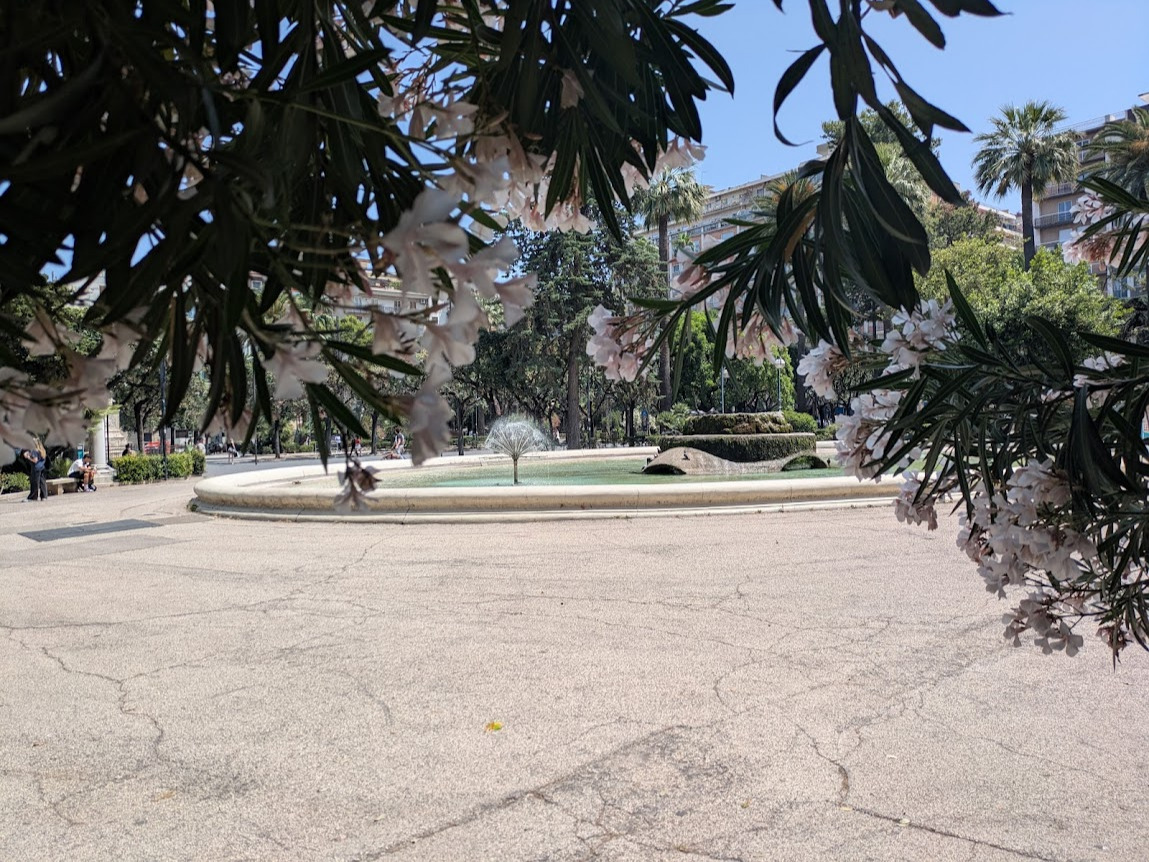
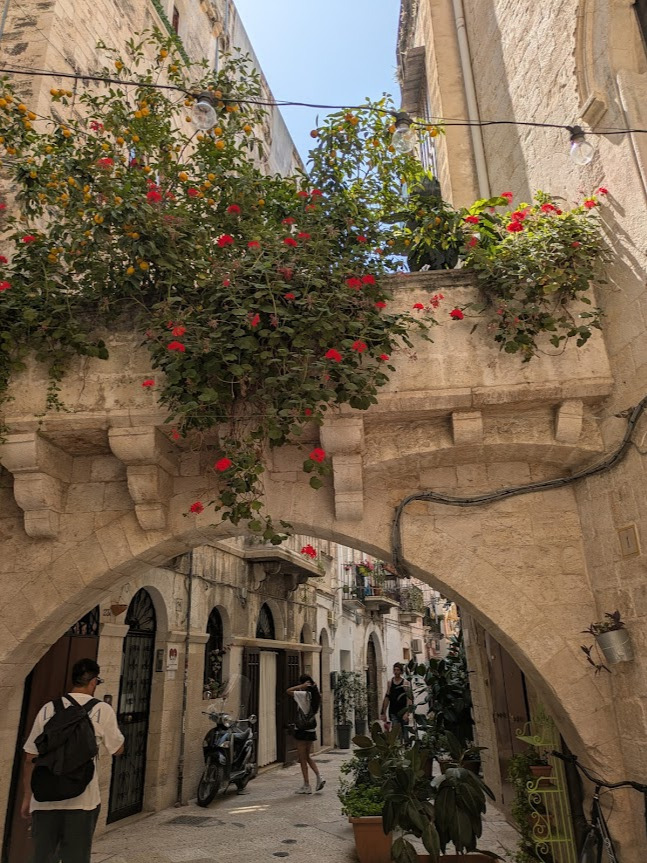
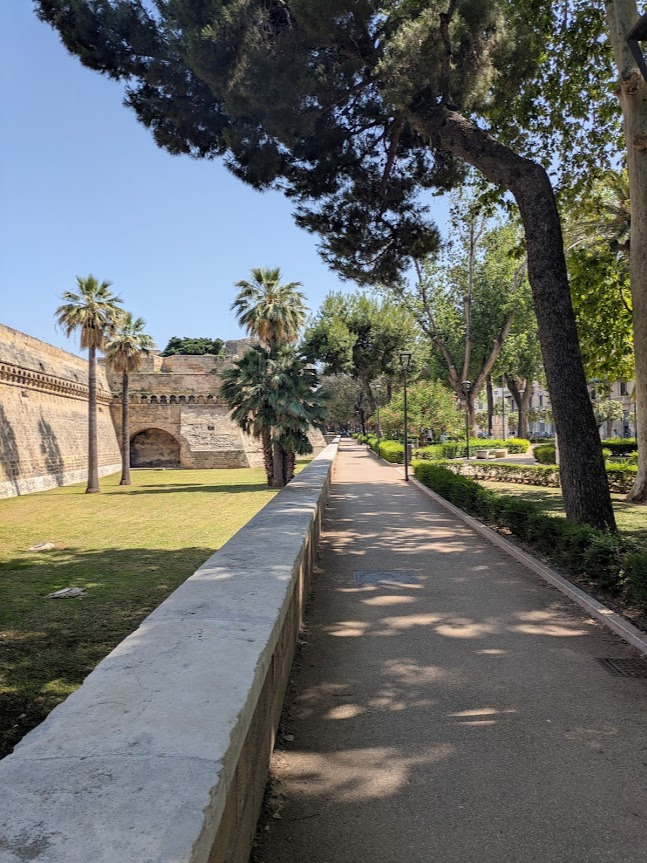
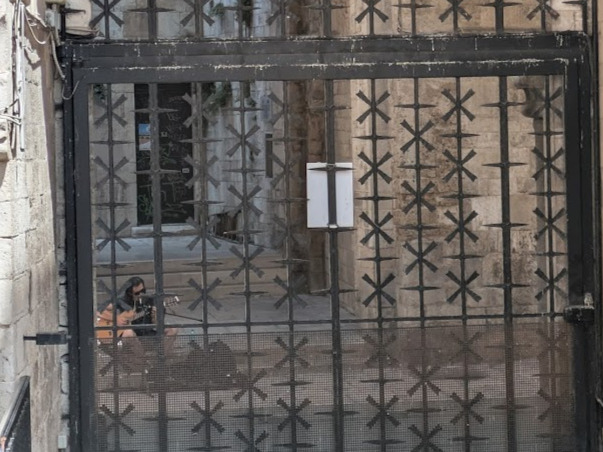
We travelled east from Naples to Bari, a coastal city known for the Basilica of San Nicola, an important pilgrimage destination, among other attractions. This unexpectedly charming town was notable for its cleanliness and maintenance, with minimal street litter and graffiti, unlike the cities we had recently visited. Bari featured lush inner city parks, a medieval walled city adorned with flowers, a Norman Castle, and solitary jazz singers in back alleys.
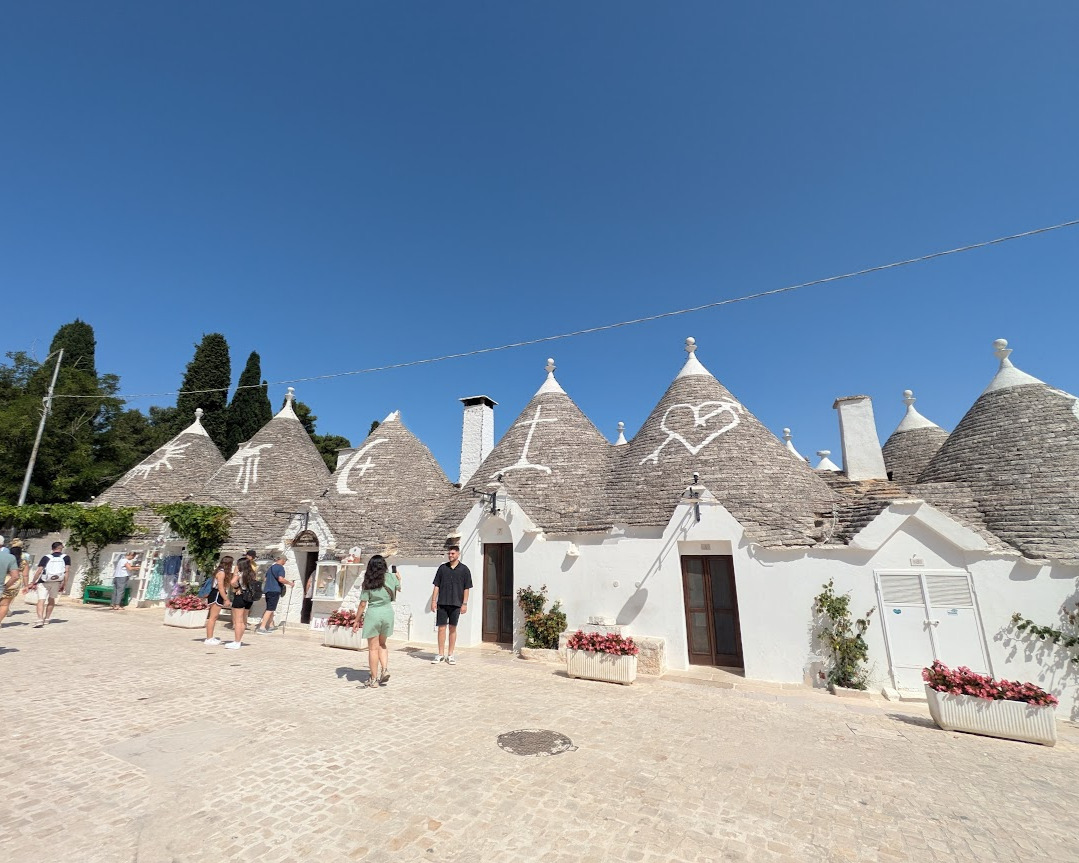
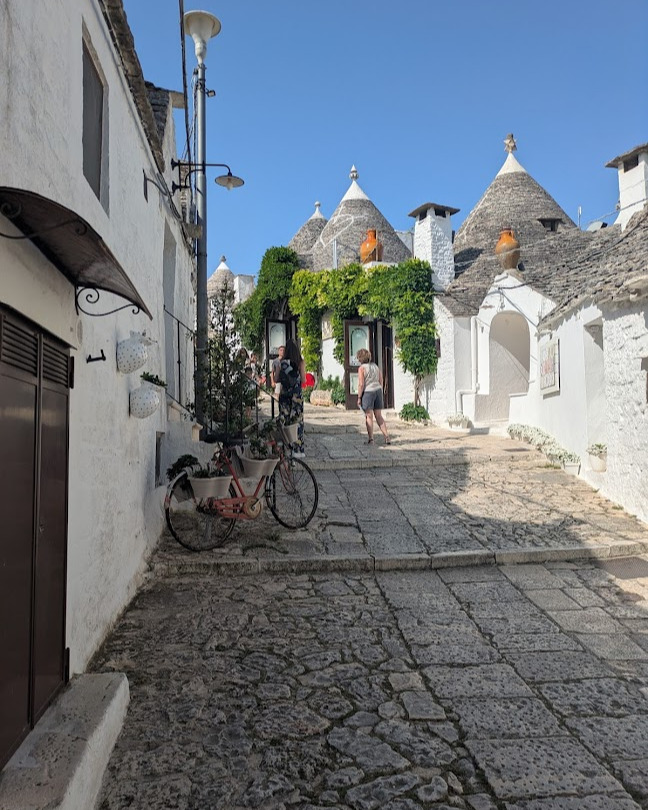
Our excursion from Bari took us to Alberobello another UNESCO World Heritage Site. Famous for its unique trulli houses, which are traditional dry-stone huts with conical roofs, it is said that owners of trulli houses would dismantle them when tax collectors arrived to avoid paying property taxes.
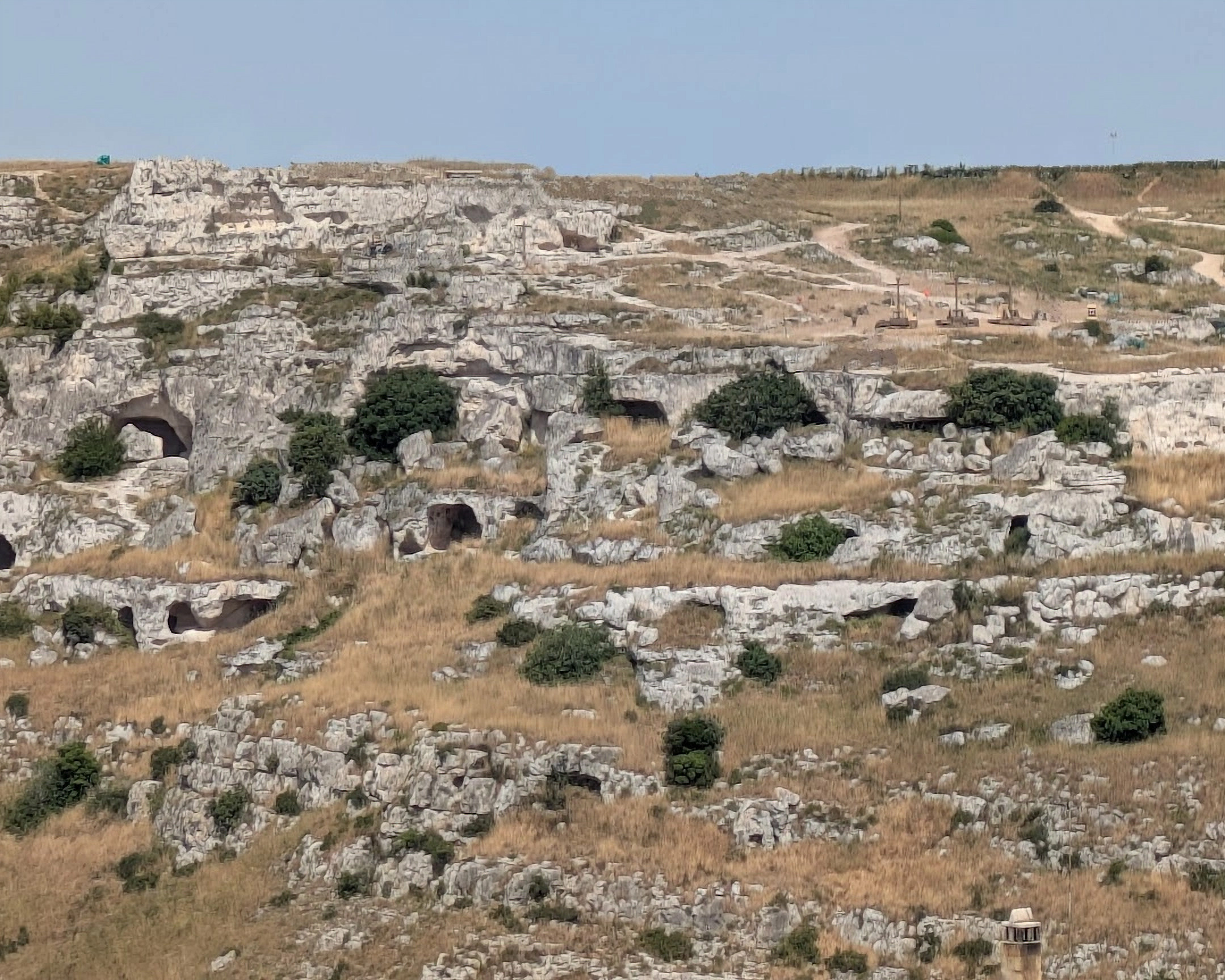
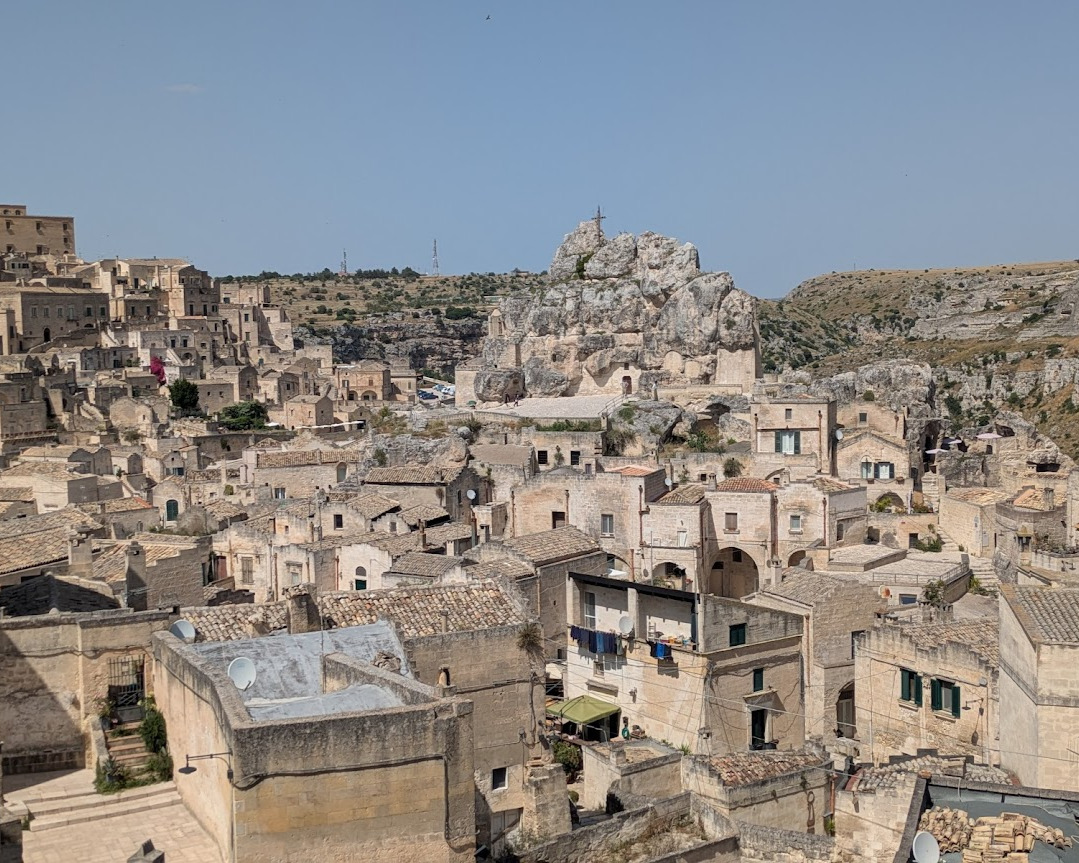
From Alberobello, we journeyed even further back in time to the medieval town of Matera (another UNESCO World Heritage site). This town boasts a history of continuous habitation since the 10th millennium BC. It’s famous for its neighbourhood of homes carved into the ravine’s rock face. Know as the Sassi, it evolved naturally as peasants and farmers excavated the soft “tufo” rock, forming interconnected homes and streets.
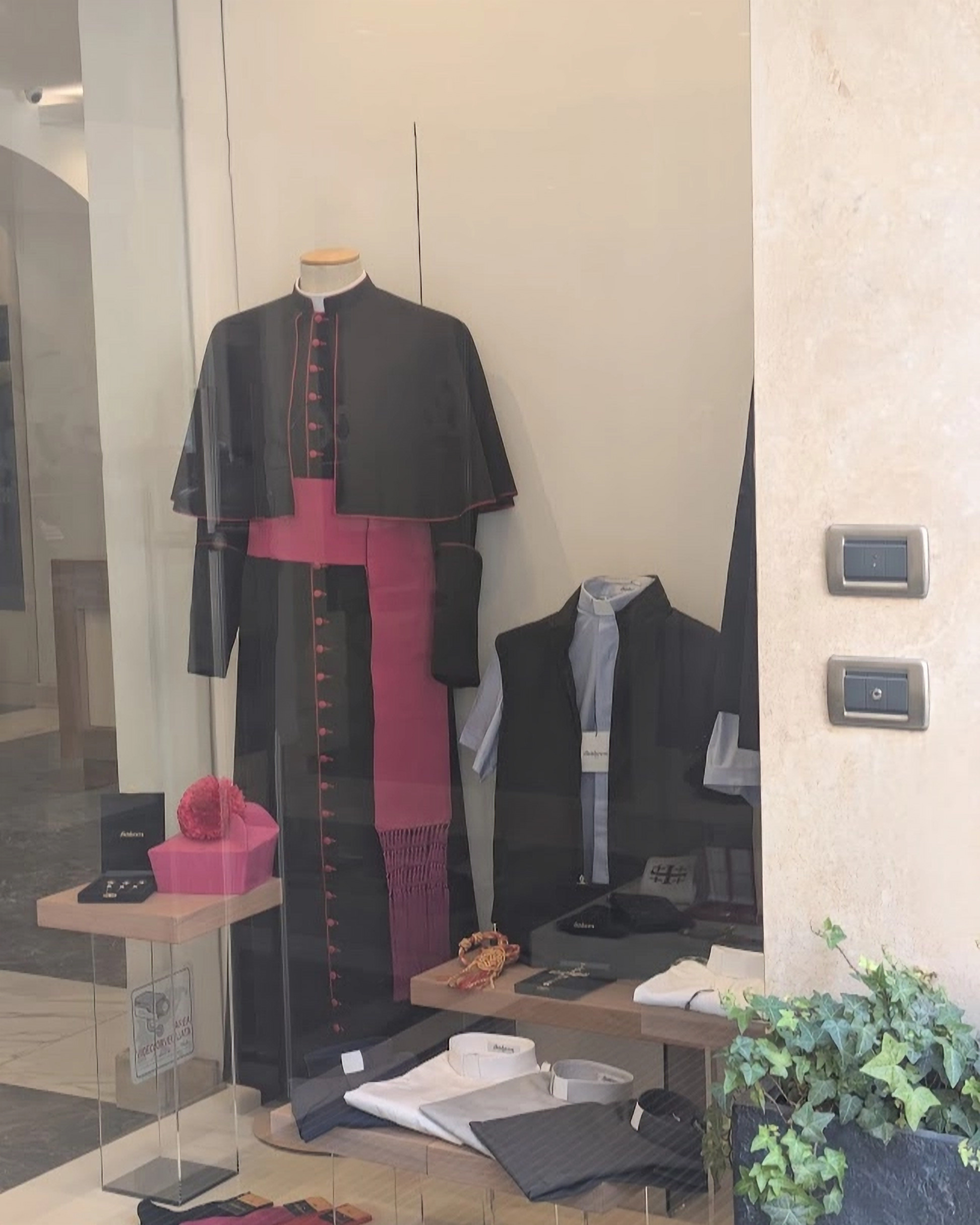
Our time in Bari was brief and with heavy hearts we headed to Rome, the “Eternal City.” Rome, a vibrant metropolis with a modern and stylish vibe, felt somewhat more refined. With only a few days to explore, we visited many of it’s renowned sites. While wandering the back streets near the Pantheon, we discovered Barbiconi, a shop known for crafting high-quality papal vestments for discerning popes and clergy members. Who knew?!
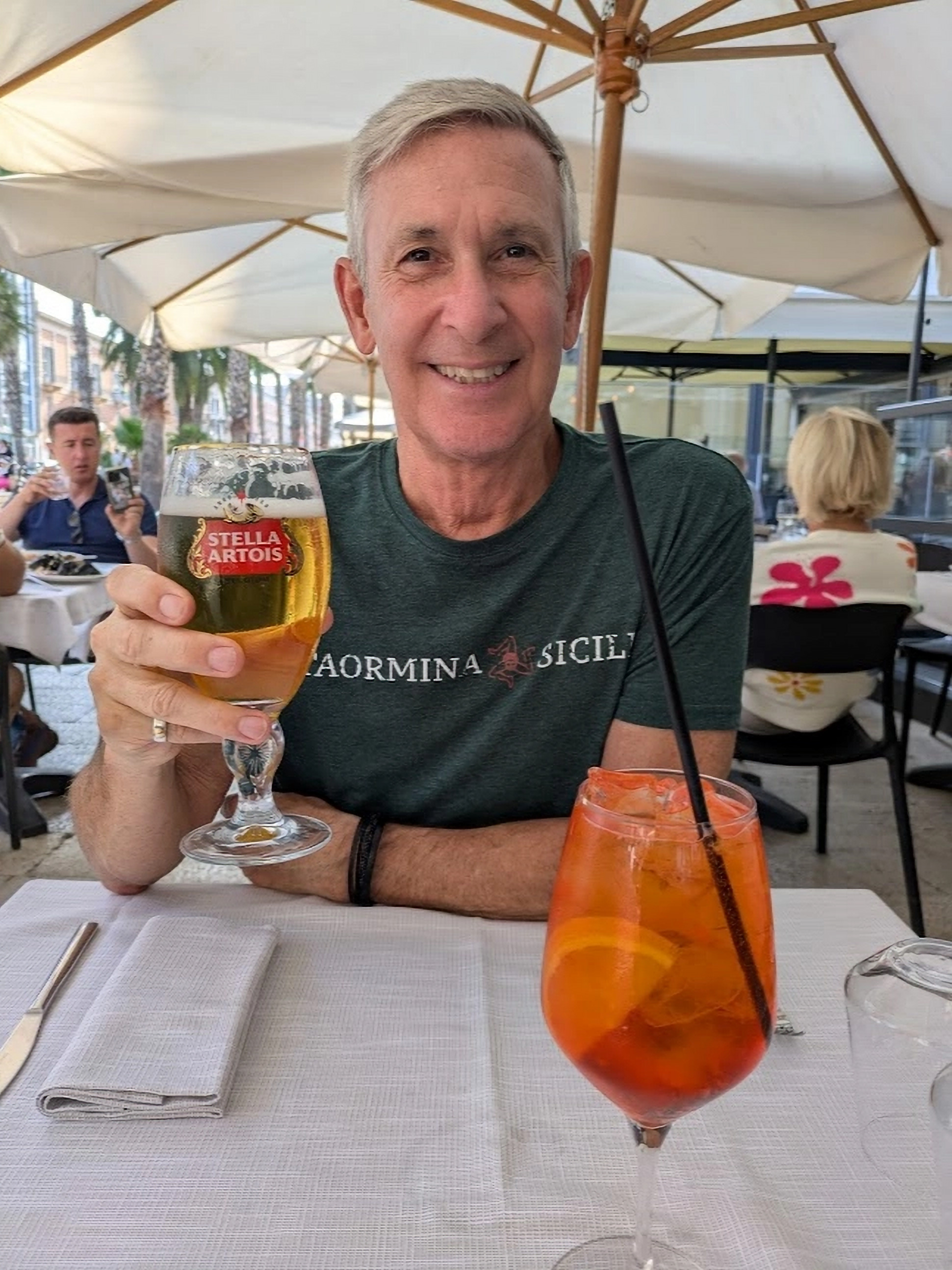
After six months of travelling through South America, Australia, Southeast Asia, Malta, and Southern Italy, we took our last flight from Rome to home. This journey has been amazing, filled with unforgettable memories, but now it’s time for the Tumbleweeds to put down roots.
Documenting our travels on our Two Tumbleweeds Blog has been exciting, serving not only as a way to share with friends and family but also as a journal for us to revisit. We’d like to thank everyone for following us. We encourage everyone to get out there and explore the world. Ciao!